Breaking
LANGO sped up month-end close 66% on AI-native ERP SEVEN US language-services companies acquired and counting 1,000+ customers worldwide 2016 founded in Austin, Texas HARVARD Divinity, then Stanford pitch competition - first place JOSH DANESHFOROOZ Co-Founder & CEO
Profile / Founder Issue

Josh
Daneshforooz

A Harvard theologian who teaches diplomats public narrative, took up enterprise software, and is quietly consolidating the American language services industry from Austin.

Co-Founder + CEO, Lango Austin, TX Est. 2016 7 Acquisitions
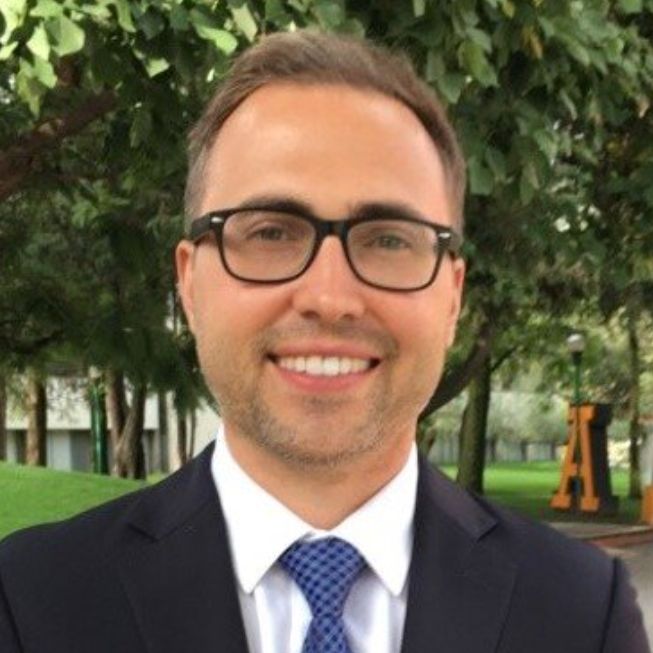
Josh Daneshforooz, co-founder and CEO of Lango
JOSH DANESHFOROOZ // CEO, LANGO // AUSTIN
FILED
FROM
AUSTIN
The Lede

Most CEOs do not have a Master of Theological Studies. Most CEOs did not, as a younger man, write a book called Loving Our Religious Neighbors: Fruit of the Spirit In a Multi-Religious Culture. Josh Daneshforooz did. He runs Lango from Austin now, with seven acquired companies behind him and over a thousand customers in front of him, and on most days he sounds less like a software founder than like someone who has been thinking very carefully about how human beings talk to one another for a very long time.

Lango sells language access. Phone interpretation. Video remote interpretation. American Sign Language. On-site interpreters in courthouses and hospitals. Document translation. Patent and IP translation. Media subtitling and captioning. AI-enabled translation paired with certified human linguists. Training. Consulting. A platform underneath all of it that tries to make a fragmented industry behave like a single supply chain. The pitch is unfussy: every person, every language, one place to make it work.

The strange specific is that Daneshforooz arrived at this through theology. He studied at Harvard Divinity School from 2008 to 2010. He served as a Harvard Leadership Fellow. He taught executives and entrepreneurs at the Harvard Kennedy School - community organizing, public narrative, the David Perell-adjacent craft of telling a story that moves a group. He consulted for Omina Leadership Consulting, advising United Nations members and Mexican diplomats. None of this looks like the path to an interpretation platform. All of it, in retrospect, does.

His father is Iranian and Muslim. His mother is American and Christian. He grew up inside two languages of belief and grew comfortable translating between them. He has written about that, publicly and at length. By the time he co-founded Lango with Sumita Mavros in 2016, the through-line was already there: the world has too many people separated by language, faith, accent and circumstance, and not enough infrastructure to bring them together. Software, it turned out, is infrastructure.

Business can be a powerful force for alleviating poverty.
- Josh Daneshforooz, on the operating philosophy he carried into Lango
By The Numbers
7
Acquisitions
1,000+
Customers
96
Employees
66%
Faster Close With AI ERP
What Lango Actually Does

Language access, treated like infrastructure.

01

On-demand interpretation

Phone, video and on-site interpreters routed by skill, certification and context. Healthcare, courts, schools and social services live and die by this part.

02

Translation, AI + human

Document, legal, patent and IP translation. Machine translation underneath, certified linguists on top. The boring stack that keeps regulated industries compliant.

03

Media + accessibility

Subtitling, captioning, dubbing, transcription and American Sign Language. The work that decides whether a video belongs to one audience or many.

04

Workflow platform

One system for scheduling, routing, billing and quality assurance across all of the above. The acquisitions all funnel into it.

05

Training + consulting

Language access plans for organizations that have to write one whether they want to or not. HIPAA-aware, audit-ready.

06

The AI bet

An AI product vision that took first place at a Stanford pitch competition. Practical, not theatrical.

The Method

Build and iterate. Fail fast. Correct quickly.

It is the kind of line founders say so often it loses meaning. Daneshforooz has said it for long enough that he gets to keep it. He has also said the founder's job is to develop other people's leadership and build systems where the team can win - a sentence that sounds like Harvard Kennedy School because it is.

A Career, In Order
2008
Admitted to Harvard Divinity School. Begins a Master of Theological Studies.
2010
Finishes the MTS. Becomes a Harvard Leadership Fellow. Teaches at the Kennedy School.
2011
Publishes Loving Our Religious Neighbors, a book about interfaith family life built around Galatians 5.
2012
Founding partner at Cornerstone Leadership Development. Consults with Omina Leadership Consulting. Advises UN members and Mexican diplomats.
2015
Founds Dine & Feed, a platform that asks restaurants and smartphone users to fight hunger together.
2016
Co-founds Lango with Sumita Mavros in Austin.
2019
Lango raises a Seed round.
2023
Acquisitions begin in earnest. Seven US language-services companies eventually fold into the platform.
2025
Lango is profiled by Intuit for adopting an AI-native ERP and cutting month-end close time by two-thirds.
Who Trusts The Stack

An industry mix that reads like a public-services org chart.

Where Lango shows up

Healthcare92%
Legal & Courts78%
Government71%
Education64%
Social Services58%
Enterprise & B2B47%

Illustrative mix based on Lango's stated verticals, not a published share figure.

The Person, Off-Duty

Three things to know that won't show up on a deck.

Quirk No. 1

Keeps one day a week with no technology. Spent outdoors, reading, jogging, in prayer. He has held this practice for years, which is unusual for a CEO running an AI company.

Quirk No. 2

Played baseball at Westmont College in California before heading east to Harvard. Philosophy major, infielder. A small detail he rarely brings up himself.

Quirk No. 3

His first published book has nothing to do with software. It is a personal-narrative treatment of Galatians 5 and the fruit of the spirit, written for families that span more than one religion.

A founder's job is developing other people's leadership and building systems where the team can win.
- A line he repeats often. It explains the acquisition strategy more than the org chart does.
The Long Read, Continued

Sumita Mavros and Daneshforooz started Lango in 2016 with a small thesis and a large market. The language services industry, then and now, is enormous, fragmented, regulated and old-fashioned. Every hospital, every court, every school district, every immigration office, every dialysis clinic needs interpreters who can show up - in person, on the phone or on a video call - in dozens of languages, sometimes at three in the morning. Behind that need is a tangle of agencies, freelancers, certifications, billing systems and quality assurance loops, most of it held together by spreadsheets and good intentions.

Lango's bet was that this could be one stack. A single platform for scheduling, routing, billing, quality and analytics, plus a network of linguists with the credentials each vertical demands - HIPAA for healthcare, certification for courts, security for government. Build the platform once. Buy the agencies that bring customers, linguists and revenue. Migrate everyone onto the platform. Repeat. Seven acquisitions later, that is more or less what is happening.

The 2025 Intuit case study is the unsexy proof. Lango moved to Intuit Enterprise Suite and cut month-end close time by 66 percent. For a roll-up, that number is the whole game. Acquisitions create operational sprawl. AI-native finance tooling collapses it. The faster you can close the books, the faster you can absorb the next company. The founder who comes out of Harvard Kennedy School thinking about systems instead of features tends to notice this earlier than most.

The AI layer is the public story. Daneshforooz took an AI product vision to a Stanford pitch competition and won. Lango describes itself as AI-enabled rather than AI-replacing, which is the correct posture for an industry where a wrong translation in a courtroom or a hospital is a lawsuit waiting to happen. Machine translation handles volume; certified humans handle stakes; the platform routes between them. Customers, mostly, do not care which is which - they care that the meeting happens, the documents are accurate and someone is accountable.

The leadership thread runs deeper than methodology. Daneshforooz spent his twenties teaching public narrative, the craft Marshall Ganz built at the Kennedy School - the deliberate work of telling the story of self, the story of us, and the story of now. It is the same craft a founder uses to recruit a vice president, sell a hospital system, persuade an acquired company's staff to keep showing up, and convince an investor that an unsexy roll-up in language services is in fact a generational opportunity. Most founders learn this by accident. He learned it as a curriculum.

The interfaith part is not decorative. Daneshforooz has written and spoken openly about being the son of an Iranian Muslim father and an American Christian mother, and about what that household taught him about disagreement, dignity and the patience required to actually understand someone different from you. That is also the daily job at Lango. Match a Spanish-speaking patient with a credentialed medical interpreter at 2 a.m. Help a deaf student attend a class. Subtitle a training video so a janitorial crew can pass certification. Each one is a small act of translation in the older sense of the word.

None of this stops him from being a normal operator. Bonfire Ventures, Mucker Capital and PLG Ventures are on the cap table. There is a 96-person team. Engineering pushes code; sales hits quota; an oncall pager somewhere is going off. He is the kind of CEO who quotes build and iterate and fail fast, correct quickly because he genuinely believes them. He is also the kind of CEO who unplugs once a week for a full day, which is roughly the opposite of how most Series-backed founders behave.

What's next is more of the same, only larger. More acquisitions, layered onto a single platform. More AI in the workflow, applied carefully. More verticals where language access has shifted from nice-to-have to legally required. If Daneshforooz pulls it off, the industry will look in ten years like American payments did after Stripe: a fragmented mess turned into a single API, with one company quietly underneath. The founder running that company will be a Harvard-trained theologian who once wrote a book about loving your religious neighbors. Which, in 2026, sounds about right.
Links + Receipts

Where to find him, in his own voice.

Share This Page
LinkedIn Twitter / X Facebook Instagram