The first useful fact about Joseph Kelly is that he once lived in a house that refused to stay put. For three years of his adolescence, home was a sailboat. His family left Anchorage, drove to Florida, bought the boat and stepped into a life measured by weather, repairs and whatever lay beyond the next stretch of water. It was an education in self-reliance before he had the vocabulary for it. It also made ordinary American assumptions look pleasantly negotiable.
By 18, Kelly had seen enough ways to arrange a life that the standard version no longer felt inevitable. He enrolled at the University of Texas at Austin, hoping business school might reveal how entrepreneurs were made. The fit was poor. He left, started a residential contracting company with a friend, worked with his hands and discovered something clarifying: he preferred technology, where a small team could build for a market that was still becoming itself.
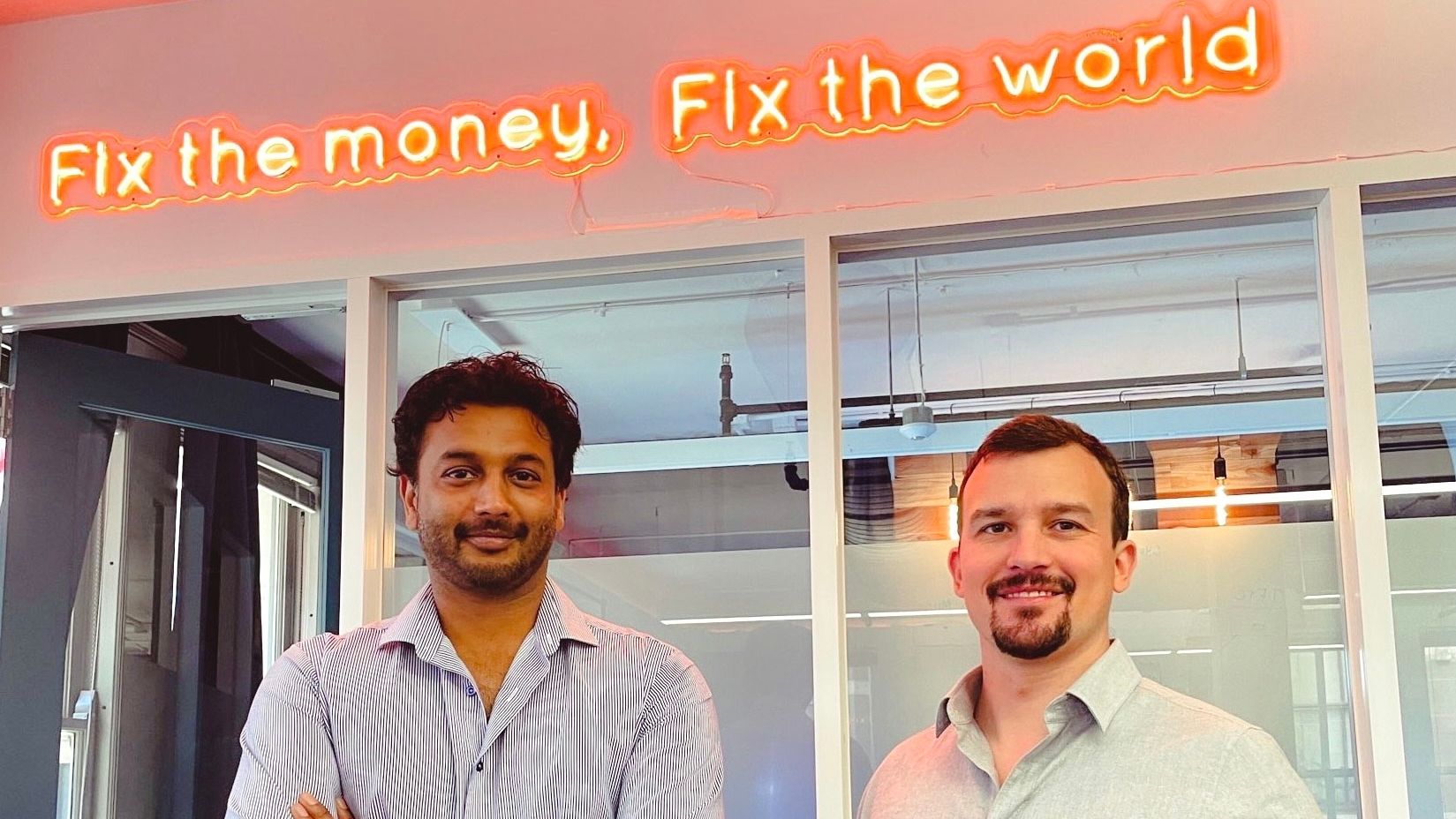
His next move began with the least romantic instrument in the founder's toolkit: Craigslist. A university physics department needed a website. Kelly, considering a web-development firm, answered the listing and met graduate student Dhruv Bansal at the Center for Nonlinear Dynamics. Chaos theory was being studied inside; a durable business partnership was forming nearby. Kelly and Bansal found common ground in curiosity about complex systems. They would go on to build two companies together.
The first company was a rehearsal with real consequences
Infochimps arrived around 2008 and 2009, when “big data” was becoming a commercial category and cloud computing was changing what young companies could attempt. The original project gathered, analyzed and distributed data sets. Its timing was excellent. Its path was not. Kelly has described a painful pivot from a technology-led idea toward a company organized around customer problems. Four years of grit produced an acquisition by CSC in 2013.
Kelly calls that outcome a base hit, an admirably uncinematic description of selling a startup. He and Bansal stayed with the acquiring company for roughly another year to year and a half. Then came the founder's awkward interval: the previous problem is finished, the next one has not introduced itself, and every fashionable trend insists on buying dinner.
Infochimps forms at the edge of the emerging big-data market.
CSC acquires Infochimps; Kelly and Bansal remain through the transition.
The pair found Unchained in Austin.
A $60 million Series B gives the bitcoin-only strategy new room.
Unchained reports crossing $1 billion in loan originations.
The two founders had retained one lesson from Infochimps: the sector matters. In 2015 and 2016, they asked which field had a credible chance of becoming far larger over the following decade. Bitcoin satisfied the test. More importantly, its long-term holders had specific, unglamorous problems. They needed safer ways to store an asset that could vanish with a lost key. They sometimes needed dollars without selling. Existing financial firms were poorly suited to either task.
A bank-shaped business that distrusts complete trust
Unchained began in Austin in 2016 and made its first private bitcoin-backed loan the following June. The proposition sounded simple: a holder could pledge bitcoin and borrow cash rather than sell. The difficult part sat underneath. If a lender held the collateral in an ordinary account, the customer traded price exposure for a large helping of counterparty risk. Kelly and Bansal decided custody was too important to outsource and too dangerous to concentrate.
Their answer was collaborative custody, typically a two-of-three multisignature arrangement. The client controls two keys; Unchained holds one. Any two can authorize a transaction. One cannot. That small diagram carries the company's philosophy: assistance without absolute possession. It allows a customer to recover from certain mistakes and use financial services while preventing Unchained from moving the bitcoin alone.
Kelly's preferred metaphor is a mountain guide. Offer a map. Point out the trails. Serve as a sherpa when requested. The language is less grand than the average financial mission statement and more revealing. Unchained's customer is meant to remain the protagonist. The institution makes the climb more manageable without quietly pocketing the compass.
The narrow road through a noisy market
In its early years, Unchained experimented with more than bitcoin. By the time the wider crypto market was multiplying tokens and promises, the company had narrowed its focus to bitcoin alone. The choice limited the available products and spared the team from several seductive distractions. Vaults became the base. Trading, retirement accounts, inheritance services, lending and later wealth advice were added around the same custody principle.
The principle met its sternest public test in 2022. Crypto lenders and exchanges collapsed amid leverage, commingled assets and opaque relationships. Unchained said client vault funds could not be moved by the company, loan collateral stayed segregated on-chain, and it did not rehypothecate that collateral. Yet the market contraction still reached Austin. Kelly announced a workforce reduction of roughly 15 percent and wrote that he took full responsibility for the hiring decisions that had made it necessary.
There is no tasteful way to put a layoff into a founder legend. It belongs there anyway. Kelly's career makes more sense when the reversals remain visible: leaving college, discovering contracting was not his field, pivoting Infochimps, tightening Unchained after a boom. His talent appears less like prophetic certainty and more like a practiced willingness to revise the route while preserving the destination.
Five months after the workforce announcement, Unchained raised a $60 million Series B led by Valor Equity Partners. In its review of 2023, the company reported that clients had grown 50 percent and the bitcoin it helped secure had risen 25 percent to a value of about $4 billion. By 2025, Kelly was describing a team of roughly 140 people and more than 100,000 BTC secured. In early 2026, he wrote that the lending desk had crossed $1 billion in originations.
The figures are large enough to invite triumphalism, which Kelly generally resists. He returns instead to constraints. Loan collateral remains in a two-of-three address, visible on the blockchain, with keys distributed among borrower, Unchained and a professional key agent. The company has pledged not to rehypothecate it. “Security and liquidity do not have to be mutually exclusive,” he wrote when announcing the billion-dollar milestone.
The human layer matters because multisignature custody can make a newcomer feel as though a safe has arrived with its instructions written in algebra. Unchained invested in guided onboarding and client education alongside the software. In 2023, support-ticket volume rose 127 percent, and the company reported an average email response time of less than three business hours during its busiest month. The statistic is modest beside billions of dollars, yet it reveals the harder commercial task: converting personal responsibility from an intimidating ideal into a routine someone can actually follow.
The captain keeps the wheel
Kelly's public interests have widened from product design to the civic meaning of ownership. He testified before a Texas working group in 2022 about self-custody, bitcoin commerce and the state's energy interests. More recently, his series The Last Free Americans has connected self-custody with property rights. Unchained's Legacy Project supports education, development and philanthropy in the bitcoin ecosystem. The company sells services, but its founder plainly wants those services to carry an argument.
Community, in his telling, is part of the infrastructure. Unchained has treated educational writing, events and conversation as more than a marketing funnel. Kelly speaks about culture in similarly practical terms: ownership must be celebrated inside the company if the product asks customers to practice it outside. That alignment can sound rather earnest. It is also difficult to fake for ten years, especially through a market that periodically rewards the opposite behavior.
That argument begins with control and ends with responsibility. The sailor must understand enough of the boat to survive a bad day. The client should know where the asset sits and who can move it. The company should design itself so a promise is reinforced by a technical limit. Kelly's unusual achievement is to make those ideas legible to people who do not wish to become security engineers for the privilege of owning savings.
He still has the habits of the curious dropout who wandered into a chaos lab: follow the system, locate the failure point, ask whether today's small market could be tomorrow's large one. He also retains the sailor's suspicion of centralized certainty. At sea, authority does not repeal weather. In finance, a handsome interface does not repeal counterparty risk.
A decade into Unchained, Kelly is building something that resembles a financial institution while arguing that institutions deserve carefully measured power. It is a difficult balance and, occasionally, a very Austin one: part engineering diagram, part frontier philosophy, part customer-support desk. The guide knows the trail. The client keeps the keys. And somewhere behind the neat multisignature graphic is a teenage lesson from a moving home: help matters most when it leaves you able to steer.