Person / Health Economist
Joseph Antos
He doesn't predict the apocalypse. He shows you the arithmetic and lets you flinch.
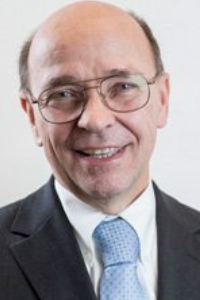
He doesn't predict the apocalypse. He shows you the arithmetic and lets you flinch.
When a cable producer needs Medicare for All explained without the shouting, or a reporter needs to know whether a reform plan actually pencils out, the call tends to land on the same desk. Joseph Antos has spent a quarter-century at the American Enterprise Institute as its Wilson H. Taylor Scholar in Health Care and Retirement Policy, and the work hasn't changed much: take a dense, politically radioactive question about who pays for American health care, and answer it in sentences a person can repeat at dinner.
The path started at Cornell, where Antos took a BA in mathematics. Most people who study math go looking for clean answers. He went looking for the messiest question in American public life and never left it. A PhD and MA in economics from the University of Rochester pointed him at the part of the field where the equations have human consequences attached, and he walked straight into government.
From 1974 to 1983 he ran economic policy analysis at the U.S. Department of Labor. Then came the Office of Management and Budget, the President's Council of Economic Advisers, and a senior role at the Department of Health and Human Services. Four federal bodies, each with its own view of the same dollar. Few people in health policy have seen the federal checkbook from that many angles.
The defining stretch was the Congressional Budget Office. From 1995 to 2001 Antos was its assistant director for health and human resources, the person who directed the analyses lawmakers used to score what their ideas would actually cost - on health, retirement, welfare, labor markets, education. CBO is where Washington keeps its arithmetic honest, and he was the one holding the pencil for an entire portfolio of it. He later returned as a member of its Panel of Health Advisers from 2007 to 2013.
In 2001 he joined the American Enterprise Institute, and the think-tank perch suited him. His research zeroed in on Medicare, Medicaid, the Affordable Care Act, the uninsured, and the broader question of how to reform a system whose costs keep climbing. The throughline is a preference for market-based approaches and a deep skepticism of anything sold as painless.
He has never been only a theorist. For four terms Antos served as a commissioner - and later vice-chair - of the Maryland Health Services Cost Review Commission, the body that runs the only all-payer hospital rate system in the country. Maryland decides what hospitals can charge, and for the better part of a decade he helped decide. It is one thing to write about where health dollars go; it is another to sit on the board that sets the price.
The Maryland seat deserves a second look, because it is genuinely unusual. Maryland is the only state that sets uniform hospital rates across all payers, public and private, so the prices a patient faces don't swing wildly depending on who is footing the bill. Sitting on the commission that governs that system put Antos inside one of the few live experiments in American health pricing - not arguing about reform in the abstract, but administering a working version of it.
His reach extends past U.S. borders. As a consultant to the World Bank, USAID and the OECD, he advised Eastern European and Asian governments building health-financing systems where, in some cases, none had existed. The same instinct that makes him useful to a CBO scorekeeper - what does this actually cost, and who ends up paying - travels well across currencies.
There is a quiet joke in his title. He is an economist who teaches in a medical school: an adjunct associate professor of emergency medicine at George Washington University. The discipline that measures tradeoffs, planted inside the place where tradeoffs arrive by ambulance.
What makes him quotable is restraint. Ask him why Medicare is so hard to fix and he doesn't reach for a slogan. He explains the trap: any reform, he has said, will be branded by its opponents - left or right - as a threat to your benefits or a cut to your choices, and those buzzwords are the kiss of death for reform of any kind. He has named the underlying problem plainly too - the high and rising cost of care, and the likelihood that much of the money buys low- or no-value services. No villain, no panic. Just the structure of the thing.
The Medicare-for-All debate brought that restraint into sharp relief. While the loudest voices argued in absolutes, Antos walked through the realities: a single national plan still has to be paid for, the trillions don't vanish because the program changes its name, and promising everyone everything tends to collide with what a budget can actually carry. He framed the dangers in mechanical terms rather than moral ones - what happens to choice, to access, to the bill - which is exactly why his version of the argument travels further than the shouting does.
His chair tells its own small story. AEI named him to the Wilson H. Taylor Scholar position in health care and retirement policy, the institute's marker for the person carrying its work on how an aging country pays for getting old. Retirement and health are the two costs that compound quietly and then arrive all at once, and Antos has spent his career at the seam where they meet the federal ledger. His writing keeps returning to the same uncomfortable center of gravity: the spending is real, it is rising, and a meaningful share of it does not buy better health.
He has also been generous with the next layer of the field - advising, reviewing, sitting on panels, and lending an economist's discipline to debates that often run on anecdote. The CBO advisory panel, the Maryland commission, the teaching post: each is a venue where his instinct is the same, to slow the conversation down to the level of evidence. It is unglamorous work. It is also the work that keeps policy tethered to reality.
Now a senior fellow emeritus at AEI, he keeps doing what he has always done. The titles accumulate. The job stays the same: read the budget, do the math, and say out loud what the numbers mean before the slogans get there first.
Much of that money is spent on low- or no-value services.Joseph Antos, on the real problem with health care costs
A Cornell mathematics degree came first. The economics was a deliberate move toward the questions where the numbers have people attached.
Six years directing CBO health analysis taught him to ask the one question slogans hate: what does this actually cost?
Four terms regulating hospital rates in Maryland - the only all-payer system in the U.S. Theory, then the board seat.
His George Washington University faculty post is in emergency medicine. The tradeoff specialist, embedded where tradeoffs are urgent.
World Bank and USAID assignments had him advising governments abroad on financing systems built from scratch.
The Cornell mathematician who became Washington's go-to interpreter of Medicare's hardest math.
Decades inside CBO, OMB, the White House CEA and HHS - he's read the federal budget from the inside.
He set hospital rates in Maryland for the better part of a decade. He knows where the money goes.
When C-SPAN needs Medicare for All explained without the shouting, they call Joseph Antos.
He doesn't predict the apocalypse. He shows you the arithmetic and lets you flinch.
Market-based health reform's most relentlessly even-tempered explainer.