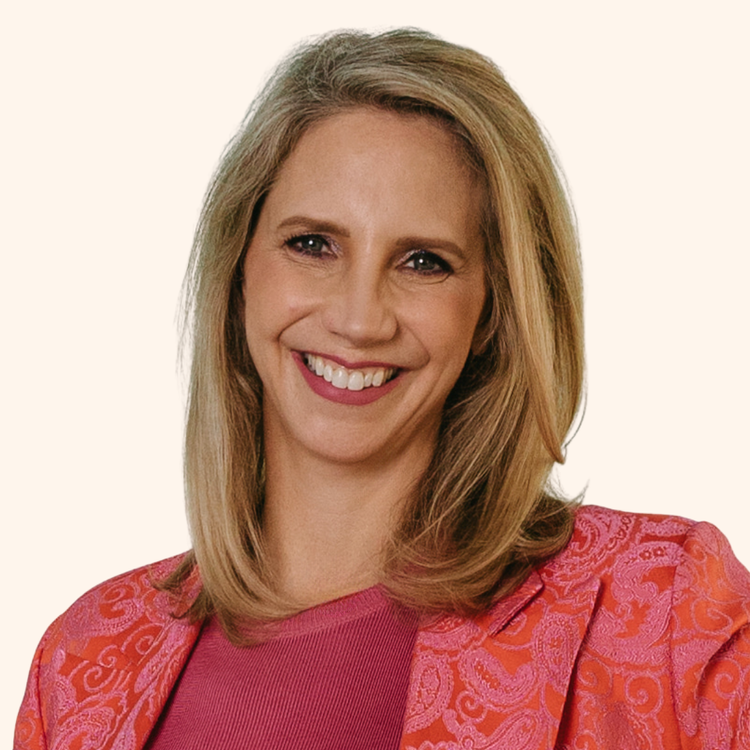
A clinic that comes to you
The pitch sounds almost quaint. A doctor, a behavioral specialist, and a family advocate show up at your house. They treat the toddler, the teenager, the mother, and the grandfather in one visit, on one plan, without anyone taking a day off work or hunting for a babysitter. Rebekah Gee built a company around that idea and called it Nest Health. The quaint part is the delivery. The radical part is who it is for: families on Medicaid, the households the system is most likely to lose track of.
Nest Health, which Gee founded in 2021, calls itself the first value-based care provider built for whole families. It folds primary care, behavioral health, and social support into a single subscription, delivered through house calls, virtual visits, and wraparound services. The model harmonizes a family's care into one plan instead of forcing parents to juggle a pediatrician here, an adult provider there, and a mental-health appointment somewhere across town. CB Insights named it among the ten most promising hybrid health companies in the world. CBS 60 Minutes sent a camera crew.
That a former state health secretary would leave government to start a company that does something as unfashionable as house calls is the whole story. Gee spent four years running the Louisiana Department of Health, overseeing roughly half the state budget. She could have written policy memos about access for the rest of her career. Instead she decided the missing piece was a literal front door.
I founded Nest to improve healthcare and health outcomes for parents and children.
— Rebekah Gee, Founder & CEO, Nest HealthThe policy heavyweight
Before the startup, there was the statehouse. Appointed Secretary of the Louisiana Department of Health in 2016, Gee led the state's Medicaid expansion, extending coverage to hundreds of thousands of residents in a state that had long ranked near the bottom of national health tables. It was the kind of work that does not photograph well and changes lives anyway.
Her most quoted move came in 2019. Hepatitis C drugs cost a fortune, and Louisiana could not afford to treat everyone who needed a cure. So Gee negotiated a flat-fee arrangement with a drug maker: pay one subscription price, treat as many Medicaid patients and incarcerated people as the state could reach. The press called it the "Netflix model" for medicine. It turned a rationing problem into an access problem, which is a much better problem to have.
If the instinct looks familiar, it should. The subscription that unlocked hepatitis C treatment and the subscription that powers Nest Health are the same idea pointed at two different walls. Gee keeps reaching for the payment structure that removes the meter from the exam room.
The long apprenticeship
Gee is, by training, an obstetrician-gynecologist. She earned her medical degree at Cornell's Weill Medical College and did her residency through Harvard Medical School, rotating through Brigham and Women's Hospital and Massachusetts General. But the more telling line on her resume is the stack of degrees on either side of the MD: a history degree from Columbia, a master's in public health from Columbia's Mailman School, and a master's in health-policy research from the University of Pennsylvania. Five degrees in all.
The pattern is a person who keeps refusing to specialize all the way down. Most physicians treat patients one at a time. Gee kept zooming out, from the patient to the population to the budget that decides whether the population gets care at all. Nest Health is what happens when she zooms back in, but brings the systems thinking with her.
Getting care shouldn't cost you a day's wages, a babysitter, and a tank of gas.
— The problem Nest Health was built to solveWhy the whole family
The insight behind Nest is almost embarrassingly simple, which is usually the sign of a good one. Health does not happen one person at a time. A mother's untreated depression shapes her children's outcomes. A grandparent's chronic condition pulls a working parent out of a job. Poverty, transportation, and time off are not side issues to medicine for low-income families. They are the main event.
So Nest treats the household as the unit. Gee has described the everyday math families face: accessing care typically demands time away from work, childcare arrangements, and transportation, resources many American families simply do not have. Remove those costs by showing up at the house, and care that was theoretically available becomes actually usable.
Built to break a cycle
Nest's own language is about generational drivers of poor health. The phrase is doing a lot of work. It means a company that does not just treat a flare-up but tries to interrupt the pattern that produces the next one, and the one after that. That is why behavioral health and social care sit beside primary care in the same visit rather than getting referred out and forgotten. A family advocate guides the household through the maze of benefits, appointments, and paperwork that usually defeats people long before a diagnosis does.
The company has positioned itself as one of the leading tech-enabled players in the Medicaid space, and the framing matters. Nest is not a charity dressed as a startup. It is a value-based provider, paid to keep families healthy rather than to bill for each episode of sickness. The economics only work if the care actually lands, which is the discipline that keeps a feel-good mission honest. Business Insider flagged it as an emerging healthcare company to watch. Gee has taken the model onto stages and podcasts, including Yale's, to argue that the household, not the patient, is the right place to start.
The detour through LSU
Between the statehouse and the startup, Gee ran health-care services for Louisiana State University, a sprawling system serving the state's most vulnerable patients. It was another vantage point on the same problem she had been circling for two decades: plenty of care exists on paper, and not nearly enough of it reaches the people who need it most. The job sharpened the conviction that the fix was not another building or another program but a different point of contact entirely.
The raise, and what it buys
In August 2025, Nest announced a Series A tranche of more than $12.5 million, co-led by returning investors 8VC and Blue Venture Fund. By November the round had closed at $22.5 million, with Socium Ventures joining the board. The money is earmarked for clinical products, AI-enabled care workflows, and geographic expansion through new payer partnerships. The bet investors are making is that the in-home Medicaid model travels beyond Louisiana.
It is a contrarian bet. Medicaid is the part of American healthcare investors usually avoid, the margins thin and the politics thinner. Gee built a company there on purpose. Having run a state Medicaid program, she knows exactly where the money and the misery sit, and she is wagering that the two can be addressed with the same house call.
The name on the door
Rebekah Gee is the daughter of E. Gordon Gee, one of the most recognizable university presidents in America, a man as known for his bow ties as his tenures. She did not take over an institution. She built one. She is also the mother of five children, including a set of identical twins, which may explain a certain fluency in logistics and chaos that a whole-family health company demands.
The recognition has followed the work. The New York Times named her one of "Five Who Spread Hope" worldwide. Modern Healthcare listed her among women leaders to watch. New Orleans CityBusiness put her on its Power 50. Election to the National Academy of Medicine in 2017 is the kind of honor most physicians spend a lifetime chasing. Gee collected it on the way to her next thing.
What makes her worth watching is not the trophy case. It is the consistency of the instinct underneath it. Give her a budget and she finds a payment model that unlocks access. Give her a clinic and she moves it to the living room. The throughline of a long, decorated career is unglamorous and stubborn: meet people where they are, and treat all of them at once.
Honors & recognition
Elected to the National Academy of Medicine
NYT "Five Who Spread Hope" worldwide
Women Leaders to Watch in Healthcare
Nest among the 10 most promising hybrid health companies
New Orleans Power 50
Nest Health featured on 60 Minutes