Milton Friedman Chair at AEI Former OMB associate director, 2001-2004 Medicare + Medicaid: 1.7% of GDP in 1980, headed past 7% Author, US Health Policy and Market Reforms Three decades in the budget fine print Milton Friedman Chair at AEI Former OMB associate director, 2001-2004 Medicare + Medicaid: 1.7% of GDP in 1980, headed past 7% Author, US Health Policy and Market Reforms Three decades in the budget fine print
Health Policy / Fiscal Reform / Washington

James Capretta

He does the one thing Washington keeps putting off - the arithmetic on Medicare, Medicaid, and Social Security.

MedicareMedicaidEntitlementsAEIMarket Reforms
James Capretta

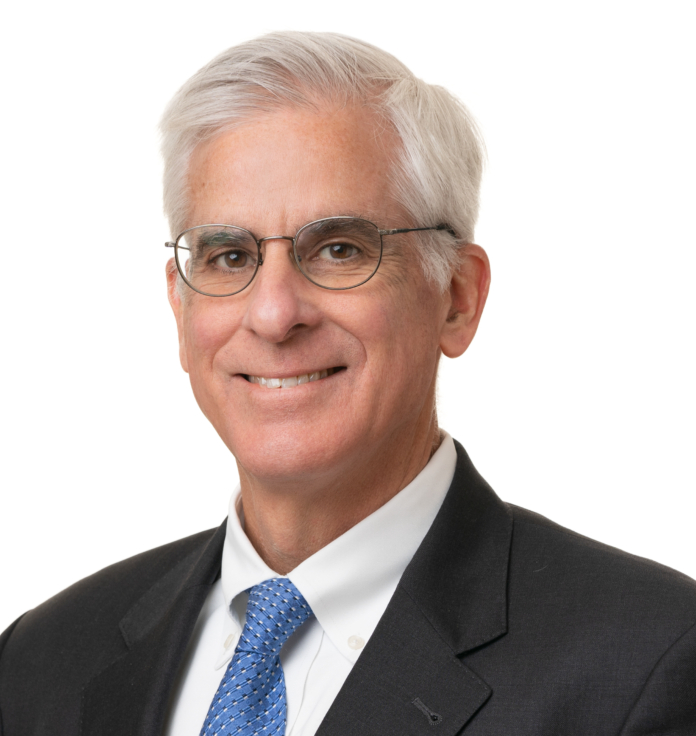
The face of a man who has read every footnote in the CBO baseline - and remembers them.

The Brief

A spreadsheet with a worldview

In the office where America decides what to do about Medicare, the loudest voice is usually the one with the cleanest math. For more than thirty years, that voice has often belonged to James C. Capretta.

Today he holds the Milton Friedman Chair at the American Enterprise Institute, a perch named for the economist whose ideas run through everything Capretta argues. His subject is narrow and enormous at the same time: health care, entitlement programs, and the long fiscal arc of the federal budget. The current preoccupation is the math that keeps getting worse. Combined federal spending on Medicare and Medicaid was equal to 1.7 percent of gross domestic product in 1980. The Congressional Budget Office projects it will reach 6.3 percent in 2026 and 7.3 percent a decade later. Capretta treats those numbers not as background noise but as the central plot.

His recent work reads like a field manual for the next deficit fight. When Congress drifts away from spending discipline, he writes that Medicare should be treated as a major cause of fiscal pressure, not exempted from it. When the 2025 reconciliation bill closed the congressional window on big savings, he turned to the executive branch and argued for refocusing the Center for Medicare and Medicaid Innovation on deep cost reductions. And when CMS announced plans to use artificial intelligence to police fee-for-service payments, he saw the first credible chance for the government to stop wasteful spending before it happens rather than chasing it afterward.

"Private incentive systems sustain themselves far longer and require less monitoring than government-run reforms."

That sentence is the whole argument in miniature. Capretta is not a man who wants to abolish the safety net. He wants to build a better set of rules around the choices people already make - rules that reward higher-value, lower-cost care without a central authority dictating every transaction. It is a market-oriented position, delivered without slogans, defended with footnotes.

30+
Years on health and budget policy
16+
Years in federal government
2001
Joined OMB as associate director
7.3%
Projected Medicare + Medicaid share of GDP, 2036
The Number He Keeps Citing

One statistic, told and retold

Ask Capretta to frame the entire entitlement debate and he reaches for a single line on a chart: the slow, relentless climb of Medicare and Medicaid as a share of the economy.

Federal Medicare + Medicaid spending

As a share of GDP // Source: CBO projections cited by Capretta

1980
1.7%
2026
6.3%
2036
7.3%
When the moment for deficit-cutting arrives, Medicare should be treated as a primary source of required savings.
- James Capretta, on why the biggest program cannot stay off the table
How He Got Here

The budget examiner who never left the building

Here is a detail that explains the man. Capretta arrived at the White House Office of Management and Budget twice. The first time, he was a budget examiner - the kind of staffer who reads the agency line items nobody else wants to read. The second time, two decades of work later, he came back as an associate director and a presidential appointee, the lead OMB official for every aspect of Medicare and Medicaid reform from 2001 to 2004, plus Social Security, welfare, labor, and education.

The path between those two visits ran through the rooms where federal health spending is actually decided. He spent roughly a decade in Congress as a senior analyst on health care and Social Security, first at the US House Committee on Ways and Means, then at the US Senate Budget Committee. He learned the policy from the inside of the legislative machine and then from the inside of the executive one. Few analysts have sat in that many seats.

His training did not start in medicine or even economics. He took a BA in government from the University of Notre Dame and an MA in public policy from Duke. He came to health care through the budget, which may be why he talks about it the way he does - less as a clinical question than as a question of incentives, trade-offs, and who ultimately pays for the promises.

After leaving government in 2004 he spent two years as a managing director at Wexler and Walker Public Policy Associates, then a decade as a fellow and senior fellow at the Ethics and Public Policy Center. Since 2011 he has sat on the advisory board of the National Institute for Health Care Management Foundation. The destinations change; the subject never does.

His brief at AEI now stretches beyond the United States. Alongside Medicare, Medicaid, and the federal budget, he studies global trends in aging, health, and retirement programs - the same arithmetic problem playing out across the advanced economies, where promises made decades ago are colliding with the demographics of longer lives and smaller workforces. As a senior adviser to the Bipartisan Policy Center, he keeps a foot in the part of Washington still willing to negotiate across the aisle on exactly these questions. The throughline, from a first job reading line items to a chair named for Milton Friedman, is a refusal to let the hard numbers go unspoken.
Career, In Order

The paper trail

1990s
Congress & OMB. A decade as a senior analyst on health care and Social Security at House Ways and Means and the Senate Budget Committee; budget examiner at OMB.
2001-04
White House OMB. Associate director and lead official for Medicare and Medicaid reform, plus Social Security, welfare, labor and education.
2004-06
Wexler and Walker. Managing director, advising clients on public policy.
2006-16
Ethics and Public Policy Center. Fellow, then senior fellow.
2011
NIHCM Foundation. Joins the advisory board.
2022
US Health Policy and Market Reforms. Publishes his introduction to reform with AEI Press.
Now
AEI. Senior fellow holding the Milton Friedman Chair; senior adviser to the Bipartisan Policy Center.
What He Actually Argues

Four moves on the board

// MARKETS

Choice over control

Build the rules around the choices consumers already make. Let people find higher-value, lower-cost care instead of mandating it from the center.

// MEDICARE

No exemptions

The largest driver of fiscal pressure cannot be walled off from budget scrutiny. When deficit-cutting returns, Medicare is where the money is.

// EXECUTIVE TOOLS

Use CMMI

With Congress gridlocked after the 2025 reconciliation bill, the Center for Medicare and Medicaid Innovation becomes the lever for deep cost reductions.

// TECHNOLOGY

Stop fraud first

AI built into payment approval could let the government block wasteful spending before it occurs, rather than clawing it back after the fact.

// MEDICAID

Many jobs, one program

Medicaid carries so many missions and optional services that reform fails when it pretends the program has a single purpose.

// QUALITY

Discipline, not damage

The goal is cost discipline that does not compromise quality or innovation - a harder target than either side usually admits.

The Book On The Desk

An introduction policymakers keep

In 2022 the AEI Press published US Health Policy and Market Reforms: An Introduction. The title is modest on purpose. Capretta set out to do something most policy books skip - lay out the major features of US health care plainly, then sketch the reforms needed to impose discipline on costs without crushing quality or innovation.

The central theme runs against the grain of both parties. Rather than expanding government control or leaving the system entirely to chance, Capretta argues for building a regulatory structure around the choices available to consumers, so they can find higher-value and lower-cost options for the services they actually need. It is a framework, not a manifesto - which is exactly why it gets used as a reference rather than read once and shelved.

His written output extends well past the book. He has authored peer-reviewed work for the Milbank Quarterly, including a study of Washington State's quasi-public insurance option, and he writes regularly for The New Atlantis and a steady run of AEI op-eds and reports. The same logic shows up everywhere: start from the numbers, respect the trade-offs, and trust incentives over mandates.

He is also a frequent guest in the long-form interview format, walking through the mechanics of reducing health care spending and chasing universal coverage without pretending either is simple. The work is consistent across formats - patient, granular, and allergic to the easy answer.

The government might finally be equipped to stop wasteful spending before it occurs.
- On building anti-fraud protocols into payment systems with AI
Things That Stick

Footnotes worth keeping

01

He holds a chair named for Milton Friedman - the economist whose ideas anchor his entire case for market-based health reform.

02

His undergraduate degree is in government, not medicine or economics. He arrived at health care through the budget door.

03

He has worked under four major policy institutions: AEI, the Ethics and Public Policy Center, the Bipartisan Policy Center, and NIHCM.

04

He served at OMB twice - once as a junior budget examiner, later as the presidential appointee running domestic policy.

Find Him

The links

▸ AEI Profile ▸ X / Twitter ▸ The Book ▸ Watch: One on One ▸ Federalist Society ▸ Commonwealth Fund ▸ Milbank Quarterly ▸ The New Atlantis
Share this profile