Jon Winsett’s mother found a useful way to explain his company. After hearing what NPI did, she compared it to the Kelley Blue Book for technology. A business devoted to enterprise pricing, licensing and negotiation suddenly sounded like something a person could explain over lunch. Winsett accepted the comparison. He says NPI has used it on and off ever since.
It is a good introduction to a founder whose working life has taken him to both sides of the negotiating table. Before he helped companies question technology prices, he helped sell technology. He had seen how the number on a proposal could depend on the circumstances of the customer. At NPI, founded in 2003, that knowledge became a service for buyers.
The maternal analogy also contains the problem that has occupied him for more than two decades. A seller gives you a number. You need a way to judge it. Enterprise software makes that judgment complicated: the license, the contract and the timing all deserve attention. A handsome percentage discount can leave a buyer with plenty of homework.
An education on the selling side
Winsett earned a BS in Industrial Management at Georgia Tech. His first job after college involved selling IBM hardware, including mainframes. The beginning was decidedly tangible, even if the questions he would eventually pursue became harder to see. In a 2026 conversation about his career, he remembered entering technology before it acquired its current cultural glamour.
He went on to Seagull Software, a publicly traded enterprise software company. His roles included vice president of North American sales and UK country manager. That put his experience inside the vendor’s business and across markets. He learned the trade from the people whose job was to persuade customers to sign.
In a later conversation with NPI colleague Tres Larsen, Winsett described the company’s origins among former software executives who wanted to bring their understanding of selling tactics to buyers. The proposition was practical. People who understood how a deal was assembled could help someone else take a closer look at its pieces.
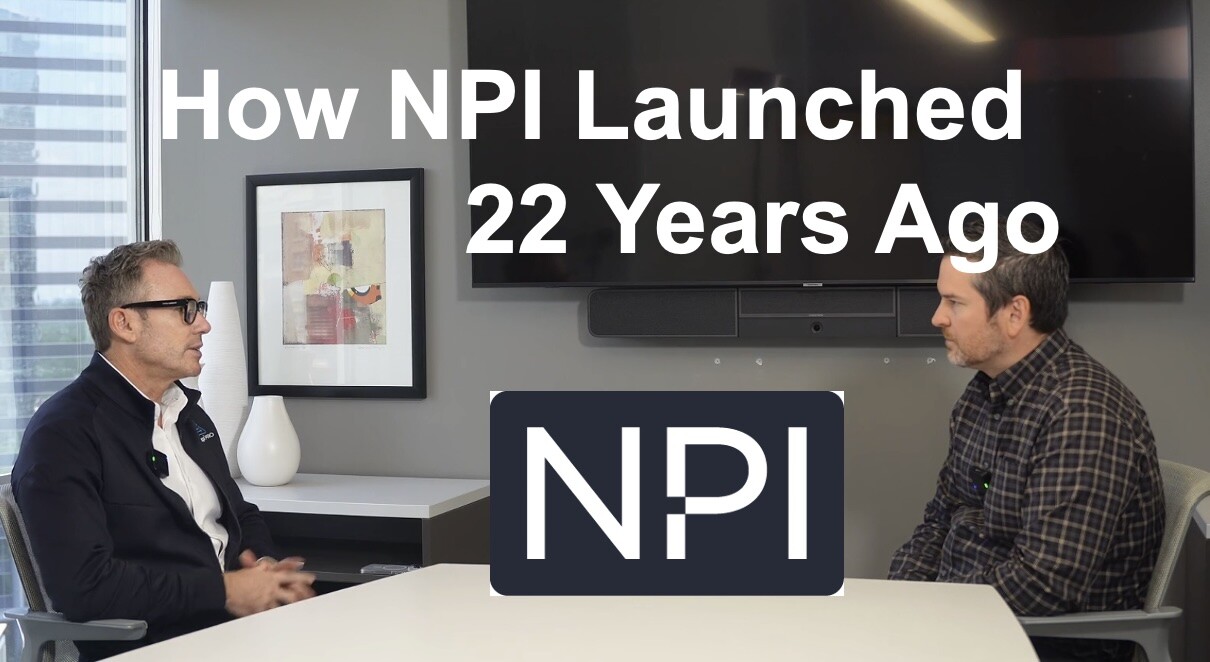
There is a pleasing symmetry to the move. The same commercial knowledge changes value according to who has it. For a seller, it helps shape a proposal. For a buyer, it helps decide what to challenge. Winsett’s founding idea depended on making that experience available to the person receiving the bill.
The numbers behind the second opinion
By January 2024, NPI reported more than 500 customers, including 120 companies in the Fortune 500. Over the previous five years, it said it had analyzed more than $75 billion in IT spending and identified more than $9 billion in associated savings opportunities. Those were opportunities identified in the analysis; the distinction matters when billions enter a sentence.
over the prior five years
opportunities identified
at the time
That month, Falfurrias Growth Partners announced an investment in NPI. Winsett would continue to lead the business. The announced plans included further spending on AI technology, products, sales and marketing. A company founded to interpret the economics of technology was investing in technology of its own.
The day-to-day proposition remained detailed work. NPI offered transaction-level price comparisons, license and service optimization analysis, and intelligence about particular vendors. The unit of attention was the purchase or renewal in front of the client, rather than an agreeable general observation about saving money.
In 2024, Winsett also described NPI’s relationship with Coupa: the procurement software company used NPI’s services, while an NPI app brought vendor research into Coupa’s workflow. It was an example of information moving closer to the place where a buyer could use it. That direction would become more prominent as AI entered the process.
A table in Buckhead, a canoe in Fort Lauderdale
Atlanta is part of how he explains the business, too. In a public post about NPI’s location, he pointed to the region’s transportation heritage, major corporate operations and supply chain technology businesses. Georgia Tech and Emory appeared in his account as part of the local talent pipeline. He presented the city as an environment where procurement knowledge develops through the companies and people nearby.
That account gives his own Georgia Tech connection a wider setting. The company grew in a place he associates with the practical work of moving things, buying things and managing large operations. His version of Atlanta’s appeal comes down to the neighbors: businesses dealing with logistics and enterprise purchasing at scale. It is a local explanation for a company whose customers operate much farther afield.
Winsett has had other reasons to appreciate a well-run enterprise. In 2016, he was identified as a silent partner in Le Bilboquet, the French bistro in Atlanta’s Buckhead neighborhood. He described the pleasure of walking into a restaurant where people knew him and where getting a table was easy. “It’s kind of like my country club,” he said.
His account of the investment dwelt on the proprietor’s experience, hiring and attention to detail. Those are recognizable management concerns, even when the product is dinner. He also enjoyed being able to take visitors to a restaurant he was involved with. The silent partner had discovered a perfectly reasonable occasion to mention the partnership.
In the same year, NPI ranked third in the small-company category of the Atlanta Business Chronicle’s Best Places to Work list. Winsett said the workplace honor gave him particular pride. He connected it to an ambition present when the company started: building a working experience better than those the founders had previously known.
That is a more personal measure than a contract total. His remarks emphasized rewarding client work, a close team and enjoyment in coming to work. For a business selling expertise, the people doing the work are also the reason the service exists. The award offered one way to talk about the company from their side of the desk.
Outside work, his official biography lists boating and helicopter flying. The boating interest has its own backstory. In a video made during a Fort Lauderdale boat-show visit, Winsett rode past canals and remembered living there in third grade. He recalled taking a canoe along the water. The scene had changed considerably since then.

He described the boat show as a recurring attraction because of the innovation on display. He was cheerfully willing to call himself a boating nerd. For someone running a company, he explained, an outlet helps. His chosen subject required very little corporate language: “Mine is boat stuff.”
“Mine is boat stuff.”
Jon Winsett, on his off-duty interest
The meeting before the meeting
At work, Winsett’s attention has increasingly turned to what happens before a vendor delivers its renewal quote. In a July 2026 interview, he described a mismatch in preparation. Vendors study accounts and plan their approach well ahead of time. A buying team that begins only when the proposal arrives has already allowed part of the process to unfold without it.
NPI’s PRISM offering addresses that earlier window. It brings contract analysis, supplier intelligence, internal alignment and negotiation planning into a structured process. Winsett says clients asked for help during the planning stage, while they still had options to strengthen their position. The emphasis puts a calendar next to the calculator.
- Read the agreementUnderstand the existing position.
- Study the supplierPut the proposal in market context.
- Align the buyersBring IT, finance and procurement together.
- Plan the conversationPrepare before formal negotiation.
He has described PRISM as expert-led and analyst-driven. That wording is useful in a field filling up with automated tools. His argument still gives a role to people who understand a supplier, interpret an agreement and help colleagues agree on what they want. Preparation includes the conversations inside the buying organization.
When the buyer is also a machine
AI gives Winsett two subjects at once. It can help purchasing teams do their work, and its own consumption creates a purchasing problem. In June 2026, he joined Philip Ideson’s Art of Procurement podcast to discuss AI tokens. The conversation concerned visibility into workloads, users and departments, alongside the difficulty of managing a rapidly changing category of spending.
His concern is easy to recognize even if the units are unfamiliar. An organization receives a bill and needs to understand what generated it. Which work used the resource? Who initiated it? What did it produce? The answer needs more detail than a total, especially when automated activity can keep generating consumption.
In his 2026 commentary, Winsett has advocated an AI-focused FinOps function to track and govern that spending. He has also discussed using less expensive models where appropriate and examining contract terms. The emphasis is on matching the cost of a tool to the work it performs, with enough visibility to make that judgment.
Then, in September 2026, NPI announced a partnership with Zip. Price Pulse, an autonomous benchmarking capability, would connect NPI’s intelligence to Zip’s procurement platform through an MCP-based interface. An AI procurement agent could request pricing context within its workflow. The announcement described NPI’s first fully autonomous, system-to-system benchmarking capability.
The work brings his original concern into a new setting. Software can help process a supplier proposal, but a decision also needs an outside reference for the price. Winsett put the question plainly in the partnership announcement: “Are we getting a fair deal?”
It is a question that connects the former software seller, the founder and the current AI commentator. The machinery around it has changed since 2003. His mother’s comparison still has a job to do. Somewhere between a quote arriving and a buyer accepting it, someone needs to know what the number means.
Continue the conversation
- NPI - company website
- Jon Winsett on LinkedIn
- Watch: Winsett and Tres Larsen revisit NPI’s origins
- Listen: AI tokens on Art of Procurement
- Watch: The Sourcing Industry Landscape
- Read: Preparing for renewals in Asia-Pacific
- Read: NPI and Zip’s September 2026 announcement
- Read: The Atlanta restaurant investment