The stranger had made a reasonable mistake. Johnny S. Cohen was at a club, people were gathered around him, and he looked like someone who could get a party started. Would he bring a crowd to an event? Cohen says he delivered 250 guests within 48 hours. The stranger then hired him to represent a denim line. A night out had acquired a job description.
It is a useful beginning for a career in fashion public relations: somebody noticed whom he knew before asking what he did. Cohen went on to dress people he met socially, photograph them and seek publicity. The clothes gave the introductions a purpose. He had found work that rewarded a habit he already possessed - putting people together.
A family resemblance, with a guest list
Fashion was familiar territory. Cohen has described a photographer father and a model mother; his father brought clothes home from his travels. The household offered an early acquaintance with how people look, how they are photographed and what a garment can suggest. His later career would sit at the meeting point of those activities.
Born in Jerusalem, he moved to America at three. His account of getting established includes a beeper-store job, leaving college without graduating, and a return to his mother's home before his brother helped him acquire his first showroom. These are the less photogenic intervals in a fashion career. They also make the eventual rooms feel less inevitable.
“I don’t want to work alone. I didn’t choose that life.”Johnny Cohen
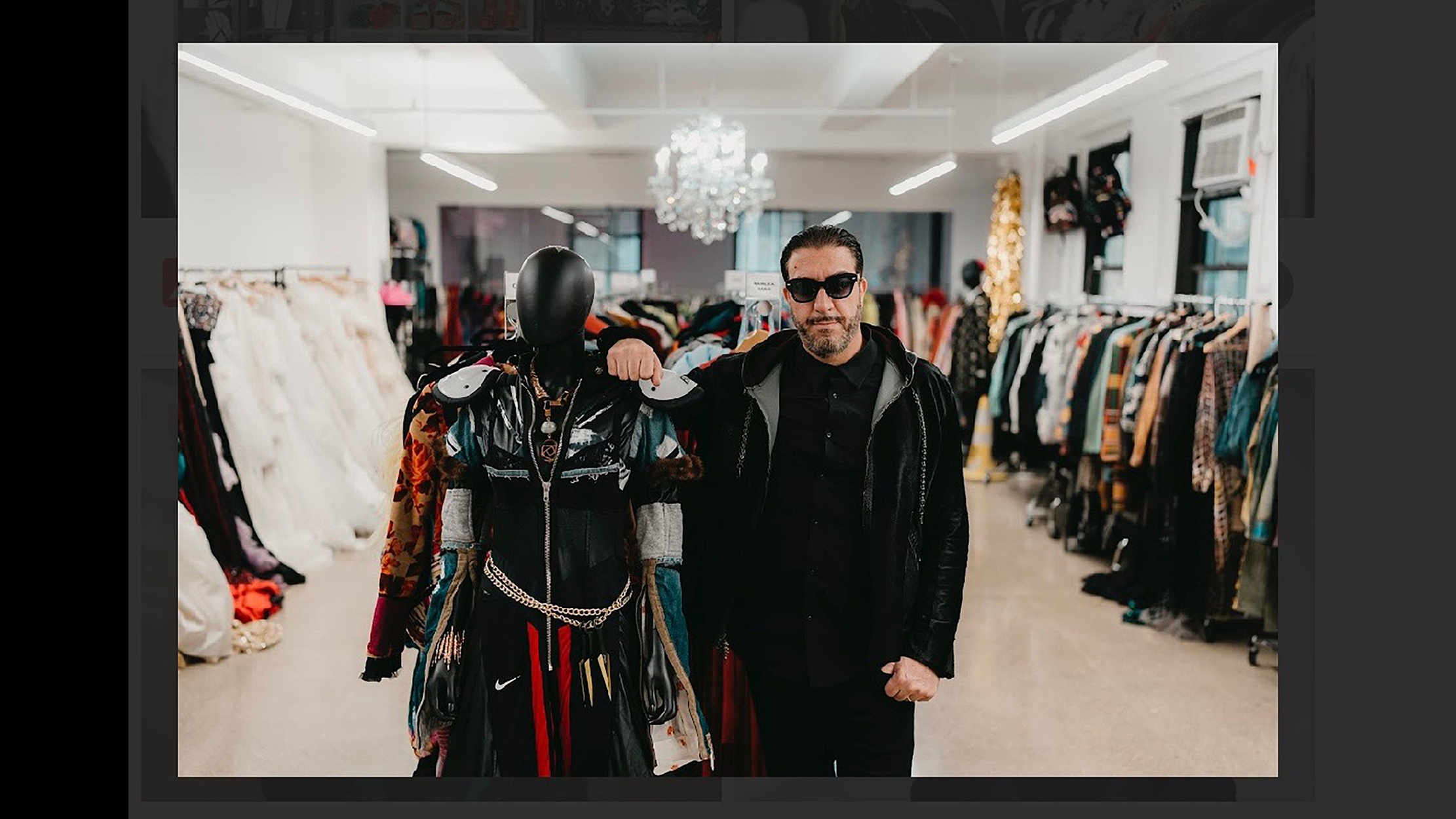
That preference helps explain the business he built. Cohen founded The Confessional Showroom in 2014. The company describes its development from an office with one client into a 3,000-square-foot showroom serving more than 80 clients. Its work spans PR, digital marketing, content production, placements and events, with locations in New York and Miami. The founder's social world had become an operation with samples, schedules and places to put the samples.
What happens while the clothes are waiting
A visit to the showroom in 2023 catches the business in a revealing double act. There was a model casting for an upcoming New York Fashion Week show. At the same time, celebrity stylists were coming through to choose clothes for clients. The future runway and the next assignment occupied the same room. Cohen's connections had practical work to do.
Among the people there was stylist and art director Nikko Kefalas, a longtime friend of Cohen's. Kefalas assembled looks by mixing designers and materials: Belgian linen with velour, brightly colored neoprene with golden metal tassels. The combinations suggest why a shared showroom can be useful. A collection enters under one designer's name and may leave as part of somebody else's visual sentence.
There is a human pleasure in that sort of room. Someone turns up looking for one thing and sees another possibility on a neighboring rack. The proprietor needs enough familiarity with the visitors to make introductions, and enough curiosity to leave room for surprises. Cohen's career invites that reading: his business began with an unexpected request, then grew around arranging further encounters.
The name has an appropriately conversational origin. Cohen says visitors shared their ambitions and difficulties with him, making the showroom feel like a confessional. Designers, editors and photographers brought more than a professional request through the door. He gave that atmosphere a name fit for the sign outside. Fashion already has plenty of mirrors; here, apparently, someone was also listening.
The fitting room gets a plot
Then there are the evenings when the room expands into a production. The showroom's event archive runs from a September 2022 show at Serafina through Cosmic Dream at Club Nebula in February 2023 and The Secret Society that September. It also lists PUMA and Members Only at Mood Fabrics in connection with Miami Art Basel 2023, including a short film. February 2025 brings The Great Gatsby.
The titles tell you something about Cohen's preferred surroundings. A runway offers clothes a sequence; a theme gives that sequence a mood and a reason to continue watching. The Secret Society is also a useful name for a fashion invitation. It flatters the recipient before anyone has found a seat. Gatsby supplies an even older temptation: the belief that a good party might change one's prospects.
September runway
Cosmic Dream / The Secret Society
February presentation
These productions also preserve Cohen's connection to nightlife. The club in his origin story was a place where a stranger could see him gathering people. Later, clubs became settings for presenting the designers he represented. The setting carries a certain logic: music, clothes and an audience are already expected to coexist there. A runway adds a timetable to the evening.
In September 2023, the showroom helped supply the wardrobe for a fashion-week project called Horsemen of the Apocalypse. Stylist Chrissy Tina described arriving at the last minute and adapting when demand made the original mood board difficult to fulfill. The resulting work came from finding another way through the available clothes. Creative work often sounds more glamorous when nobody mentions availability.
Other visitors described helpful staff and an atmosphere that made choosing clothes comfortable. One singled out Cohen's attention to the experience of being there. Those observations give the events a quieter counterpart. A founder can attract people with an invitation once; the daily room needs to be useful when the party is over and the next shoot still needs dressing.
Disco, with a backstage department
On December 7, 2025, the Miami operation put on a Studio 54-themed Art Week show at Electric23/Uva in Wynwood. Marielena GQ served as creative director and producer. The participating labels included Cazal Eyewear, Okimmi by Simi D., Catou Wear, MyMokondo and Viktoria Marchev. DJ Tracy Young supplied the music, while Lindsey Koggan's All Skates Go to Heaven collective brought roller skating into the production.
The skaters gave the disco reference something to do. Rather than leaving the theme to a title, they carried its movement into the room. Koggan described her collective responding naturally to the playlist. Around that performance sat a substantial working team: styling, beauty, backstage direction, production assistance, screen design, film and volunteers. The apparent ease of a party requires considerable organization.
Cohen's role in that account is telling. He led the business while giving the creative team room to develop the show. Marielena's production work appears again in the New York coverage. A founder known for relationships has to practice them inside the company too, where trust means allowing another person's decisions to become visible.
February, and all the names behind the curtain
On February 15, 2026, Cohen and Marielena GQ helmed a Manhattan presentation at 139 West 35th Street. Angelina Harron of EMG Models hosted. Tiscareno, BDR Black and Annie Pacious were among the designers; Denise Gutman led styling and Inter Beauty handled beauty. Lea NYC provided music, with a live performance by Angelina Statyeva.
That list is worth lingering over. The founder's name may organize the story of a company, but a show gives many people authorship of its final image. A silhouette, a hairstyle, a song and a model's movement arrive together in front of a camera. For the viewer, they become one moment. For the team, each belongs to a different set of decisions and responsibilities.
The work also travels in smaller, less theatrical forms. QP's August 2024 Liz Mastrogiannis editorial credited The Confessional Showroom NYC for wardrobe and gave Cohen a special thank-you. In September 2025, Simonetta Lein's Emmys appearance included a J Berushi dress supplied through the showroom. The connection between a room of samples and a public photograph becomes visible in these credits, after the garment has left the building.
The studio side gives that activity a practical home. The company offers space rental, model digitals and look-book production, alongside other services. A designer needing pictures can find that work near the wardrobe itself. It is an extension that fits Cohen's history: photographs were part of his first denim assignment, and they remain part of how clothes acquire an audience.
The next introduction
Cohen's stated ambitions still have a theatrical streak. He would like to do a Schiaparelli project for the Met Gala and assemble a campaign with the supermodels he admired in the 1990s. Alongside those wishes sits a more prosaic concern: creative people should be paid. He has also spoken about bringing collaborators into work with AI while keeping them involved in the process.
The ambitions and the invoices belong in the same portrait. Cohen likes the occasion, the clothes and the company; he also runs the business that has to keep them meeting. His opening anecdote survives because it contains both sides. There was a party, and there was someone willing to pay for his ability to bring people to it. Years later, the invitation is more elaborate. He still needs people to turn up.