Breaking
MIT PHYSICS PhD '80 trades satellites for smartphones CES 2017 Best of Innovation for the Personal Vision Tracker 150+ COUNTRIES now testing their eyesight with a phone ~25 PATENTS in hardware and software FOUNDED AT 60+ "Better late than never" — John Serri GLOBALSTAR architect turned eye-care entrepreneur
Founder · Physicist · EyeQue Corporation

John Serri

He helped wire one of the world's largest satellite phone networks. Then he decided the harder problem was helping people read the eye chart.

Chairman & CEO MIT PhD, Physics Newark, California
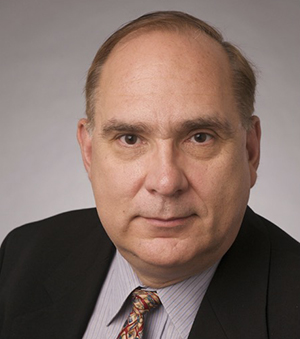
Portrait of John A. Serri, co-founder and CEO of EyeQue Corporation
John A. Serri. The eye chart never stood a chance.
150+Countries reached
~25Patents held
1980MIT Physics PhD
2015EyeQue founded

Today John Serri runs EyeQue Corporation, a small company in Newark, California, with an outsized claim: that the phone already in your pocket can measure the prescription in your eyes. He is the co-founder, Chairman of the Board, and CEO, and the pitch is as plain as the science behind it is dense.

The device is a clip-on eyepiece and an app. You look into it, line up two colored bars until they touch, repeat a few times, and the software works backward to your refraction numbers - the same figures an optometrist writes on a slip of paper. EyeQue registered the Personal Vision Tracker as a Class 1 medical device and licensed the underlying method from MIT. It won Best of Innovation at CES 2017, in the same electronics show that crowns televisions and drones.

What makes the story worth telling is not the gadget. It is the man aiming a physicist's toolkit at a problem the eyewear industry had left alone: the price and inconvenience of finding out what you need to see clearly.

A physicist's warm-up act

Before the plastic eyepiece there were three and a half decades of much larger machines. Serri earned a BS in Mathematics and Physics from SUNY Albany in 1975, then a PhD in Physics from MIT in 1980, working under Professor David Pritchard on state-to-state molecular collisions. His verdict on that apprenticeship is affectionate and unsparing: "David was tough on me - an incredible training, yet humbling experience."

From MIT he went to Bell Laboratories in New Jersey, and from there through a run of names that read like a history of American aerospace and telecom: AT&T, Lockheed Martin, Loral, Trimble Navigation. He designed secure networks for the U.S. government. He was one of the main architects and developers of Globalstar, one of the world's largest satellite mobile device networks - the kind of system that keeps a phone working in the middle of an ocean. Along the way he published more than fifteen peer-reviewed articles in physics, chemistry, and engineering, and spent time as a professor of computer science and astronomy.

He describes himself, cheerfully, as a physics nerd. The through-line across every job was the same instinct: take a hard measurement problem and find the clean route through it, whether the signal is a gas molecule bouncing off a crystal or a data packet crossing a rapidly changing network.

The question that started it

EyeQue began, as these things often do, with a friend and a question. In 2014 Serri met Tibor Laczay, who also runs Zenni Optical. Laczay put the problem plainly: if glasses can be sold online, why can't people also get their latest refraction numbers online? The two set a specific goal - an inexpensive device that works with a smartphone and lets anyone measure their own vision well enough to order eyeglasses.

Serri, by his own telling, underestimated it. "How hard could it be to build a little piece of plastic? Let's do it!" he remembers thinking. The plastic turned out to be the easy part. Turning a phone into an instrument accurate enough to trust with your eyesight took years, a licensing deal with MIT, and a technique borrowed from astronomy - the inverse of the Shack-Hartmann method, a way of measuring optical error that observatories use on starlight.

How hard could it be to build a little piece of plastic? Let's do it!
John Serri, on founding EyeQue

He founded the company in 2015 and took the roles of CTO and COO, then President in 2019, then CEO in 2021. It was, notably, a first startup - and he started it in his 60s. His response to anyone who thinks that is late: "Better late than never." His response to the idea of slowing down is blunter still: "I'm not ready to sit in a rocking chair; I still have too much energy!"

Building the team, not just the tool

For all the physics, Serri talks most warmly about the people. He runs a deliberately structured shop - weekly all-hands meetings, daily management syncs, individual status reports - and he frames the whole operation around a single promise. "I tell all of our employees that it's my goal to see them come out of EyeQue better than they came into EyeQue," he says. After decades inside enormous organizations, he seems to relish a company small enough that the mission fits in one sentence: help the world see more clearly.

He also brings a habit large companies rarely leave room for. Serri is a working keyboardist who has released several CDs, available on Amazon and iTunes. The man who reverse-engineered starlight optics to read your eyeglass prescription also, quietly, makes records.

There is one more detail that reframes the whole arc. Serri overcame dyslexia early in life before earning a physics doctorate from MIT. A learning difference at the start; a global vision-testing company at the other end. He has spent a career on the far side of problems that were supposed to be settled by people with more conventional paths.
The Trick

Astronomy, aimed at your eyeball

Observatories use the Shack-Hartmann method to measure how starlight bends. EyeQue runs it in reverse - turning the same optics into a self-administered refraction test.

1

Clip on

A small optical eyepiece attaches to the smartphone screen.

2

Align

You slide two colored bars until they line up, repeating across the field.

3

Compute

The app applies the inverse Shack-Hartmann math to your responses.

4

Refraction

Out comes an eyeglass-number estimate - no clinic required.

A clinic that fits in a shipping envelope

The pitch behind EyeQue is less about optics than about access. Most of the planet does not live within easy reach of an eye clinic, and for many people the barrier is not medical - it is the cost and the trip. Serri built the company as a telemedicine play from the start, pairing at-home hardware with an app and a data record you carry with you, so a refraction estimate does not require an appointment or a waiting room.

That framing is why the numbers matter more than the gadget. Reaching more than 150 countries is not a bragging point about sales; it is the whole thesis - that a cheap piece of plastic and a phone can go where a phoropter and an optometrist cannot. Serri puts the ambition in flat, unglamorous terms: "We launched EyeQue with the simple but ambitious goal of creating low cost vision testing using smartphones that just about anyone could afford."

The next chapter leans on the direction the whole industry is running: artificial intelligence. Serri has talked publicly about AI reshaping how vision is measured and tracked over time, folding pattern recognition into a category that has changed little in decades. For a man who spent his first career squeezing signal out of noise - molecules, satellites, networks - it is familiar ground with a new subject.

He is candid that he came to all of this late, and equally candid that he would tell a younger version of himself to start sooner. The regret is not bitterness; it is a recommendation. Spend years learning patience and logic and collaboration inside big organizations, he argues, and then go build something of your own. He simply wishes he had left more runway for the second act.

For now, the second act is the one that seems to fit him best. A small team. A single sentence of a mission. A measurement problem hard enough to be interesting and useful enough to matter. Serri, restless as ever, appears in no hurry to reach for that rocking chair.

Space science to eye care

1975

BS in Mathematics and Physics, SUNY Albany.

1980

PhD in Physics from MIT, studying molecular collisions under David Pritchard.

1980s

Joins Bell Laboratories; begins a long run across AT&T, Lockheed Martin, Loral, and Trimble.

1990s

Helps architect Globalstar and designs secure networks for the U.S. government.

2014

Meets Tibor Laczay, who pitches an at-home smartphone vision test.

2015

Co-founds EyeQue, licensing MIT's inverse Shack-Hartmann technology. Takes CTO/COO roles.

2017

The Personal Vision Tracker wins Best of Innovation at CES 2017.

2019

Becomes President of EyeQue.

2021

Becomes CEO; company completes its Series C round.

In His Words

The founder, unfiltered

"We launched EyeQue with the simple but ambitious goal of creating low cost vision testing using smartphones that just about anyone could afford."

"I tell all of our employees that it's my goal to see them come out of EyeQue better than they came into EyeQue."

"I'm not ready to sit in a rocking chair; I still have too much energy!"

"David was tough on me - an incredible training, yet humbling experience."

Footnotes

Five things that don't fit on a resume

01

He makes music. Several CDs of his keyboard work are on Amazon and iTunes.

02

His MIT thesis modeled gas molecules colliding with crystal surfaces.

03

EyeQue's test borrows the Shack-Hartmann method from astronomy and runs it in reverse.

04

Co-founder Tibor Laczay also serves as CEO of Zenni Optical.

05

He overcame dyslexia early in life, then earned a physics doctorate.

06

First-time founder - and he started the company in his 60s. "Better late than never."

Watch

On the record

Revolutionizing Eye Care with AI - John Serri's Vision Behind EyeQue John Serri - A Scientist's Life

Find John Serri