A payment is a small act with a long shadow. Someone approves it. Someone else waits for it. A bank clears it. An accounting system records it, perhaps after a human has copied a number from one screen to another. When everything works, the transaction disappears into the ordinary hum of business. When it does not, the back office suddenly has the entire company’s attention.
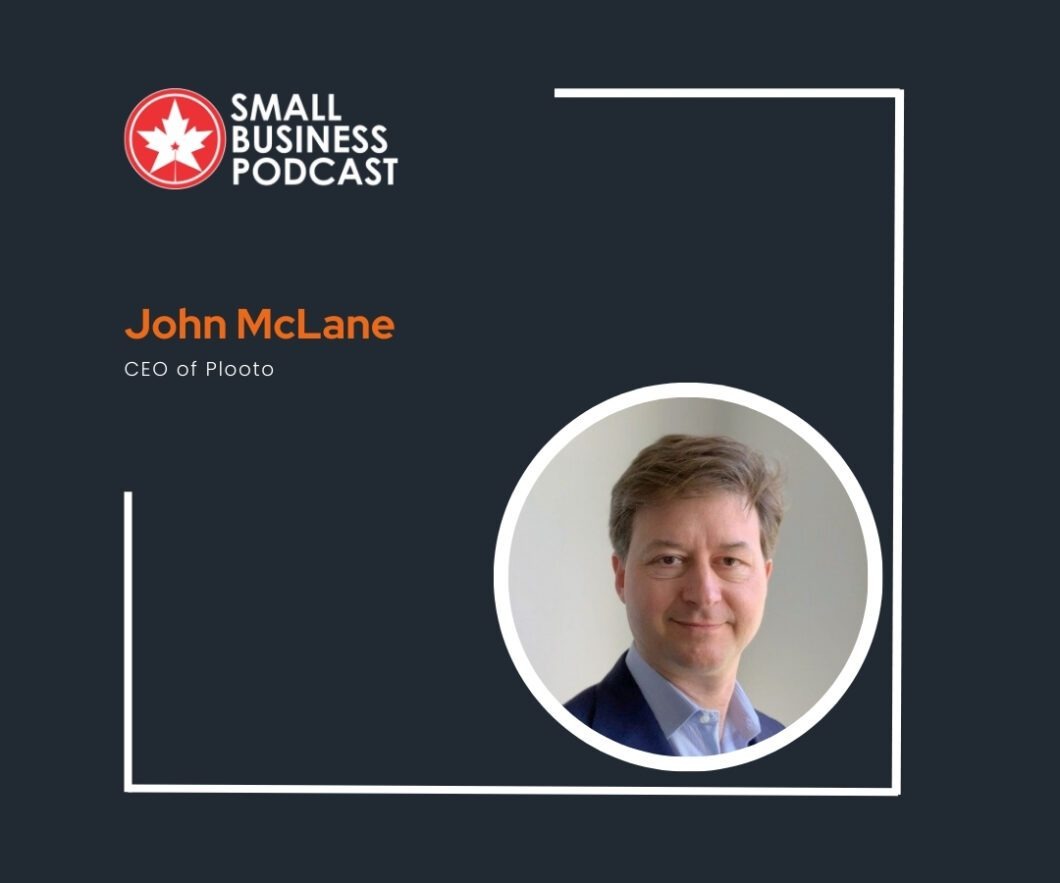
John McLane has built a career in that territory between invisibility and consequence. Since September 2024, he has served as chief executive of Plooto, the Toronto company that automates accounts payable, accounts receivable and payment workflows for small and medium-sized businesses and their accounting firms. He leads it from Menlo Park, California, which makes him a cross-border executive at a cross-border business, worrying about the movement of money before most of us have finished locating the right invoice.
The assignment is plain enough to say. Make it easier for smaller finance teams to know what is owed, what is approved, what has moved and what the books should show. The stakes arrive in less tidy form. A missed payment can strain a vendor relationship. A manual entry can become a reconciliation puzzle. A cash balance that is technically visible but practically stale can turn a routine decision into a guess.
01 / A useful kind of range
Before the ledger, there was the gallery
McLane’s route to fintech does not begin with a bank. It begins with art history at Carleton College, economics studies at Université Paris Dauphine, and early work around Christie’s and PaintingsDirect.com. One former colleague remembered him moving between quantitative analysis, art review, Perl programming and marketing campaigns. It is a charmingly early-internet list of duties, assembled before job descriptions learned to stay in their lanes.
That range matters because his later career can look, at first glance, like a sequence of costume changes. He became an engagement manager at McKinsey, working in private equity, consumer and organizational practices. In 2008 he joined Sverica International’s San Francisco office as a principal, evaluating investments and working with portfolio companies. He served as acting CEO and executive chairman of document-management company DocuLynx, then moved into corporate development at Epicor Software. Operating roles at mobile-marketing company Waterfall and software company Khoros followed.
The thread is not a particular industry. It is translation. Art needs context before it yields meaning. An investment case needs numbers turned into judgment. Acquisitions need ownership structures turned into working organizations. Software needs complex machinery turned into a customer experience that makes sense before the patience runs out.
“Plooto has fantastic potential.”John McLane on joining the company
McLane’s formal education added another layer. He earned an MBA from Wharton and an MA through the University of Pennsylvania’s Lauder Institute, a program built around international management and language. His public profile lists English and French at native or bilingual proficiency and Spanish at professional working proficiency. An American executive who has lived in France now leads a Canadian company with customers in Quebec and the United States. Geography, in his case, has become operating equipment.
02 / The Trustly years
Learning to make speed behave
Payments became the center of McLane’s work at Trustly. He joined the open-banking payments company’s Americas operation in 2019, served as president of North America, and in 2021 was appointed global chief operating officer. The job stretched across Europe and North America, with responsibility for commercial operations and the company’s people agenda. During his tenure, Trustly reported that revenue grew by more than thirty times, the business reached profitability and its North American position became a leading one.
Growth statistics tend to arrive polished. Operations is the unpolished work hiding behind them: hiring, controls, bank connections, customer support, compliance, settlement and the daily negotiation between a product’s promise and a system’s limits. McLane’s later comments about payment speed reveal an operator’s instinct for what the headline leaves out.
In a 2026 conversation with an accounting-firm owner, he discussed faster transfers as a risk-management problem. The technology may be capable of moving the experience forward before money has fully cleared, but somebody must carry the exposure. That somebody cannot be wished away by a smoother button. Speed is useful only when the plumbing, permissions and economics can keep up.
The automation idea, illustrated
Conceptual illustration, not measured Plooto customer data. The point is the sequence: connect approval, payment and reconciliation so information travels with the money.
This is the distinction behind much of business software. Automation can remove keystrokes, but the valuable part is the confidence it creates. A payment with a visible status, an approval trail and a matching accounting entry is more than a faster chore. It is a smaller uncertainty. Multiply that across a month of vendors and invoices and the back office begins to resemble a management system rather than an archaeological dig.
03 / The Plooto chapter
A company built around the uncelebrated hour
When McLane arrived at Plooto, the company was already nine years old and served more than 10,000 organizations across North America. Its software connected with QuickBooks, Xero and NetSuite, and its product covered bills, invoices, approvals, domestic and international payments, and reconciliation. The customer was often an owner or compact finance team whose time had been divided into fragments by administrative work.
He inherited a company in transition. Founder Hamed Abbasi had stepped down earlier in 2024, and co-founder Serguei Kloubkov and finance executive Wajdi Ghoussoub had led as interim co-CEOs. Plooto had also reduced its workforce and reshaped its leadership team. McLane took charge on September 24 with a clear public ambition: expand the number of businesses Plooto supports while improving the solution delivered to them.
His language repeatedly returns to accountants and bookkeepers. That is strategically sensible. These professionals sit close to the financial habits of thousands of smaller companies, and they do not recommend a payments tool casually. Their name travels with the advice. McLane has called that trust the foundation of Plooto’s growth, a claim with more texture than the usual celebration of distribution. A channel partner is useful. A trusted interpreter is harder to replace.
The company’s product moves in the same direction. Pay by Card lets businesses use commercial credit cards for domestic vendor payments, adding a short-term working-capital option while vendors receive funds through their normal channel. Accounting integrations aim to remove duplicate entry. Approval workflows keep more than one set of eyes on a transaction. The product’s glamour, if one insists on finding some, lies in making an evening spreadsheet unnecessary.
“The trust they’ve placed in Plooto to move money safely and precisely is the real foundation of our growth.”John McLane, after Plooto’s 2025 Deloitte ranking
In 2025, Plooto ranked 233rd on Deloitte’s Technology Fast 500 after reporting 348 percent growth during the measured period. Recognition is pleasant; the more revealing signal is what McLane chose to praise. He pointed to the accountants and bookkeepers who put their reputations behind the software. It is an operator’s answer, because reputation is the invisible balance carried beside every payment.
04 / The larger wager
What disappears when finance works
McLane’s aspiration for Plooto is expansion across small and midsize finance teams and the accounting firms that serve them. Yet the more interesting unit of growth may be the uncelebrated hour. It is the hour no longer spent entering the same invoice twice, tracing an approval through email, or comparing a payment list against the ledger. Nobody frames that hour. The owner simply gets it back.
His biography makes him a fitting steward for that wager. He has been an investor examining companies from the outside, an executive rebuilding them from the inside, and an operator responsible for systems that move money across borders. He has also stood on the other side of the abstraction, programming and reviewing art inside an early online business. The career offers a quiet argument for leaders who can look at a process as both a model and a lived annoyance.
Plooto’s challenge is familiar to every growing software company. It must add capability without adding confusion, move faster without disguising risk, and scale without treating smaller customers as miniature enterprises. McLane’s public record suggests that he understands the machinery. His customer language suggests that he remembers why the machinery exists.
The back office will probably never become fashionable, which may be its charm. Fashion loves novelty. Finance teams love an accurate balance, an approved payment and a clean close. McLane is betting that software can turn those modest desires into a durable company. If it works, the proof will be almost invisible: money where it should be, records that agree, and somebody leaving work on time.