The ceiling at John Gallegos’s agency has 322 umbrellas. The company has counted them, which suggests a certain commitment to the joke. An advertising office needs somewhere for its ideas to go; overhead appears to have been taken. In the less decorative business of deciding who gets to work on what, Gallegos has spent years trying to create more space.
He founded Grupo Gallegos in 2001. Its starting territory was Hispanic advertising, a field in which he believed creativity deserved a larger role. By 2017, he was assembling UNITED COLLECTIVE, adding disciplines and widening the assignments his business could take on. Along the way came a beer investment and, later, a sports enterprise with courts, tournaments and a digital platform.
Read those interests as separate entries on a biography and they seem an eclectic collection. Follow the people using them and a pattern emerges. Gallegos keeps working at the point where an audience becomes a community, with its own habits, frustrations and reasons to show up. The question running through his businesses is what to build once you have paid attention.
A specialty with an exit door
Gallegos’s objection to the advertising business began with the work. In his account of entering the industry, reaching Hispanic consumers in Spanish occupied too much of the conversation. Creative ambition and storytelling received less attention than he thought they deserved. Starting an agency gave him a way to make that dissatisfaction concrete: he could decide what sort of work the company would pursue.
There is a career problem hidden inside that decision. Become known for understanding a particular audience and clients can begin to treat that understanding as your entire range. Expertise earns the invitation, then threatens to determine the seating plan forever. Gallegos has been unusually direct about wanting room beyond it.
“I’m Hispanic, and I’m in advertising.”
John Gallegos
His formulation allows both parts of the sentence to stand. He has argued that cultural sensibilities need professional skills alongside them, and that Hispanic talent can contribute to work reaching the wider consumer landscape. The point carries a practical demand: judge the thinking and the execution, while recognizing the experience that helped produce them.
The agency accumulated industry recognition, including multicultural agency honors from Ad Age in 2007 and Adweek in 2008. Awards gave the work a public record. The more interesting management question was what to do with the reputation: keep refining a specialty, expand its remit, or build enough new capability that the distinction became harder to maintain.
Gallegos chose expansion. That choice would require more than an argument about the changing country. A client giving an agency a larger assignment expects it to answer the phone when the question concerns a website, a press inquiry or a production schedule. Philosophies rarely have a useful answer about delivery dates.
Five names, one larger assignment
UNITED COLLECTIVE arrived in 2017 with five businesses. Grupo Gallegos became GALLEGOS United. Digital agency CANVAS and public relations firm ROX joined a structure that also included business planning through POLY and production through LUNA. Gallegos’s proposal allowed clients to use the group together or engage particular specialists.
The arrangement made his broader ambition legible. A creative agency could originate an idea; complementary teams could help it become something people actually encountered. Each discipline retained its identity while contributing to a larger job. The word “collective” came with an operating question attached: could the pieces collaborate without becoming indistinguishable?
The California Milk Processor Board offered a revealing assignment. The agency had worked on its multicultural marketing since 2005. In 2018, its work as lead agency of record appeared in a statewide campaign with children treating everyday childhood grievances as material for adult conversation.
One child faced disappointing allowance negotiations. The humor depended on a familiar reversal: children taking their own problems as seriously as grown-ups take theirs. It gave parents a way into the campaign through recognition. Gallegos’s team was handling a broader audience with the same need for a particular, believable human detail.
The scope extended across broadcast, digital, social and retail. Within the group, CANVAS handled website and search work, while ROX handled public relations. Here was the founder’s expanded structure doing an identifiable job. A client relationship that began with a narrower remit had become a test of the whole arrangement.
It also made the stakes of expansion clearer. Claiming to understand a changing audience is a beginning. Delivering work across languages and channels requires colleagues who can turn that understanding into many different forms. Gallegos had built a business whose broader promise depended on other people’s specialties.
The client on the other side of the table
SouthNorte put Gallegos in a different position. He was a founding partner in the beer business and increased his investment in 2019, becoming its majority owner. An advertising executive accustomed to advising brands now had more of his own capital riding on one.
The brand connected Mexican influences with American craft brewing. For Gallegos, that offered a familiar cultural territory and an unfamiliar set of obligations. A brewer, a sales operation and a distribution plan have to keep working after the campaign presentation ends. Ownership gives the marketing conversation an additional, rather persistent participant: the operating business.
Head brewer Ryan Brooks was central to that proposition. Gallegos credited Brooks’s experience across the border with informing the products. Cultural understanding, in this instance, entered the drink itself. The marketing had something tangible to describe before it needed to invent an attitude.
By 2020, SouthNorte was launching its first major advertising campaign, “A New Frontier in Beer,” across television, streaming and social media. The additional investment helped finance that effort. The sequence matters: product development and recognition preceded the larger advertising push. Gallegos was applying his professional tools to a business in which he had accepted an owner’s exposure.
SouthNorte later expanded into ready-to-drink tequila cocktails. It was another move beyond the original product category, while retaining a connection to the brand’s Mexican influences. For a founder whose agency had already changed its name and scope, the familiar challenge returned in a can: how far can a recognizable idea travel while remaining useful?
A different kind of replay
With AIM Sports Group, Gallegos’s attention turns to a community whose demands are visible from the sidelines. Young athletes need places to compete. Coaches need information. Families want to watch, remember and follow what happens. AIM combines venues, events, technology and media around that experience.
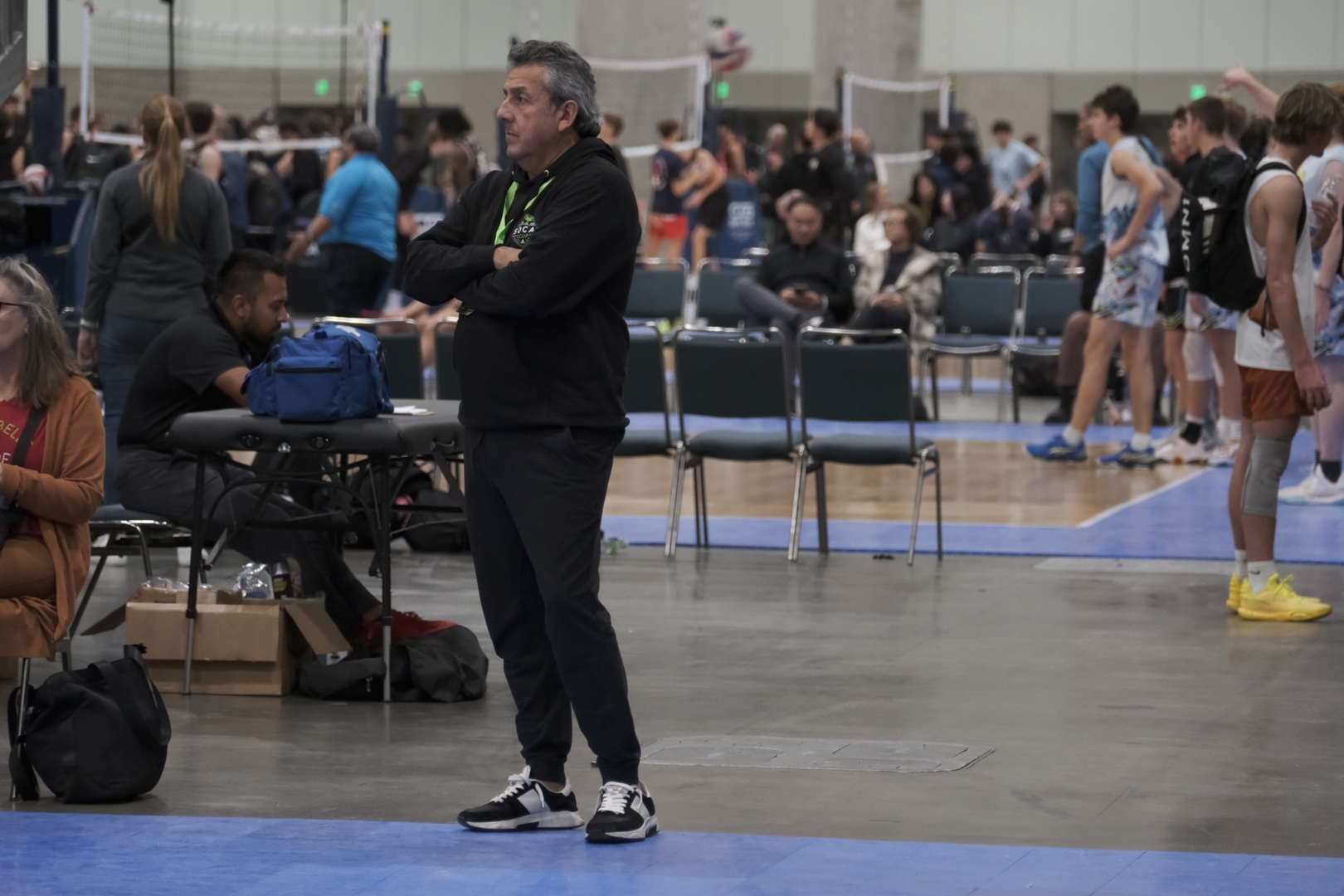
AIM’s Sportsplex in Seal Beach occupies 115,000 square feet. Its size establishes the physical side of the undertaking: courts, games and people arriving in the same place. The digital side extends the experience beyond the building, giving a match a second life as footage, individual highlights and player information.
AIM+ launched in October 2025. The platform brings together replays, statistics and athlete profiles. Its usefulness rests on a recognizable family problem: watching a game and recording it can become competing assignments. A parent who is checking a screen is, at that moment, looking away from something happening in front of them.
Automated recording offers to take over part of that work. Players can return to their performances, coaches can review them, and families can keep the moments they want. These are concrete jobs. The technology earns its place through what someone can do with the result after the noise of a tournament has subsided.
Company-reported totals at the announcement of the JVA partnership.
In May 2026, the Junior Volleyball Association announced that AIM+ would be its digital partner through 2028. Gallegos reported that the platform had already generated more than two million highlight clips and created profiles for over 30,000 athletes. Those figures describe activity at that moment, rather than a guarantee about what comes next.
The partnership takes the business beyond a single facility’s walls. It also gives Gallegos another version of the problem he has been pursuing in advertising: a group of people already has reasons to gather. What additional service would make the experience more valuable to them?
Room for somebody else to lead
At UNITED COLLECTIVE, the next stage has included widening leadership. In October 2025, Gallegos appointed Paul Miser President and Chief Strategy Officer, with responsibility for strategy, growth, client services and innovation. His explanation emphasized the connection between creative work and commercial results.
That appointment belongs beside the acquisitions and new ventures. Building a larger business involves deciding which responsibilities someone else should carry. A founder’s attention remains finite even when his portfolio acquires another company name. The work has to become repeatable without requiring him to conduct every conversation personally.
There is an appealing consistency in the questions Gallegos keeps taking on. How much room should a specialist have? Which capabilities make a bigger promise credible? What can a community use once the advertisement is over? His answers have taken different forms, from an agency group to a beverage investment to volleyball video.
The variety can distract from the discipline underneath it. Each expansion asks him to make cultural understanding operational: hire for it, invest in it, build something around it and accept the consequences. At the agency, the umbrellas are already overhead. The harder work remains on the floor.