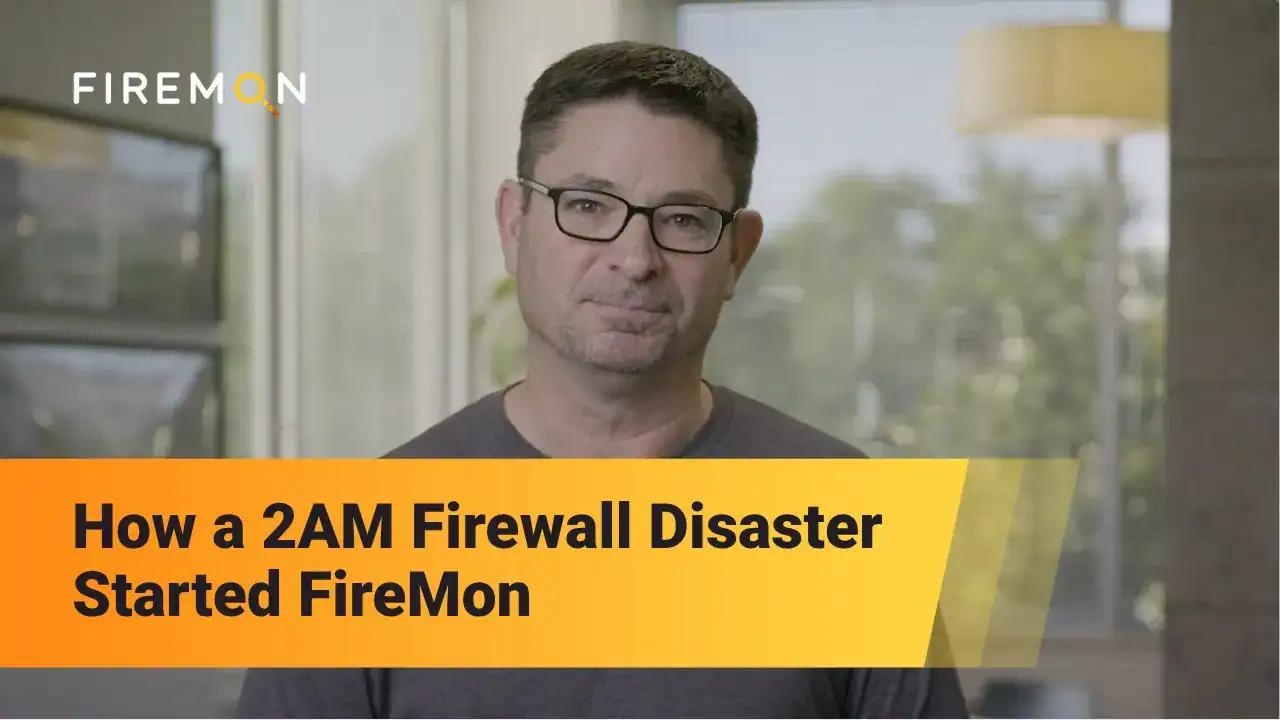
At two in the morning, a firewall can acquire a remarkable number of supervisors. Jody Brazil remembers a phone call with 25 vice presidents looking for someone to blame. A customer’s network traffic had stopped getting through. The equipment responsible for letting it pass was the obvious suspect. Brazil, who worked at FishNet Security, had to find the explanation.
The awkward part was that the firewall was obeying its instructions. A policy rule was blocking traffic that the business needed. In the account he has returned to over the years, the incident became the beginning of FireMon: a practical response to a failure that buying a functioning firewall had done nothing to prevent.
There is a certain comedy in a room full of executives being defeated by a rule. For the person responsible for restoring service, the joke arrives considerably later. Brazil began building tools to track changes, giving administrators a way to see what had happened before the telephone assembled another committee.
A physics degree, then the untidy world
Brazil graduated from Kansas State University in 1995 with a bachelor’s degree in physics. Twenty years later, he returned to give the Ernest Fox Nichols Distinguished Alumni Lecture. His title was “Physics: The Curriculum of the Entrepreneur.” He credited his education with laying the foundation for his career, and argued that physics could prepare future entrepreneurs.
The pairing is more revealing than an honorary return visit might suggest. Physics asks what a system actually does. A network asks the same question under less agreeable conditions: somebody needs the answer quickly, and an application may be unavailable while you work it out. Brazil’s subsequent career can be read as a long attempt to make complicated systems easier to inspect.
Before FireMon, he founded Beta Technologies, a network services and internet application development company. At FishNet Security, he became chief technology officer. He implemented a load-balanced deployment of Check Point firewall software in 1997, then engineered a solution for transferring criminal-history data over the internet with FBI approval.
These were working systems with consequences beyond a demonstration. They put him close to the customer’s predicament: the network must permit useful work and restrict unwanted access, often at the same time and through the same equipment. That leaves very little room for instructions whose meaning nobody has checked.
The invention was a way to remember
The customer outage occurred in 1997. By 2001, the change-monitoring application had emerged as FireMon. In 2004, Brazil and Gary Fish formed Secure Passage to continue its development and marketing. Separating those dates helps explain the business: the problem, the tool and the company arrived in stages.
The first useful question was small. What had changed? A second followed closely: who had changed it? A machine’s current configuration could tell an engineer what instructions existed. The history could tell the engineer how those instructions had arrived. That difference matters when an investigation begins after the trouble.
Brazil’s early work also included a graphical view of firewall policy changes in 2001 and a rule-usage analysis application in 2004. Those tools addressed two distinct inconveniences: understanding a change, and understanding whether a rule was serving a purpose. Neither problem required an attacker to become expensive.
In April 2009, Secure Passage named him president and CTO. The announcement described his responsibilities in policy and strategic direction, putting the technical builder in charge of more of the organization around the product. The business grew around a task that sounds modest until somebody has to perform it across a sprawling network.
- 1997A customer outage prompts change monitoring.
- 2001The application emerges as FireMon.
- 2004Brazil and Fish form Secure Passage.
An argument with the security industry
By March 2014, Brazil was publicly warning security vendors about DevOps. Developers and operations teams were learning to deliver software faster through collaboration, virtualization and automation. Security risked being left outside that arrangement. A product that required every task to pass through its own screen could become an obstacle to the work around it.
His proposed remedy was concrete: publish usable application programming interfaces so other systems could manage security products. He argued that a vendor’s interface mattered less than its security engine and its ability to operate within an enterprise. It was a pointed position for somebody selling management software. Make the controls accessible, and let other people build useful processes around them.
The following year, he wrote about the continuing role of firewalls even as networks stretched beyond the traditional perimeter. Mobility, virtualization and cloud computing changed the setting, but organizations still needed to limit access. His position allowed for a changing industry without pretending that every older control had become irrelevant overnight.
These pieces show an executive with a fairly consistent professional preoccupation. Technology gets introduced; people must operate it; the business expects both speed and restraint. His attention keeps returning to the work between those demands. A product launch is brief. The configuration it leaves behind can enjoy a much longer career.
The award, and the trip back to Kansas State
FireMon’s commercial progress made that unfashionable work visible. In 2014, the company reported doubling revenue and reaching more than 1,000 customer deployments across 50 countries. Insight Venture Partners acquired a majority interest that year. Brazil and Fish had taken a tool for inspecting security changes into a business used across national borders.
In June 2015, Brazil received EY’s Entrepreneur Of The Year award in technology for the Central Midwest region. It was a regional technology award, a specific recognition of the company-building he had done. That April, FireMon had also acquired Immediate Insight, adding event analysis to its security intelligence work.
By September, Brazil was back at Kansas State speaking about entrepreneurship. The journey from a physics degree to a lecture on founding companies had an appealing circularity. The lecture also made his educational allegiance explicit: he saw value in the habits of inquiry he had learned before the security industry became his working world.
The milestones make a useful pause in his story. There was a growing company, an institutional investor and a regional award. A conventional founder profile could comfortably stop there. Brazil’s career instead took him toward another version of the same operating problem, in infrastructure that could change faster than the old administrative routines.
customer deployments across 50 countries
He left. The problem came along.
In 2018, DisruptOps introduced a cloud-management platform with Brazil as CEO. Its founding group included Brandy Peterson and Securosis principals Rich Mogull, Mike Rothman and Adrian Lane. Rally Ventures led a $2.5 million seed round, with Gary Fish among the participants. Several familiar relationships had followed Brazil into new territory.
The product’s premise was to put guardrails around cloud infrastructure. Teams needed to find and fix configuration problems while keeping the pace that made cloud computing attractive. Exposed storage, overly open network access and unnecessary resource allocation were among the mistakes the company set out to address.
That ambition had a family resemblance to the work at FireMon. The environment had changed, and so had the tools. The difficulty of translating an organization’s intentions into the behavior of its infrastructure remained. DisruptOps put automatic assessment and enforcement closer to the activity of cloud teams.
Then came a reunion. In 2021, FireMon acquired DisruptOps and Brazil returned as CEO. “We have the same missions,” he said. The transaction brought his newer cloud work into the company he had co-founded years before. His departure had produced something the original business could use.
“We have the same missions.”
Jody Brazil, on FireMon and DisruptOps · 2021
Golf enters the corporate record
Brazil lists family, effective security management, team-building and golf among his interests. The combination reads like a very compact calendar. Golf, however, has an unusually concrete place in his business history.
Gary Fish raised the idea of combining FireMon and DisruptOps during a round in early July 2021. The acquisition closed on August 30. Many executives describe golf as useful for relationships; relatively few can point to a round that preceded their return to the CEO’s office.
The episode also says something about the continuity of Brazil’s professional connections. Fish was there when Secure Passage formed, participated in DisruptOps’ seed funding and suggested the combination. Peterson, another FishNet veteran, helped build DisruptOps. The companies changed, while some of the people working through the problems together remained familiar.
Brazil’s own description of his interests includes “building great teams, and playing golf.” In this case, the two activities briefly shared an agenda. There is no need to invent an elaborate personality theory around that fact. The documented version is already rather good.
The next version of the old question
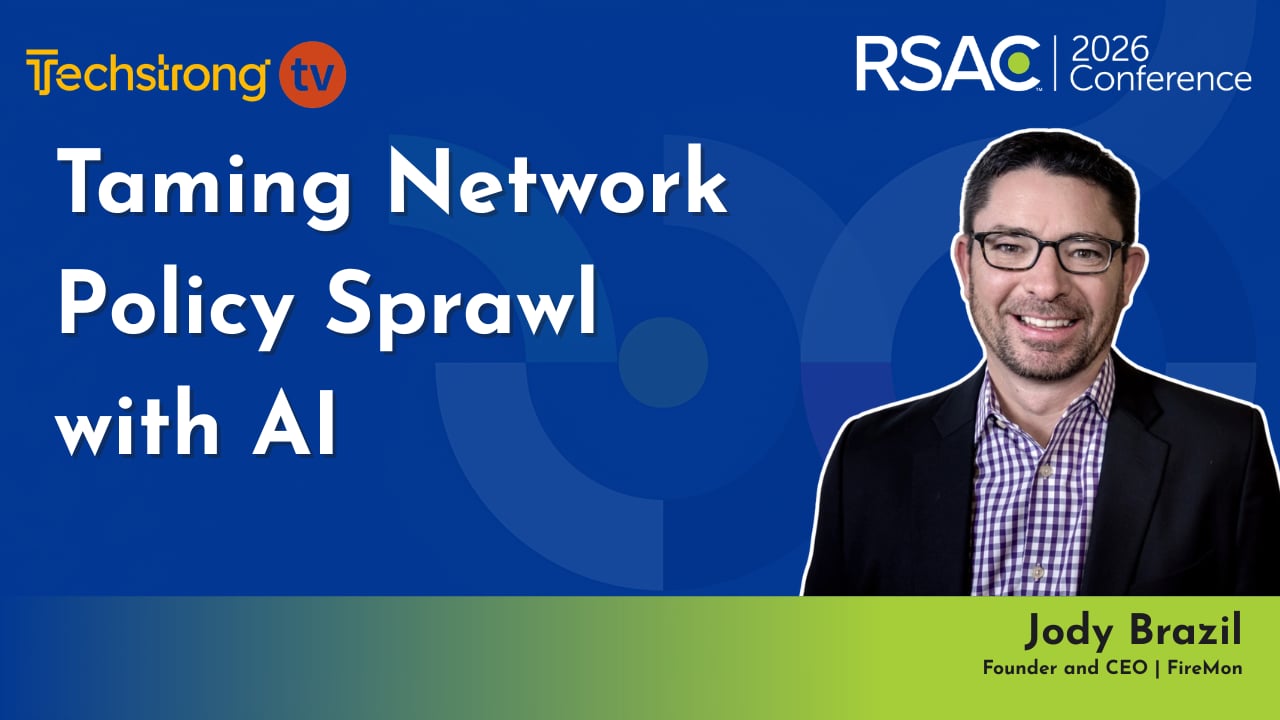
In February 2026, Brazil described a conversation with John Kindervag about making Zero Trust work in existing networks. His emphasis was on what happens after the design: keeping the intended restrictions aligned with real firewalls, cloud controls and changing policies. The FireMon and Illumio integration brought segmentation and network policy into the same operating picture.
He framed governance as continuing work. A network does not stop changing because an architecture has been approved. Rules and controls have to keep matching the intended relationships as applications move and environments evolve. The aspiration is a reliable connection between what an organization decides and what its infrastructure permits.
That is why his present-day vocabulary includes a security policy control plane: a way to validate and coordinate policies across different enforcement systems. It is an extension of an old concern. An individual device can be doing its assigned job while the combined result disappoints everyone depending on it.
FireMon’s Cyber Confessionals gives that concern a human setting. The series collects practitioners’ accounts of mistakes, outages and lessons, with Brazil’s own late-night call among them. The origin story remains useful because it leaves the engineer in the frame. Somebody has to understand the change after the meeting ends.
Three decades after the incident that prompted his early tools, Brazil still has a remarkably serviceable question. What changed? It fits a troubleshooting session, a cloud deployment and a founder’s return. At two in the morning, it also has the considerable advantage of being short.
Keep the conversation going
Explore FireMon, follow Jody Brazil on LinkedIn, or read his 2014 argument for security APIs and 2026 reflection on Zero Trust with John Kindervag.
For the return journey, read the DisruptOps acquisition interview. For more voices from the work itself, listen to Cyber Confessionals or watch Brazil’s security policy control plane discussion.