The firewall had an excellent view of the office. Unfortunately, the work was leaving. Employees were connecting from elsewhere; applications were moving into cloud services. A security arrangement built around a building was being asked to protect a business that increasingly lived outside it. Perimeter 81’s founders noticed the mismatch before the pandemic turned it into everyone’s problem.
- Cloud-managed security for workers, private applications, and internet access.
- Customers helped push the product beyond remote access into corporate networking.
- A $1 billion funding valuation in 2022 preceded a roughly $490 million acquisition agreement in 2023.
- The technology now sits inside Check Point’s SASE business.
The office was already emptying
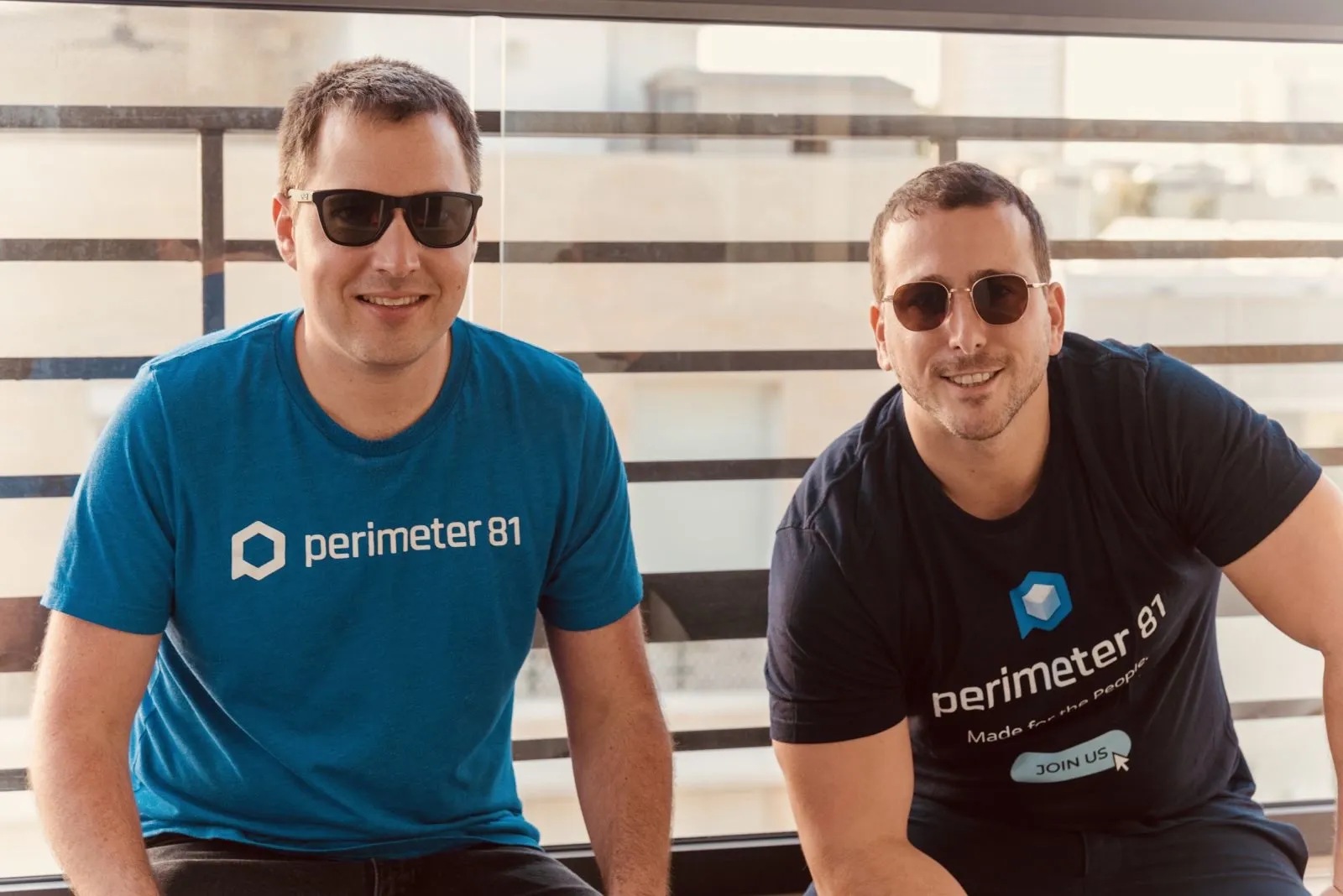
Amit Bareket and Sagi Gidali met as students at Tel Aviv University in 2012. They launched the consumer service SaferVPN in 2013, then founded Perimeter 81 in 2018. Their second venture addressed a less leisurely question than a personal VPN: how does a company decide which employee may reach which resource when neither stays put?
The founders brought complementary experience. Bareket had worked in software engineering and served in Israel’s Unit 81 cyber intelligence group. Gidali had worked in user experience. That pairing mattered to the proposition: networking knowledge joined to the belief that security software should be usable. Administrators, after all, have enough puzzles without their own console volunteering another.
The customers rewrote the brief
By late 2019, the company said more than 81% of its customers used Perimeter 81 as their secure corporate network, rather than only for zero trust access. This was a revealing distinction. Customers were asking the product to organize more of their working environment, and requesting additional security features. The company’s own account connects that feedback to its SonicWall partnership.
SonicWall led a $10 million funding round and signed a commercial OEM agreement. In February 2020, Perimeter 81 announced a SASE platform combining its networking service with SonicWall’s cloud security capabilities. The trajectory ran from connecting people securely toward combining connectivity and protection. The customers had supplied a broader job description.
“The internet is the new corporate network”
Amit Bareket, in a 2021 CTech interview
An invitation to one room
The working idea is least privilege. A successful login should give someone access to the resources their job requires. It should not automatically grant a tour of everything nearby. Perimeter 81’s application access tools apply identity-based permissions; its agentless option gives access to supported applications without installing a dedicated endpoint client.
Identity + device
Permission check
Approved resource
Conceptual flow, not a deployment diagram.
For administrators, the platform brings networks, gateways, users, and policies into a cloud management console. Dedicated gateways and encrypted tunnels connect resources. Firewall as a Service and secure web gateway functions address traffic controls and internet threats. Private access and internet protection are related jobs, but buying one does not settle every requirement for the other.
The customer stories make the market tangible. Postman replaced open-source VPNs with zero trust access. Kustomer replaced a hardware VPN with cloud-based remote access. Other published references include Aqua Security and Whisky Auctioneer. Different businesses, similar administrative friction: people need reliable connections, while IT needs permissions it can change without nursing another appliance.
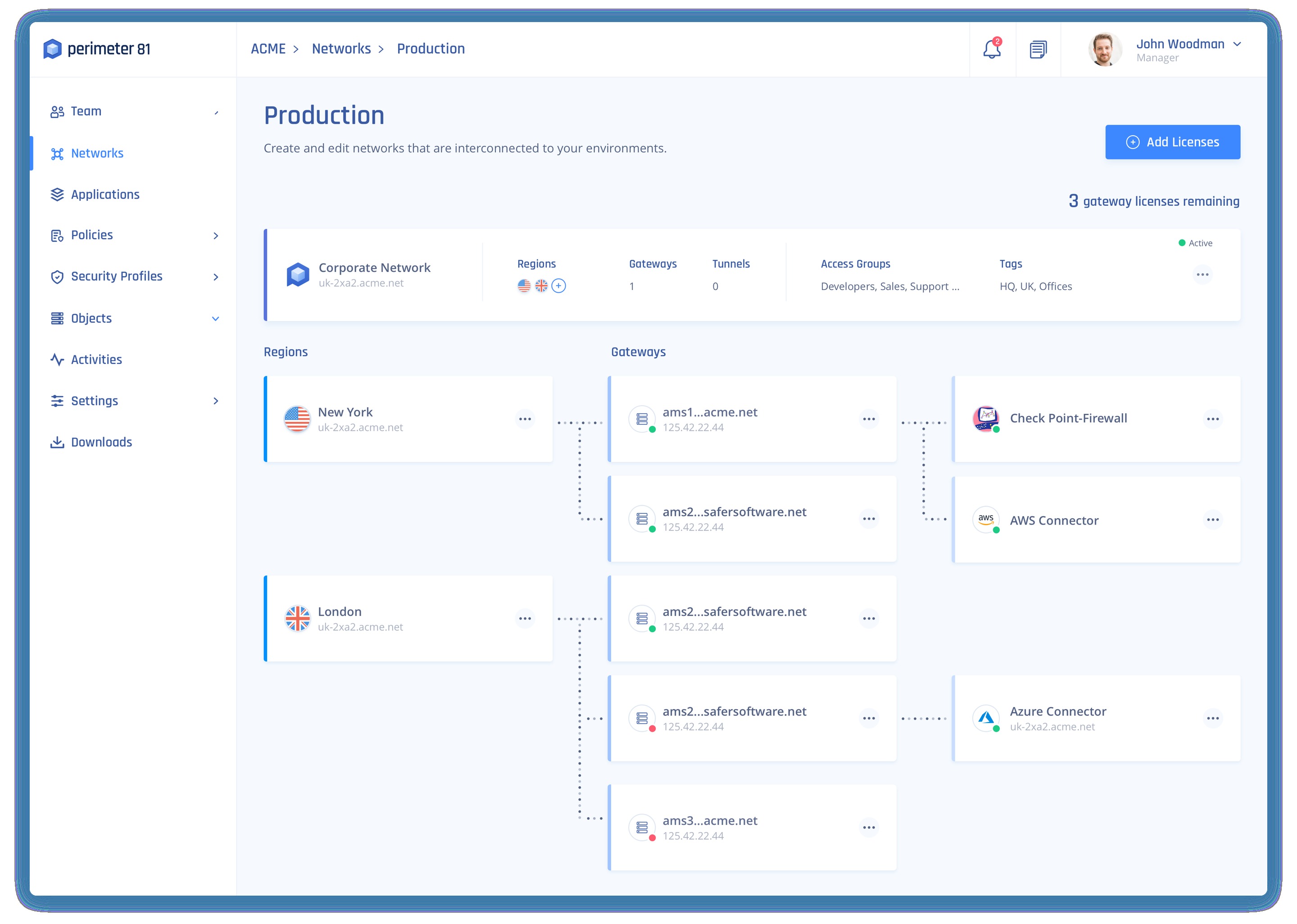
This is a crowded market. Zscaler also connects authorized users to applications through its Zero Trust Exchange. Cato combines networking and security on a cloud backbone. Perimeter 81’s case rested on accessible administration and converged network controls; Check Point added its wider security portfolio. The distinction is a product approach, not evidence that rivals cannot perform the same jobs.
Two prices, two different transactions
In June 2022, a $100 million Series C led by B Capital valued Perimeter 81 at $1 billion. The announcement put its customer count near 2,400. In August 2023, Check Point announced an acquisition agreement worth approximately $490 million, cash-free and debt-free. The deal closed on September 13; Check Point reported more than 3,000 customers and over 200 employees.
A funding valuation and an acquisition agreement measure different transactions. Neither bar represents revenue or investor returns.
The two prices invite gossip; the record supports a narrower conclusion. A venture financing valuation is different from an acquisition price. The announcements do not explain every shareholder’s outcome. Check Point’s stated rationale was to strengthen secure access for distributed organizations and integrate Perimeter 81’s capabilities into its Infinity architecture.
The operating business sold subscriptions, directly and through partners. Historical price cards listed $8, $12, and $16 per user per month, plus $40 per month per gateway. Those are historical figures, not a current quotation. They reveal the budgeting wrinkle: count the people and the network infrastructure. Add security options, support, contract terms, and the work of migration.
The useful part to steal
Perimeter 81’s founders also described a problem inside their own business. Third-party analytics tools failed to give them the customer visibility they wanted. They built an internal system called Jarvis. Bareket initially worried about resources; venture funding made the investment possible. The transferable lesson is to identify the missing decision-making information before commissioning another dashboard. Building your own requires money and people to maintain it.
For a security buyer, the equivalent discipline is a measured pilot. Check whether the identity provider, devices, applications, and routing behave as required. Test ordinary work and disconnections. An isolated environment that cannot depend on cloud connectivity needs a different design; a poorly maintained permission list remains a poorly maintained permission list inside a handsome console.
A new name, more moving parts
The product continued after the acquisition. June 2024 iOS release notes recorded the Harmony SASE rebrand. In May 2025, Check Point announced data residency options in India and Australia. Its September 2026 update added a consolidated public API and generally available file access controls; browser and workforce AI security integration remained in early availability. The office boundary keeps moving. So does the list of things crossing it.