A hot chicken and a melting ice cream make a rather good examination paper for a software engineer. Both need to reach the same front door. Neither is interested in your elegant architecture. During JJ Zhuang’s years working on Instacart’s fulfillment systems, this was the sort of problem his team had to accommodate: the untidy, perishable world outside the computer.
By then, Zhuang had already helped build an email app that became Outlook Mobile. He understood the peculiar bargain of useful software. Enormous effort goes into making somebody else’s ordinary Tuesday a little less troublesome. The customer rarely applauds the infrastructure. Usually, the customer has other things to do.
That bargain runs through his career, from Zimbra to Microsoft to Instacart, and into Pretty Good AI, where he is co-founder and CEO. The products have changed. So has the machinery available to build them. The question underneath is remarkably durable: how much work can you remove from somebody’s day?
An engineer takes an unexpected turn
Zhuang grew up in Shanghai, graduated from Shanghai Jiao Tong University and came to the United States after college. His training was in mechanical engineering. Software entered the picture by chance, as he describes it. The resulting career is a useful reminder that a degree can be a starting point without becoming a set of handcuffs.
His early professional record includes architecture work at Openwave, followed by Zimbra and roles within Yahoo and VMware. Those names describe a period when email was being rebuilt around the browser, the smartphone and the expectation that work should follow you everywhere. It was a lucrative promise with a slightly menacing aftertaste. Wherever you went, your inbox would be delighted to join you.
In December 2007, he explained Zimbra’s move to the Jetty server. The problem was specific: keeping requests open could consume too many computing resources. He laid out why Jetty’s approach freed resources while limiting changes to existing applications. It is a revealing piece of technical writing. He moved from a user-facing irritation, delay, to the engineering choice meant to reduce it. The fashionable name of the technology mattered less than the work it allowed the team to avoid.
Before Outlook, there was an iPhone to admire
In July 2008, Zhuang was writing about Zimbra Mobile for the iPhone. The delight was quite unembarrassed. He liked the screen, the attachments, the meeting invitations and the way messages arrived. His demonstration moved through setup, synchronization, calendars and contacts. The glamour of the new device was accompanied by the practical business of getting everything onto it.
That post identified him as Zimbra Mobile’s lead developer. Another, published in April 2009, identified him as lead developer for Zimbra Desktop. Here the engineering trick was to develop a desktop client and an enterprise server together, sharing more than 95 percent of their code. A substantial server could, with the right adjustments, serve an audience of one.
He explained the benefits in terms of development, maintenance and the effort required of users. Familiarity had value. People moving between the browser and desktop versions would not have to learn a different interface. Offline access mattered, too. An email client ought to remain useful when an aircraft, or an uncooperative connection, interrupted the internet.
“We didn’t do this just to be cool,” he wrote. It is a pleasingly economical defense against a recurring occupational hazard. Engineers can enjoy a clever solution. The person opening the application would quite like to get on with the day.
“We didn’t do this just to be cool.”
JJ Zhuang, writing about Zimbra Desktop, 2009
The app that changed its name
In 2013, Zhuang co-founded Acompli with Javier Soltero and Kevin Henrikson, serving as chief technology officer. The three brought experience in enterprise software to a small-screen problem: email on a phone still needed to support actual work. Reading a message was only the beginning. Meetings, files and the next action had to fit into the same small rectangle.
Microsoft announced the acquisition on December 1, 2014. Its explanation emphasized an app that brought different email services together and helped people manage their inbox, schedule meetings and work with attachments. Acompli had found a problem that was both ordinary and consequential. Almost everybody understood it without a presentation.
On January 29, 2015, Microsoft announced Outlook for iOS and a preview for Android, built from Acompli’s code base. The new apps worked with Microsoft services as well as Yahoo Mail, Gmail and others. A small company’s software had acquired a familiar name and a much larger stage.
Zhuang stayed at Microsoft, becoming a Distinguished Engineer and working on Office 365 app technology. Years later, marking Outlook Mobile’s tenth anniversary, he recalled the journey from a tiny startup to the Outlook launch with obvious affection. The memory he chose to celebrate was collective: what the team had made together.
The product carried on. The name on the screen changed.
A partnership with room for disagreement
Henrikson is a recurring character in Zhuang’s working life, rather than a co-founder confined to one chapter. They met at their first Silicon Valley jobs and, by chance, shared an office. Both had studied mechanical engineering before moving into software. Their backgrounds differed: Shanghai for Zhuang, a California pig farm for Henrikson.
At Instacart, the pair led fulfillment engineering. The company described them as an engineering odd couple. Zhuang’s explanation was practical: running a technical organization takes several kinds of ability, and the partnership gave each person room to develop and use his strengths.
There is a useful distinction here between hiring people you resemble and finding people you can work with. Similarity is immediately comfortable. Complementary judgment can be more productive over the years. Their repeated collaborations give that argument a concrete shape, extending from Acompli and Microsoft through Instacart and now Pretty Good AI.
Instacart also supplied an unusually direct remedy for engineers becoming too abstract. Fulfillment engineers shopped as part of onboarding and were expected to keep logging shopper hours. A proposed improvement could be tested against a grocery aisle. It is harder to treat an inconvenience as a minor edge case once you have pushed the cart yourself.
The architect leaves the building
Zhuang joined Instacart in 2018, working in fulfillment and later infrastructure. In 2022, the company created the chief architect role for him. His remit crossed product teams: guide technology and architecture decisions, and connect engineering investment to the longer-term business.
The promotion recognized earlier work on system resilience, recruitment and scaling. These are responsibilities that become visible mainly when something fails. A stable service tends to look inevitable from the outside. Inside, people have been making choices about capacity, dependencies and what to fix before customers notice.
He left in February 2024 after more than five years. His farewell described a company that had become part of his identity, a team he loved and the experience of seeing the business become public. He thanked chief executive Fidji Simo for her trust and support. The tone was warmer than the customary corporate departure notice, which can sometimes read like a lift announcing its next floor.
“I plan to take some time off to focus on learning and discovery,” he wrote. By December, he had joined the ibex board. He now serves as its lead independent director and chairs its corporate governance committee. Architecture had given him a company-wide view; board work placed technical judgment inside another kind of responsibility.
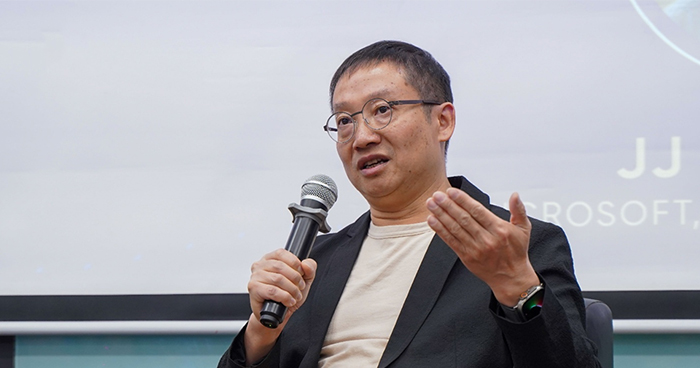
More code, more judgment
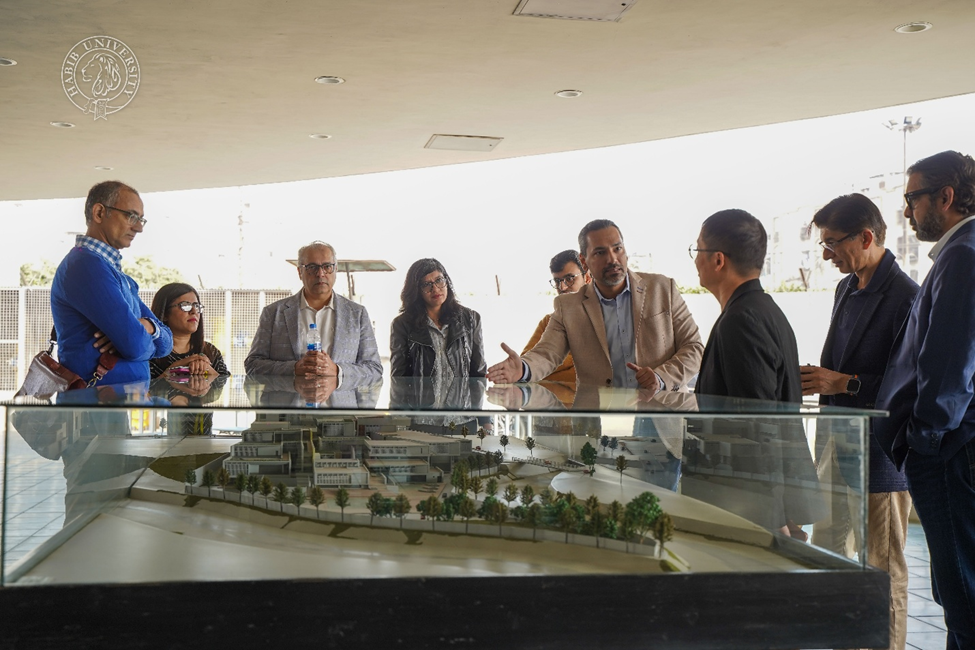
In January 2025, at Habib University in Karachi, Zhuang discussed the meeting of humanities and technical education. His argument placed logical reasoning beside communication, critical thinking and ethical judgment. Generating an answer was becoming easier. Deciding whether the answer deserved to be used remained a human task.
“The future demands that we understand many things, not just one.” That observation fits his own path from mechanical engineering into software, and his later movement across products and organizations. A boundary between disciplines can be useful for arranging a university timetable. It becomes less useful when a problem refuses to respect it.
On Founder Mode, he has brought the same reasoning to software teams. He favors adaptable generalists and describes a world of fast software, where a small team can turn an idea into something customers can try. Less time spent producing the first version changes the economics of asking a question. You can put a working example in front of somebody before commissioning an elaborate monument to the proposal.
But faster production creates its own work. AI-generated changes still need human review. In his discussions of AI as a development teammate, Zhuang describes people reviewing its proposed code rather than simply accepting an autonomous result. The appeal is understandable. So is the obligation. A colleague who can type at extraordinary speed is still capable of being wrong.
A founder willing to be marked
By October 2026, Zhuang was back on Founder Mode with Henrikson and Jason Shafton, revisiting ten earlier predictions about AI. The hosts used Claude to help grade them. The result was 6.5 out of ten. There are more flattering ways to arrange a founder interview. Few are as useful.
The discussion returned to generalists, engineering judgment, rapid prototypes and the limits of prediction. His argument for generalists had not cleanly described the wider hiring market, where specialist demand persisted. That qualification matters. An approach a founder chooses for his own company does not automatically become a description of everybody else’s behavior.
At Pretty Good AI, he is putting those views into practice with Henrikson. He talks about building around each customer’s work and learning through things that can be tried. The attraction of a small team is partly speed, but speed has a purpose only if it brings the team closer to a problem worth solving.
Across his career, the scale has shifted from a local email client to a mobile app inside Microsoft and systems spanning Instacart’s products. Now the builder is a CEO again. The tools have become more accommodating. Customers retain their old standards: the message arrives, the task gets done, the afternoon is a little more their own. That is a demanding enough brief to keep an engineer occupied.