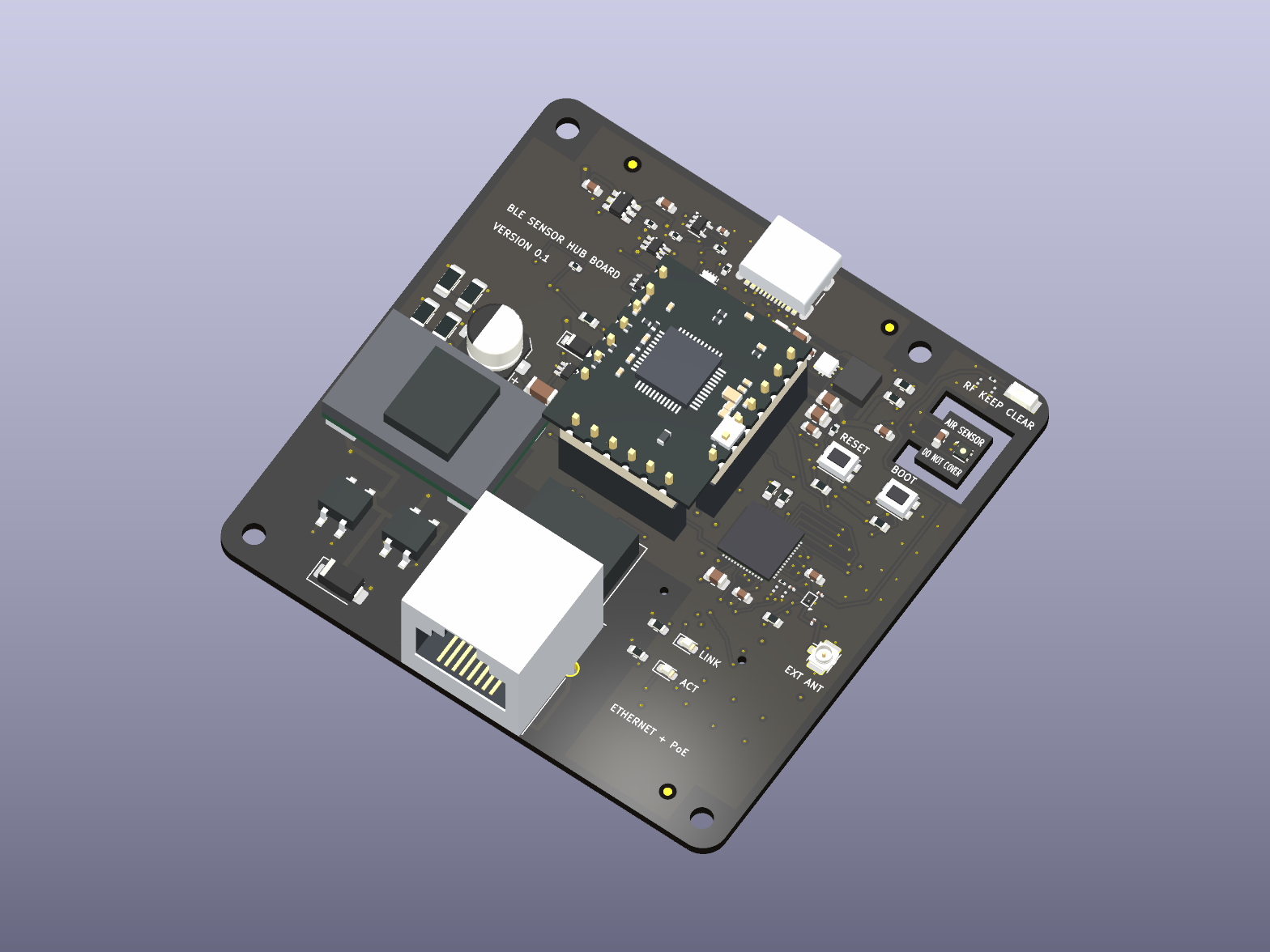
Jessie Frazelle had asked a computer to help design a circuit board. It had reviewed pinouts, routing and clearances. Then she looked at the rendering. The USB-C and Ethernet connectors faced into the board. A machine could check an impressive number of details and still put the door on the wrong side of the house.
She described the episode in September 2026 while building a Bluetooth sensor hub and a maintenance display for her home. There were datasheets to read, parts to compare and actual boards to order. The software was useful. It also needed supervision. Frazelle supplied that supervision with questions, corrections and a vocabulary unlikely to survive a corporate communications department.
There is a useful introduction to Zoo’s co-founder and co-CEO in this small domestic rebellion. She wants access to the machinery. She wants to change how it works. And she has repeatedly turned the distance between what a tool permits and what she wants into something other people can use.
The computer with the turbo button
One of the computers Frazelle described owning in 2016 was a 486DX with an amber monochrome monitor, MS-DOS 6 and a turbo button. It came with a family history. Her grandfather had worked at Motorola and later opened a consulting practice. He passed along programming books and floppy disks, many containing his own code. Inside the machine, he had labeled the parts.
The detail is lovely: a computer as an inheritance you can open. Alongside it, she used a Debian laptop and a Chromebook. Asked about her dream setup, she imagined a mainframe and the theatrical satisfaction of stroking a white cat. Practical computing and cartoon villainy could apparently share a desk.
She studied mathematics with a computer science minor at the University of Arizona from 2008 to 2011. Her early work included digital agencies. Later, a startup running workloads for data scientists introduced her to Linux containers. The progression was practical: use a tool, discover its rough edges, start watching the project, contribute.
A browser belongs wherever she can make it run
Docker became the place where that habit acquired a public audience. Frazelle contributed before joining the company; by 2015 she was a core maintainer working on its engine. Her work included container security, while her demonstrations found entertaining ways to make infrastructure software feel personal.
Containers were commonly associated with servers and deployment. Frazelle put desktop applications inside them. Her February 2015 walkthrough covered Chrome, Spotify, Skype, terminal programs and more. She wanted applications that could be removed cleanly and resources she could control. The article offered commands people could try themselves, with screenshots to establish that the improbable arrangement actually ran.
She also stated its limits. The setup was a hack, and she warned readers against treating it as equivalent to Apple’s application sandbox. That qualification matters alongside the jokes. A lively demonstration does not relieve an engineer of explaining what the thing actually does.
During a DockerCon experiment with colleague Arno, the pair compressed a Docker image to about 1.3 megabytes, small enough for a floppy disk. The floppy hardware refused to cooperate. The compression worked; the nostalgic prop exercised its ancient right to be unreliable. Frazelle told the story without editing out the failure.
Her career subsequently included Google, Microsoft and GitHub. Her public talks ranged across container security, application isolation and firmware. The same person who made a browser-in-a-container entertaining was asking audiences to look below the operating system, into code most computer owners never see.
The garage came with manuals
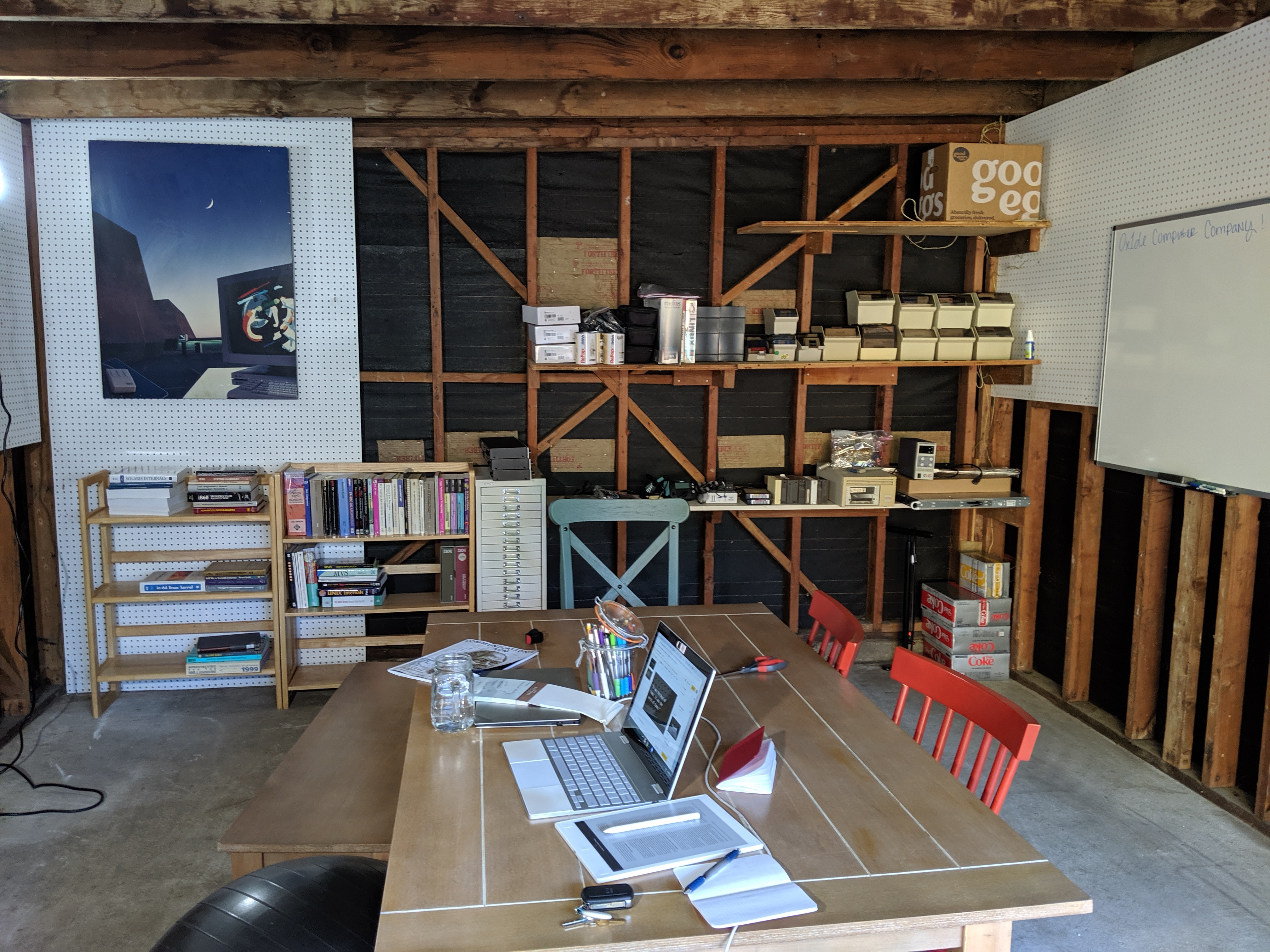
In December 2019, Frazelle announced Oxide Computer Company with Bryan Cantrill and Steve Tuck. They had met through the container conference circuit. The company began working in her garage, where Cantrill brought computer manuals and added to the floppy disk collection. The setting had enough historical symmetry to make a publicist weep.
The business argument was less sentimental. Companies running their own infrastructure had needs that commodity equipment did not adequately meet. Large cloud operators could build integrated hardware and software for themselves. Frazelle wanted more organizations to have access to that kind of integration. At Oxide, she served as co-founder and chief product officer.
Building physical computers introduced another set of tools to question. Mechanical design files could be enormous and slow to load. Work that a software engineer expected to automate could become a sequence of manual operations. Hardware development gave her a close view of the gap between the computer on the workbench and the software used to design it.
Her writing made room for that curiosity. In ACM Queue, she explored firmware, storage, chips, additive manufacturing and mechanical CAD. Explaining the lower layers became part of the job she made for herself. The subjects changed; the willingness to pull a system apart in public remained.
The case against doing it twice
Frazelle’s interest in automation reaches into the unglamorous corners of work. In 2020, she described a Rust system for onboarding new colleagues: a configuration change could create accounts and assign access across company tools. She also maintained her Gmail filters as code. At the time, she had 72 of them.
Her arithmetic was deliberately plain. Compare the time a task consumes manually with the time required to automate it, including future repairs. The difference is the time recovered. It gives the urge to tinker an accountant’s discipline: a beautiful script can still be an expensive hobby.
“can this be scripted”
The question Frazelle asks when faced with manual work
The aspiration extended beyond programmers. She was interested in consumer tools that let people chain actions together without learning to code. Having software do the repetitive work should be a pleasure available to more than the people who can build their own command-line tools.
That helps explain why mechanical CAD became such a compelling problem for her. Software developers were accustomed to version control, automated tests and programmable workflows. A person designing a physical object deserved comparable ways to examine changes and eliminate repetition.
A complaint becomes KittyCAD, then Zoo
In March 2021, Frazelle laid out a detailed critique of mechanical CAD: performance constraints, duplication, version control, programmability and testing. Her argument allowed for exceptions. Different kernels and operations behaved differently. The question was how to give hardware designers more of the flexibility software developers already took for granted.
That May, Frazelle, Jenna Bryant and Jordan Noone introduced KittyCAD. Before the announcement, they had published a GitHub README to find people who recognized the same missing pieces. The response helped turn a proposal into a company. Embedded Ventures incubated the business.
The original idea centered on infrastructure others could build upon. Imagine a change to a model triggering simulations, or a plugin performing a transformation automatically. Such examples came directly from software development’s working habits. They proposed a less repetitive day for the person trying to finish a design.
Frazelle worked on the backend herself. Her 2022 account, titled “Boring Infrastructure,” described separating an external Rust API service from a C++ engine service. She wanted minimal complexity and resilience. A component’s reassuring promise was something to design around cautiously, rather than an excuse to stop thinking about failures.
She moved into the CEO role in mid-December 2022 and announced the change the following January. Customer work, recruiting and product direction became larger responsibilities. In December 2023, KittyCAD became Zoo as the company expanded its identity to cover both infrastructure and applications. By the 2026 Makeathon, Frazelle and Noone were listed as co-CEOs.
Keep the model editable
Zoo Design Studio v1 arrived in May 2025. The company had built a geometry engine, a programming language called KCL, a machine learning model and a graphical CAD application. For Frazelle, the important connection was that these pieces could work on the same editable design.
Someone could use the graphical interface, change a dimension in code or request a modification in natural language. The engineer did not have to learn KCL to use the application. Code supplied an additional route into the model, with possibilities for automation and reviewing changes.
The distinction matters when a generated object must become something manufactured. A pleasing image gives you little help moving a hole by a precise amount. Zoo’s emphasis on parametric models and boundary representation preserved the structure needed for continued engineering work. Frazelle also acknowledged that the machine learning models would make mistakes.
In 2026, Zoo added its conversational CAD agent, Zookeeper. Its Makeathon invited people to create and share designs through the Aquarium gallery. The old README’s invitation had acquired more concrete forms: tools, public models and opportunities for other builders to put them to use.
The connectors still have to face out
At home, Frazelle was encountering the same questions at a smaller scale. She wanted programmable devices and better control over her own setup. The project produced board designs, manufacturer conversations and revisions. Her plan was to release the designs after verifying that the hardware worked.
“Give me API access or give me death.”
Jessie Frazelle, on her home hardware project
Her follow-up examined a disagreement over radio-frequency trace widths. Different assumptions about the board’s layers produced different calculations. She described the confusion, corrections and measurements still ahead. Precision on a screen had to answer to a physical board.
It is a fitting place to leave her: making something, asking someone knowledgeable to inspect it, and refusing to confuse a completed drawing with a working device. After containers, cloud infrastructure, servers and CAD, the task in front of her could still be a connector pointing the wrong way. There would be another question to ask before calling it finished.