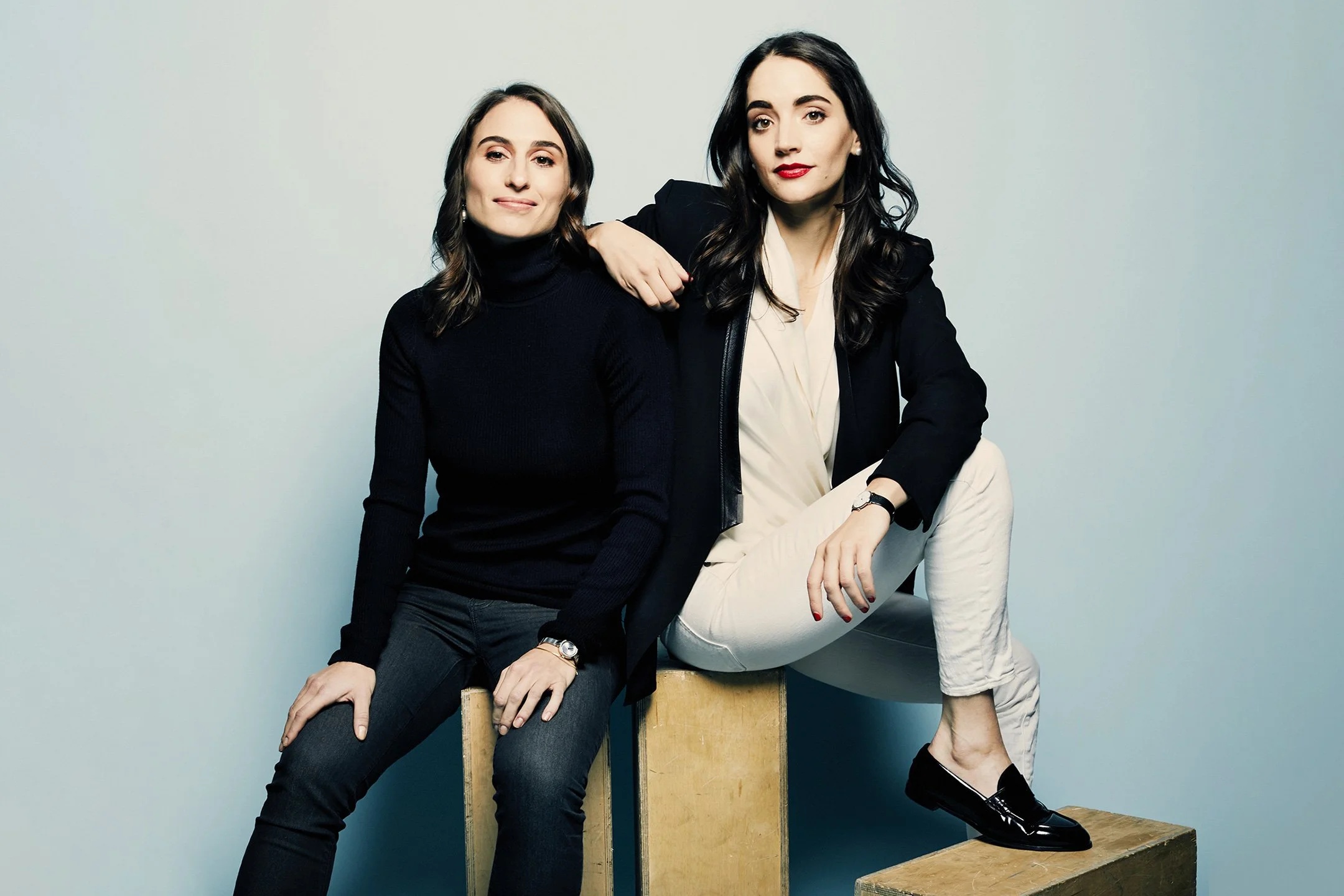
Jessica Beck drew a stick figure doing chores. It was a modest-looking candidate for a company: a person running around a building, taking care of groceries and dry cleaning. Her future co-founder, Marcela Sapone, initially thought it sounded like a dreadful business idea. Too hard. Too complicated. Everyone having someone they could rely on? A lovely thought, certainly. Lovely thoughts have a habit of leaving the laundry where they found it.
The drawing survived the objections. Beck and Sapone were at Harvard Business School, where they wanted to make something rather than spend all their time discussing how things might be made. The thing they wanted was help. A household kept asking for attention while work, study and ordinary life made perfectly reasonable competing claims. Their company, Alfred, began with that familiar little collision.
By 2026, Beck was CEO of a business bringing technology and property operations together, with a newly launched management platform, Arqline, serving more than 50,000 homes. The route from a stick figure to a national operating business took her through other people's shopping lists, a startup competition, employment policy and acquisitions. The original question remained pleasingly domestic: could home ask a little less of the person living in it?
The customers who refused to be cancelled
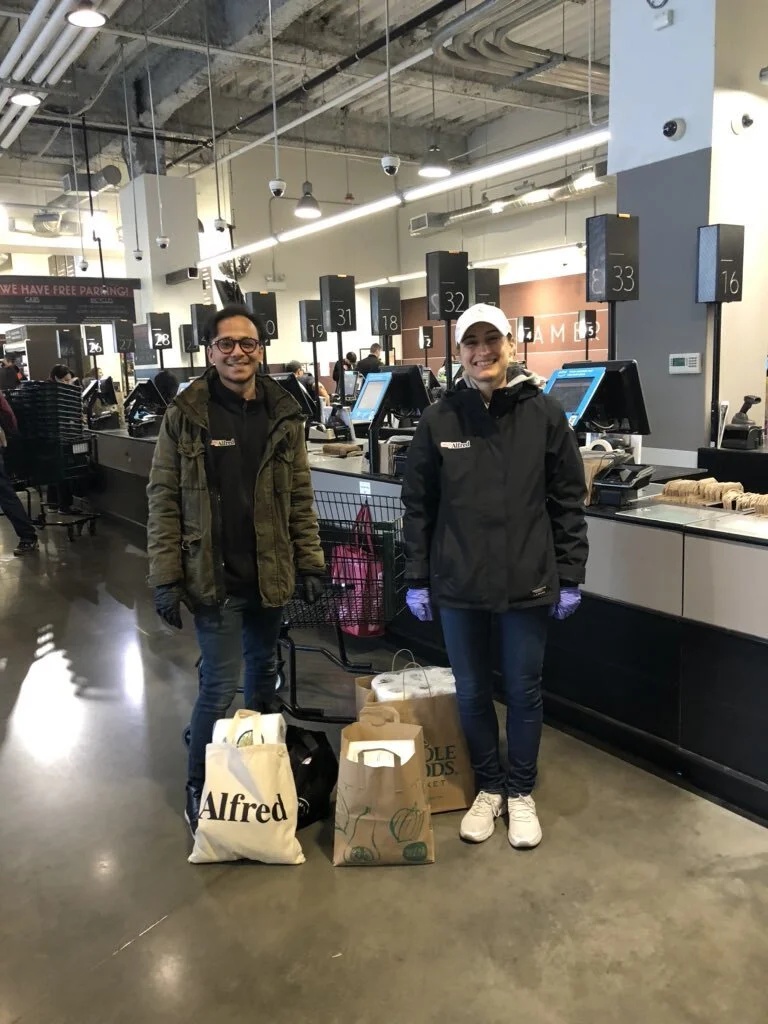
Before there was much machinery around the idea, there were postcards. Beck and Sapone slipped them under doors around Boston to see whether strangers wanted the service. Families signed up, and the founders went to their homes to ask what needed doing. They collected packages and dry cleaning, bought groceries and put them away. They were testing whether relief from the weekly household circuit was something people would actually buy.
The experiment became inconveniently persuasive. Running errands alongside business school grew difficult enough that the pair tried to close the service. Customers responded by offering more money. Few business-school exercises provide such direct marking: the customers were effectively refusing to let the homework end. A concept that looked awkward on paper had become useful in somebody's kitchen.
That early experience makes Beck's later path easier to understand. Alfred's appeal depended on the last few feet of a task. A delivery still leaves a bag to unpack. Clean clothes still need a cupboard. Someone must make the arrangements and remember what happens next. The founders were offering to carry that chain of responsibility further into the home.
An economist meets the laundry pile
Beck arrived at entrepreneurship with an economics degree from Williams College, graduating in 2008, and experience at McKinsey & Company. Her consulting work took her from business analyst through associate to engagement manager. Harvard followed in 2012; she completed her MBA in 2014. She had wanted to build something of her own, while first learning how different businesses worked.
There is a neat fit between that preparation and the problem she chose. Household work is a collection of small activities with an enormous appetite for coordination. Alfred asked customers to trust a person and a process with tasks that are both repetitive and oddly intimate. The company would have to make the process repeatable without treating every household as interchangeable.
Beck's education also included a less sedentary activity: she captained the women's rugby team at Williams. Her later work with Sapone extended to WHITESPACE Ventures, a seed investment firm focused on design-led technology. Neither detail reduces her to a type. Together they suggest the range of rooms she has occupied: the economics classroom, the playing field, the consulting engagement and the home of an early customer.
A butler walks into a startup competition
Alfred launched in 2014, and that September the founders won TechCrunch Disrupt in San Francisco. The prize was $50,000. Their proposition brought an old-fashioned idea of service into a technology competition: a recurring helper could coordinate the growing assortment of services people already used. The butler had acquired an app and a considerably wider potential clientele.
Beck later described the less photogenic preparation for pitching: repeated attempts, questions, feedback, coffee and revisions. The founders learned to think carefully about the people listening. A pitch had to make an unfamiliar service feel legible. Household coordination was obvious to someone doing it every week; explaining why it could support a company was a separate job.
The win gave Alfred a public milestone, though its practical test continued in homes. A customer could admire a presentation once. The groceries would need attention again next week. Recurrence was the attraction and the obligation. The company was selling a routine that people could stop worrying about.
- 2014Alfred launches; wins Disrupt SF
- 2022Acquires RKW Residential
- 2025Combines with Quarterra Living
- 2026Launches Arqline
The person with the key
Alfred made a consequential employment choice. Its home managers were employees rather than independent contractors. For a company entering customers' homes, the relationship with the worker was part of what it was asking the customer to trust. Recruiting, training and supporting people belonged inside the business model.
In October 2019, Beck took that argument to Congress. Appearing as Alfred's co-founder and chief operating officer, she described a company with more than 300 employees and home visits in more than twenty American cities. The testimony connected the promise made to residents with the working relationship behind it. A service built around receiving help also had to consider the people providing it.
“For us, people are an asset”
Jessica Beck
That belief complicates the usual fantasy of effortless service. Effort exists somewhere, even when the customer no longer sees it. Alfred put people into the structure of the company rather than leaving the entire relationship to a transaction. Beck's continuing interest in operating teams follows from that decision: a resident's experience is partly the experience of work on the other side of the door.
Eventually, she went inside the operation
The business gradually moved closer to the building itself. By 2017, Alfred was working with apartment properties to make its services part of residential life. A household helper could become an amenity embedded in a place, available through the building rather than discovered one customer at a time. Real estate partnerships changed how the service could reach residents.
Then Beck went further. Alfred acquired RKW Residential in March 2022, bringing property management into the company. In June 2025, Alfred and RKW combined with Quarterra Living. Becoming an operator meant taking responsibility for the practical environment in which the technology had to work. Software could now encounter its assumptions in the daily running of buildings.
The reasoning was concrete. Selling a tool leaves a founder at some distance from the work it is meant to improve. Owning the operating relationship shortens the journey between a problem, a product decision and its consequences. Beck came to see technology and operations as things that needed to be designed together. The company had acquired a much more demanding way to learn.
Fewer systems to wrestle with
In 2026, Alfred launched Arqline, uniting RKW Residential and A Residential, formerly Quarterra Living, under one operating model and management identity. Its announced footprint exceeded 50,000 multifamily and build-to-rent homes across 31 markets. Alfred supplied the technology foundation and resident-service approach; the combined businesses supplied the operating experience.
Beck calls the direction Property Management 3.0: operations, data, technology and resident experience connected within one system. She has described a familiar irritation on both sides of the business. Residents juggle separate services; property teams juggle separate systems. Each disconnected tool can leave somebody responsible for joining the pieces by hand.
Artificial intelligence is part of her proposed response, including round-the-clock resident communication and assistance for operating teams. Her stated ambition is to free people to spend more time on service and relationships. That makes the relevant question unusually down-to-earth for an AI discussion: does the person doing the work have a clearer, more useful day?
The appeal of the unglamorous detail
Beck's recent writing has become increasingly concerned with basics. In June 2026 she published “A Renter's Hierarchy of Needs,” putting a functioning home beneath the amenities that photograph well. A resident with a broken air conditioner will have a rather particular view of the rooftop. The maintenance request acquires an eloquence no brochure can match.
She has also spoken candidly about the difficulty of changing a business while continuing to run it. In her August 2026 account, early 2025 included unmet goals and uncertainty. Her response was to describe transformation as accumulated decisions and attention to unresolved details. The story contains fewer triumphant unveilings than the startup vocabulary generally permits.
Her interest in teamwork has a specific reference point: former Ford chief executive Alan Mulally and his “One Team” approach. Beck has described bringing that language into Alfred. Collaboration also appears in her advice to people starting careers: bring different groups together. The job of the founder expands from having the idea to arranging the conditions under which other people can improve it.
She now wants to show that operating efficiency and a better resident experience can hold together at scale. That ambition has taken her a considerable distance from the first drawing, while preserving its subject. The stick figure was busy so somebody else might be less busy. Twelve years later, Beck is still working on the arrangements.
Continue the conversation
Explore Beck’s work and conversations about the business of home.
Alfred ↗Arqline ↗Jessica on LinkedIn ↗Twitter / X ↗Instagram ↗Watch: Multifamily Unpacked ↗The 2022 conversation ↗Five questions with Beck ↗Listen: Story in a Bottle ↗Listen: Women in Multifamily ↗