The first thing Jesse Pollak tried to make disappear was a password. It was 2013, and the Pomona College student was working with Brennen Byrne and Mark Hudnall on a company called Clef. They had begun with a broad question about how websites share information. A few weeks later, the question had shrunk to a nuisance everyone knew by heart: why did getting into a website still depend on remembering a string of characters? Clef’s answer was a phone-based login. It was a modest entrance to an immodest career.
Pollak grew up in Washington, D.C., attended Sidwell Friends School and played defense for Pomona-Pitzer’s soccer team. The college’s 2012 roster records him as a sophomore who intended to study computer science and math. His life soon veered away from a conventional graduation path. The startup got the attention, and Pollak and his cofounders left school to work on it full time. For a while, as he later wrote, the company was still just three people, with a failed attempt at raising seed money behind them and a product whose public use could be counted precisely: 2,589 people logged in with Clef in May 2014.
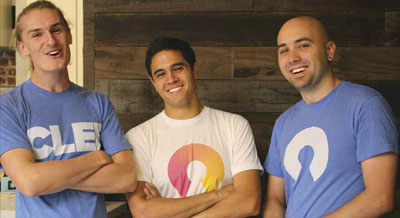
Clef would eventually grow to ten people, raise $2.2 million and power logins on more than a million websites, according to Pollak’s own account. Those numbers have a bright startup sheen. His next sentence supplied the sandpaper: the team never found a product businesses would reliably pay for. Clef pivoted, then joined Twilio. It was an early lesson in the difference between a working tool and a durable company.
The problem behind the problem
There is a detail in Clef’s customer list that makes the later story less surprising. More than 25 digital currency companies used its technology, including Bitfinex and BitMEX. Pollak had first learned about Bitcoin in 2012, and the login startup put him close to people trying to build services around it. Security mattered intensely to them. So did ease of use: a system that made every first encounter feel like an exam would struggle to find an audience.
Pollak wrote in 2017 that Clef had begun with an identity-first approach, but he had come to think identity could emerge from something people already valued. That is a fairly quiet change of mind. It also foreshadows Base. The question was becoming larger than how to enter a website. What would be valuable enough for people to enter in the first place?
After Clef’s wind-down, Pollak took time off and joined Coinbase in 2017 as engineering manager of its brokerage team. He had spent years near crypto customers; now he would work inside one of the companies trying to make crypto ordinary. His own explanation was direct: he still wanted to work with decentralized technology, and he still wanted people to control their identity without fighting the interface. At Coinbase, he thought the work could reach further.
The engineer who got a blank page
Over the next four years, Pollak moved from managing a small group to leading consumer-facing engineering across Coinbase, Coinbase Pro and Coinbase Wallet. He has described the team’s growth from three or four engineers to around 200; a separate account puts the later figure at 250. Either way, it was enough people to make management, hiring and product judgment central parts of the job. The former student founder had become a builder of teams.
By 2021 he wanted a different sort of challenge. Coinbase chief executive Brian Armstrong asked him to find a way to bring the company onchain, meaning closer to applications and activity recorded on a blockchain rather than held entirely inside a company’s own systems. It sounds like a tidy assignment only after the answer is known. At the time, Pollak and his team did not yet know what the product would be.
One proposal was spectacularly large. Pollak later recalled pitching Coinbase’s executives on turning the company into a decentralized autonomous organization, or DAO, with a $1 billion budget and 60 employees. The executives liked his energy, he said, but declined. An advertising marketplace followed. So did an app store and an identity product. The list is almost comic in its range: one idea could reorganize a company, another could fill a phone screen. None settled the assignment.
The eventual decision: build a platform for other people's applications.
In a later interview, Pollak said the group spent about a year trying things and failing. That admission gives Base a less polished origin than a product launch usually receives. The decisive realization, as he described it, was that the team needed a software platform first. Before choosing every app that belonged in an onchain world, they could give developers a place to make one.
“Base is for builders.”Jesse Pollak's description of the network's culture
A place to build, with Coinbase at the door
Base was announced in February 2023 and opened to everyone that August. It is an Ethereum layer 2: transactions can be handled on a network designed to be faster and cheaper to use, while settling back to Ethereum. The distinction matters because most people have no reason to care which layer does the work. They care whether an app functions, whether a payment arrives and whether the cost of trying something is small enough to try it.
Pollak and his team built Base with the OP Stack, software developed in the Optimism ecosystem. They also committed Base to participation in Optimism governance and to contributing a share of sequencer revenue to public goods. It was a practical relationship, not just a logo pairing: the new chain would share technical foundations with other networks and help fund the common tools beneath them. Pollak, once absorbed by the friction of an individual login, was now working on the friction between whole networks.
The launch brought a very Coinbase advantage. A large exchange already had users, a wallet and the means to point people toward applications. Base could start with that distribution while inviting developers outside Coinbase to build on it. At opening, its team said more than 100 applications and service providers were available in the ecosystem. The public mission was vast - a million builders and a billion users onchain - though an early August mainnet is a much smaller event than a billion of anything.
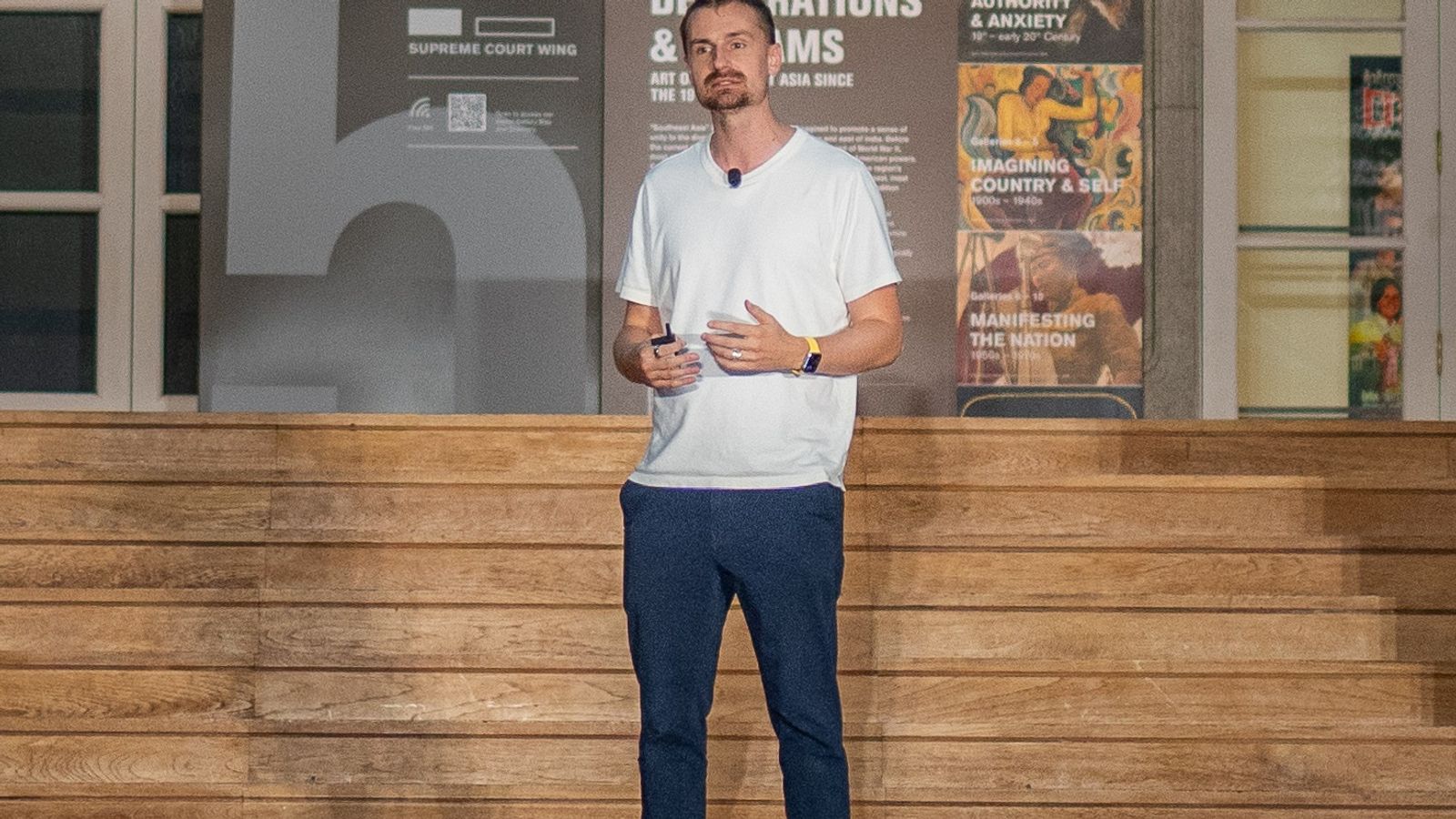
The team celebrated with Onchain Summer, a month of projects across art, music, games and other experiments. Pollak hosted daily livestreams featuring builders and their work; Base reported more than 200,000 views across those sessions. He later joined the network’s builder events in cities including Nairobi, Bangalore, Bangkok, Singapore and Manila. The itinerary made a point without a manifesto: a platform built in a California company had to matter to people building elsewhere.
The social bet, and the public reversal
Base’s openness created another problem: what should its own team encourage most strongly? The network became a home for financial applications, but Pollak also advocated for creators and social tools. In October 2024, he took on leadership of Coinbase Wallet as well as Base and joined the company’s executive team. The wallet later became the Base App, a consumer product that mixed trading with social features and ways for creators to earn from posts and content.
It was an understandable bet for someone who had long cared about the entrance to new technology. If crypto wanted more than traders, perhaps creative and social activity could be the invitation. In November 2024, when he talked with builders in Manila, Pollak still described Base as a place for people who showed up to make things, whether an app, a community or something expressive onchain. The phrase “Base is for builders” had room for all of them.
By July 2026, he had changed his assessment. In a lengthy public post, Pollak wrote that Base had made the right bet on builders and the wrong bet on social. He argued that prediction markets, perpetual trading and stablecoins had become stronger drivers of adoption than the onchain social experiences his team had emphasized. He handed leadership of the Base App back to Coinbase, where Jordan Fish, known as Cobie, took over. Pollak kept leading the Base network.
“We made the right bet on builders, but obviously the wrong bet on social.”Jesse Pollak, July 2026
The candor was unusually plain for an executive with a successful network to defend. He did not have to announce that a strategy had missed. He could have called it a natural evolution, waited for a product update or tucked the news into an earnings call. Instead he named the bet and described its cost. His stated priorities for the rest of 2026 became trading, stablecoin payments and AI agents. In an August interview, he also said the consumer app under Fish would become less tied to Base alone as it expanded what people could trade.
What remains underneath
There is no need to make this sequence into a parable of perfect foresight. Clef found millions of uses but no lasting business model. The first Coinbase onchain pitches went nowhere. Base found its audience, then its creator revised a conspicuous bet about what that audience wanted. Pollak’s career contains many of the ordinary verbs of building - try, ask, hire, ship, notice, revise - made unusually visible by the size of the systems around them.
He began with an annoyance at the threshold of the web and ended up working on the floor beneath a set of applications. The distance between those problems is enormous; the instinct behind them is recognizably similar. A new tool asks people to cross into unfamiliar territory. The builder’s job is to make the crossing worthwhile. Pollak is now betting that faster trading, more useful payments and software acting on people’s behalf will do that work on Base. Whether those applications become ordinary is still an open question. The network is there for others to answer it.