Jeremy Levine had a theory about rookie cards. Buy the right player early, wait for everyone else to notice, sell later. Growing up around Boston and Cambridge, he collected Vince Carter when, he now jokes, Kobe Bryant would have been the better investment. Even his childhood hobby had a little stock exchange hiding inside it. The difficulty, as many adults eventually discover, was picking the right asset.
Years later, his first company would try to turn athletes into a market. His second would make choosing athletes into a game you could play on a phone. His third would bring former colleagues back together after the second had disappeared. Across those businesses, Levine kept returning to the pleasure of having an opinion about sports, then finding out whether it was any good.
An attic, a pitch deck, and a mailbox
At Syracuse University, Levine discovered he could major in entrepreneurship. He graduated in 2009 and moved into his parents’ attic in Cambridge. He had an idea for a sports stock market and very little preparation for starting a technology business. His early fundraising routine included emailing venture capitalists, then checking the physical mailbox for a check. Venture capital had neglected to provide an instruction manual.
He was rejected by the accelerators he initially applied to. He found his first engineers through Craigslist, people willing to work on the idea alongside other commitments. Techstars accepted him the following year. StarStreet began to acquire the things a company needs: collaborators, a product, and an opportunity to discover which assumptions were wrong.
The original sports market struggled. Daily fantasy sports offered another direction, and StarStreet moved into contests built around athletes’ performances. DraftKings acquired its daily fantasy assets in 2014. The price was undisclosed. Levine and fellow founder Nicolo Giorgi were soon working on another way to play.
The phone deserved its own game
DRAFT arrived on iOS in December 2014. Its central action was familiar to anyone who had sat through a fantasy draft: take turns choosing players. A player selected by your opponent was no longer available to you. The small drama of getting your choice in first became something you could repeat, without waiting for next year’s league gathering.
Levine’s interest was the casual participant. The prevailing daily fantasy experience could reward extensive research and carefully calculated lineups. DRAFT offered a shorter route into the contest. Its design question was whether someone who knew the stars, enjoyed sports, and had a few spare minutes could find a game worth opening.
In March 2015, DRAFT announced a $3.5 million Series A led by Upfront Ventures. The investor relationship had begun on Twitter, where Levine and Upfront’s Greg Bettinelli first became acquainted. Meetings followed. So did a round involving BoxGroup, Advancit Capital, The Chernin Group, and Queensbridge Venture Partners, whose partners included Nas. The social network had supplied a business introduction more useful than a check in the post.
The day the marketing stopped
Then the permission to operate became more urgent than the invitation to play. In November 2015, New York’s attorney general declared daily fantasy sports illegal gambling. The industry’s expansion ran into a fight over its basic legal footing. For a small operator, uncertainty could consume the runway before any product argument had a chance to matter.
Levine scrapped DRAFT’s marketing plans and cut its two marketing positions. “It rocked our world,” he said. The company had been projecting more than 500,000 users as football season approached; it finished the 2015 NFL season with just over 200,000. Growth forecasts had become a luxury. Keeping enough cash to continue was the practical assignment.
New York’s 2016 legislation gave the company a route back, and DRAFT received a temporary license. Marketing resumed after months on hold. Levine had learned a recurring feature of this business: an app can be elegant, popular, and funded, yet still depend on decisions made far from its screen.
A six-minute wait is a business problem
Paddy Power Betfair acquired DRAFT in 2017. The terms were $19 million upfront, with up to $29 million more tied to performance over four years. Levine and Jordan Fliegel would continue as co-CEOs. For Levine, the attraction included the buyer’s resources and experience operating regulated games.
Ask him what greater scale would improve, though, and he offered a remarkably ordinary measure: waiting. During the previous football season, he said, the average wait for a draft had been under six minutes. He expected the coming season to bring it below one minute. That was a forecast, not a reported result. It was also a revealing answer from someone announcing a sale worth millions.
More players could mean quicker matches, and quicker matches could make the game more appealing. A marketing budget and a customer’s idle minute belonged to the same calculation. “Our game, by virtue of the snake draft, is very different,” Levine said. The format needed opponents as much as it needed attention.
The company closed. The group chat stayed open.
DRAFT helped bring best ball to a wider audience. Players drafted a roster, then the contest used the highest-scoring eligible players automatically rather than requiring weekly lineup choices. The appeal lay in keeping the draft while dispensing with some of the maintenance. There were still decisions to make; fewer of them arrived as chores every Sunday.
Ownership brought a different set of decisions. Paddy Power Betfair acquired FanDuel, and DRAFT was eventually folded into it. The standalone service closed at the end of the 2019 NFL season. A sale that had promised room for the product to grow had ended with the product losing its separate home.
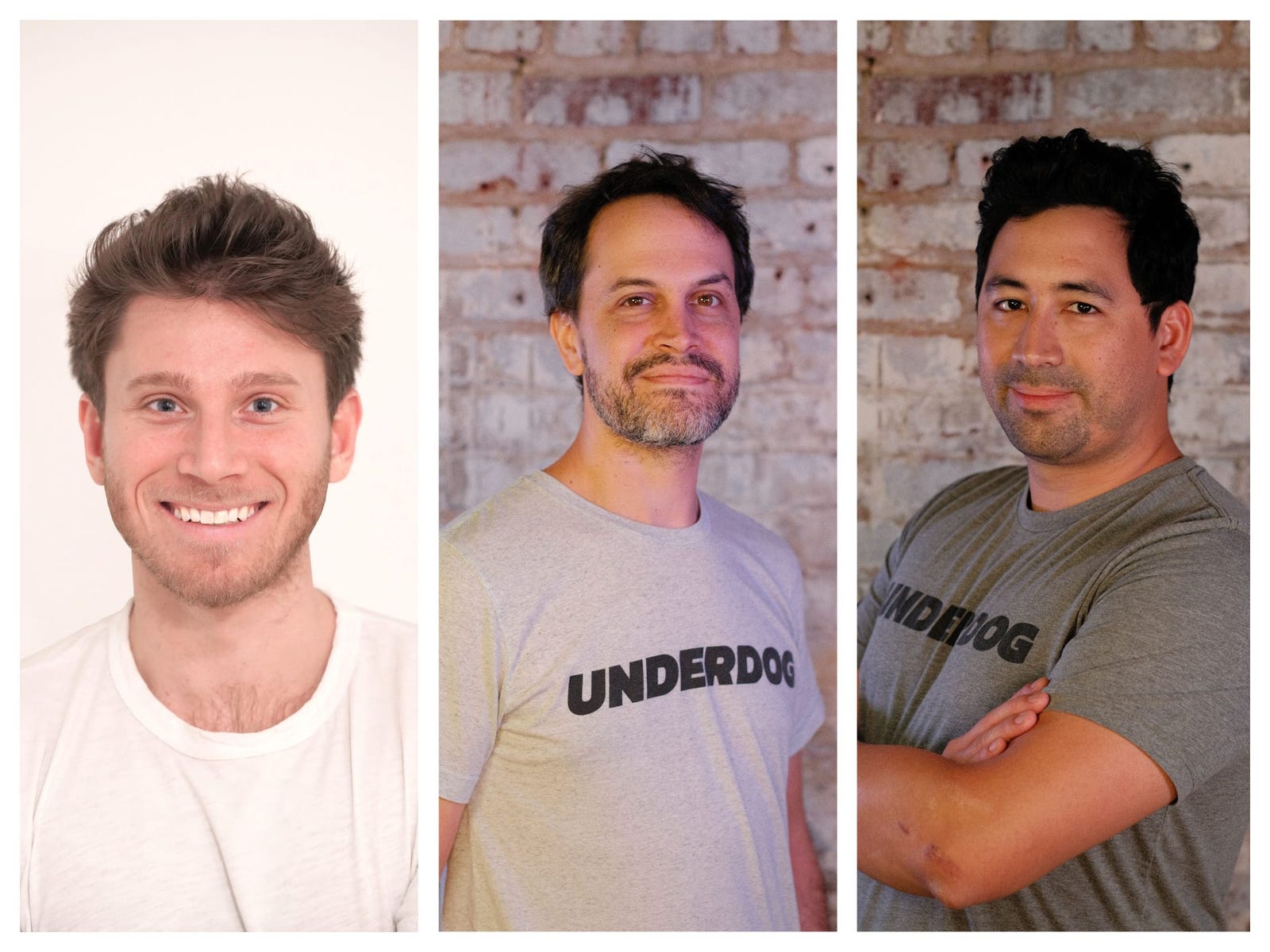
Levine’s former colleagues were still talking. Brandon Stakenborg encouraged another attempt, and seven people from DRAFT became Underdog’s founding team in early 2020. By July, Levine was discussing the new launch and lessons from DRAFT in a long conversation with Adam Levitan. This return carried years of experience with the people, the games, and the customers they hoped would follow.
Recruiting the next version of himself
Underdog’s investors soon included people who had very different reasons to understand a sports audience. A $10 million round announced in 2021 brought together Mark Cuban, Kevin Durant, Jared Goff, Adam Schefter, and others. Kevin Carter led it. Levine was once again building a fantasy business, now with athletes, entertainers, and industry participants among its backers.
By October 2024, the company had about 450 employees. Its recruitment included people from FanDuel, DraftKings, and PointsBet. Levine described hiring as a central part of his job and good character as a requirement. He wanted experienced colleagues while preserving the ability to ship products quickly. That balance becomes harder to maintain as an organization gains departments and reporting lines.
People who worked around him described a founder willing to listen. Stacie Stern, who joined to build government affairs, remembered his curiosity and readiness to take advice when they first met years earlier. Friend Peter Jennings described his optimism and ability to recognize other people’s strengths. Levine, meanwhile, acknowledged that the company’s changing scale required him to keep changing as a leader.
He could be less accommodating about his own surfing. Learning with his wife, Iman Bashir, he admitted he was terrible at it and preferred working at his computer. His account of his father, a criminal defense attorney writing on a yellow pad during a family trip to Rome, suggested where some of that attachment to work began.
“I certainly learned by doing.”
Jeremy Levine, 2024

A third deal, and a familiar face
Recognition followed the hiring and growth. Goldman Sachs honored Levine at its Builders and Innovators Summit in 2024 for the second consecutive year. In March 2025, Underdog announced a $70 million Series C first close led by Spark Capital at a valuation of about $1.23 billion. The business had moved a considerable distance from the attic.
The next turn brought it closer to Levine’s original fascination with markets. Underdog introduced prediction markets in September 2025, acquired exchange and clearinghouse businesses in March 2026, and launched its own exchange in July. Sports opinions could now be expressed through event contracts as well as fantasy lineups. More of the machinery behind the transaction belonged inside the business.
On July 30, 2026, IG Group announced an agreement to acquire Underdog for approximately $1.1 billion upfront, plus a potential $200 million earnout. A separate employee incentive plan depended on future performance. The proposed deal reunited Levine with Breon Corcoran, who had led Paddy Power Betfair during the DRAFT purchase and later invested personally in Underdog. Completion was expected in late 2026 or early 2027, subject to approvals.
Announced agreement. Expected completion: late 2026 or early 2027, subject to approvals. Separate employee incentives excluded.
What gets left out of the draft
The expansion also carried costs. Underdog cut jobs during its 2026 transition toward prediction markets. In September, Levine told customers the company would stop accepting new draft entries in seven states after choosing between those states’ fantasy licenses and its federally regulated offerings. Existing entries would continue. Fans attached to the drafting game were being asked to accept a smaller experience so the company could pursue a larger one.
At an October investor seminar, Levine presented a business routing customers among fantasy games and exchanges through one app. The ambition had broadened, while the tension remained familiar: how to keep the experience customers enjoy as the organization, its owners, and its permissions change. DRAFT had already shown that a good game does not control its own future.
Levine’s career makes the draft an unusually apt recurring scene. Choose a player. Build a team. Discover what happens when the game begins. He has repeatedly returned with people who have done it alongside him before. The next result will depend on what those people build, what customers keep choosing, and whether the product that earns their affection gets room to stay.