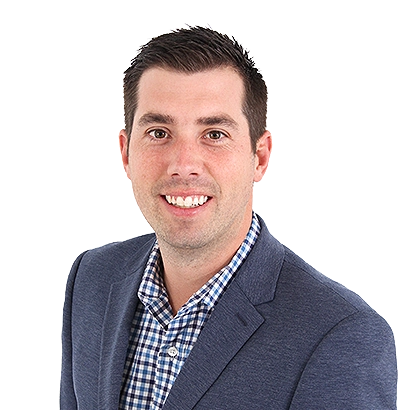
Walk into a DGDG dealership on a Saturday in San Jose and the place hums in a way that car stores generally do not. Test drives leaving the lot every few minutes. Service advisors looking at screens that actually talk to each other. A finance office that does not feel like a hostage situation. The man responsible for that hum spends most weekends at one of his stores, not because the job demands it, but because he likes the rhythm. He started doing it at sixteen.
At that age, most kids are still figuring out parallel parking. Beaver was already at a Dodge store in San Jose, sitting in the BDC, dialing customers cold. He stayed five years. He learned, in his own telling, how the gears of a dealership actually mesh: how the service drive feeds the used car department, how the BDC feeds the sales floor, how the floor feeds the F&I office, and how the whole thing breaks if one of those handoffs is sloppy. It is not glamorous material. It is the material that built him.
From the Dodge store he moved to Jumpstart Automotive, a San Francisco startup that sold the auto industry on something it had barely learned to spell at the time: digital lead gen. That detour mattered. It gave him the second language he speaks now. Most dealer CEOs talk gross and turn and CSI. Beaver also talks unified data layers and normalized pipelines and the cost of an unscheduled DMS outage. Most dealer CEOs got the second language late. He had it before he had a corner office.
DGDG, by the numbers, and what they hide
He joined Del Grande Dealer Group in 2009. There were three stores. He has watched, and helped, the group grow to roughly seventeen rooftops, with annual volume climbing from about 3,000 cars to somewhere between 25,000 and 30,000. The revenue line follows the unit line: about $1.3 billion. The headcount follows the revenue line: about 1,100 people.
Numbers like that get tossed around in press releases. Worth pausing on what they actually mean. Seventeen rooftops across Audi, Chevrolet, Ford, GMC, Hyundai, Kia, Mazda, Subaru, Volkswagen, Cadillac, Honda - each franchise a separate set of OEM standards, separate software, separate co-op programs, separate quarterly objectives. Running one of those well is a job. Running seventeen, in California, with California labor law and California real estate and California consumer expectations, is a different job entirely.
DGDG Growth During Beaver's Tenure
"Culture is the difference between a workshop that operates and a workshop that performs."
— Jeremy Beaver
The CDK Test
In June 2024, a ransomware attack on CDK Global - the dealer management software a huge slice of the U.S. industry runs on - knocked thousands of dealerships off their core systems. Some were dark for weeks. Sales staff scribbled deals on paper. Service drives went manual. Owners watched revenue disappear in real time.
DGDG kept moving. Not because Beaver got lucky. Because, in his words, the group "had so many redundant systems on data that we were not really impacted too much because we had the ability to extract our own data and operate our own systems." That sentence is unremarkable from a CTO. It is genuinely unusual from the CEO of a car dealer group. It is what he means when he says he wants DGDG to operate like a tech company.
The CDK incident became, for the industry, a moment of clarity. Single points of failure in dealership IT are not theoretical anymore. Beaver had been quietly making the bet against them for years.
A Tagline That Sounds Like a Joke (It Isn't)
DGDG's house phrase is BE HAPPY. It appears on signage, in email signatures, in store windows. Beaver uses it in his LinkedIn headline: "DGDG.COM - BE HAPPY!" - exclamation point included. It reads, on first encounter, like a candy bar slogan that wandered into the wrong industry.
Sit with it. In a business famous for treating customers like a problem to be processed and employees like a cost to be managed, opting publicly for cheerfulness is a position. It tells staff what the target is. It tells customers what to demand. It commits the leadership to a metric that does not fit on the standard dealer P&L. The phrase is half marketing, half mission statement, and entirely deliberate.
01
Operator First
Held nearly every position inside a dealership before getting the corner office: BDC rep, GM at Capitol Kia and Capitol VW/Fiat, COO, President.
02
Data Believer
Spent his early career at Jumpstart Automotive, an SF auto-tech startup, before bringing that mindset back into the dealership.
03
Stays Local
Born in the Bay Area. Educated at Leland High School in San Jose. Still runs the company from a San Jose HQ on Capitol Expressway.
Humans, Still
The temptation, listening to Beaver talk about data warehouses and integration layers, is to read him as another executive trying to algorithm the humans out of his business. He isn't. He keeps making the opposite argument, which is more interesting because it is harder to defend in a room full of investors.
"We think that humans still play such a vital role in this business," he told one interviewer. "At the end of the day, people want to come see a car. They want to come test-drive a car. They want someone to talk to when they need it." That is the case for keeping showrooms staffed and service advisors looking up from their tablets. It is also a case for paying those people enough that they stay. DGDG's headcount of 1,100 in the Bay Area is not an accident of the labor market. It is a position about what the product actually is.
Run that argument through the operating model and a strategy comes into focus. Spend on systems so people can spend on people. Standardize the back end so the front end can be human. Move the boring stuff into software so the interesting stuff - test drives, repairs, conversations - can be done by a person who is paid to care.
2026, From the Showroom Floor
Beaver does industry press regularly. On CBT News in late 2025, he walked through what he is watching for 2026: EV demand patterns that have stopped behaving the way the forecasts said they would, the durability of fixed-ops revenue as new-car margins compress, and how to staff a service drive when the vehicle mix is shifting underneath you faster than any model can predict.
The view is grounded. He runs the lots. He sees the inventory. He reads the service appointments. When he talks about EV demand softening in one segment while rebounding in another, it is not a take. It is the data from his own seventeen stores, plus the conversations he has with OEM partners as a member of multiple dealer councils.
The Bay Area, As Backbone
Plenty of dealer CEOs run their groups from a vacation home and let regional VPs handle the floor. Beaver does not. He grew up here. He went to Leland High School here. He works out of a San Jose HQ at 911 Capitol Expressway. His Twitter handle is DGDGCars. His LinkedIn ends with an exclamation point. The footprint is intentionally local in a way that maps to how the company is run.
It also explains why DGDG has not chased growth into geographies where its operating advantages would evaporate. The group is dense, not sprawling. The stores are close enough that a senior leader can be at any of them inside an hour. Beaver still walks them. He still answers email.
What Comes Next
The medium-term play, as Beaver describes it, is to keep building DGDG into the prototype dealer group of the next decade. Better data infrastructure than any single-OEM software stack can provide. Human staff trained and paid like they matter, because they do. A house motto that holds the whole operation accountable to a measurable, social outcome - did the guest leave happy.
None of that is revolutionary on a slide. The revolution, if there is one here, is that an automotive retailer is actually doing it - and that the person running it started at sixteen, on the phone, at a Dodge store, three exits up the freeway.