A wine list is a peculiar little test. It arrives dressed as hospitality, yet it can make a table feel like an examination room. There are regions to remember, vintages to judge, names to pronounce and prices to acknowledge without looking startled. Jennifer Martucci saw that ritual and found a product problem hiding inside it: the diner needed confidence, the restaurant needed accuracy, and neither needed more paperwork.
Her answer was SmartCellar, an interactive wine-list system developed by Incentient, the company she co-founded in 2008. A guest could browse by name, region, varietal or price, see bottle labels, review pairings and work from the restaurant's available inventory. For the staff, a menu could change without a trip to the printer. For the restaurant, the interface could carry its own visual identity. For the uncertain diner, two letters might be enough to begin finding a Barolo.
This was 2009 and 2010, when putting an iPad on a dining table still looked less like operations and more like science fiction with a wine program. Trade coverage reported orders from roughly 40 restaurants in SmartCellar's early period. Its debut at Tony May's SD26 in New York put the software beside a collection of more than 10,000 bottles. The screen did not shrink the cellar. It gave the guest a door into it.
“We want people to get as much or as little information as they want.”Jennifer Martucci on SmartCellar, 2010
First, find the missing thing
Long before Martucci built for a dining room, she built for a much less composed moment: a pet had disappeared. Her first company, GPSTracks, developed and manufactured a portable satellite-tracking device for pets. The public account of that venture is compact but consequential. She founded the company in 2001, led it through invention and production, and took it to an acquisition. The buyer is identified in her current public biography only as a Fortune 50 company, so the useful fact is the arc rather than the logo: idea, hardware, market, exit.
A granted patent later assigned to Pfizer names Martucci with Eugene F. Fowler and Joseph C. McAlexander as inventors of a portable position-determining device. The machinery described in the filing is precise. A satellite navigation receiver determines a location; a transmitter sends it; a receiver displays coordinates and can add a message or alarm. Strip away the patent language and the emotional job is immediately legible. Something valued is gone. Where is it?
After GPSTracks, Martucci served as a strategic consultant to Pfizer from 2006 to 2008. Then she returned to company-building. Incentient changed the setting from yards and streets to dining rooms, suites and resort corridors, but it retained the same practical instinct. Locate the friction. Put useful information in the hand of the person who needs it. Help the next action happen.
A founder's route through physical space
- GPSTracks begins with portable location technology for pets.
- Martucci moves into strategic consulting work with Pfizer.
- Incentient is founded around interactive guest experiences.
- A room-service patent application and SmartCellar bring software into hospitality rituals.
- A further interactive wine-selection patent is granted.
The iPad arrives at dinner
Timing helped, but timing alone is a poor product manager. Apple's iPad arrived with a screen that felt at home in the hand and enough cultural electricity to persuade restaurants to reconsider the leather binder. Martucci said Incentient coupled an overdue restaurant product with a hot new device. The phrasing is refreshingly unsentimental. The hardware was the opening. The overdue work was making the experience useful.
SmartCellar did more than turn pages into pixels. It connected the guest-facing list to a content system and available inventory. It allowed restaurants to organize a large cellar without asking every guest to know its private taxonomy. It could be styled for the room it entered. “No two SmartCellars are the same,” Martucci said in a culinary trade publication. The line contains an enterprise-software lesson: a premium venue buys efficiency, but it cannot afford to rent someone else's personality.
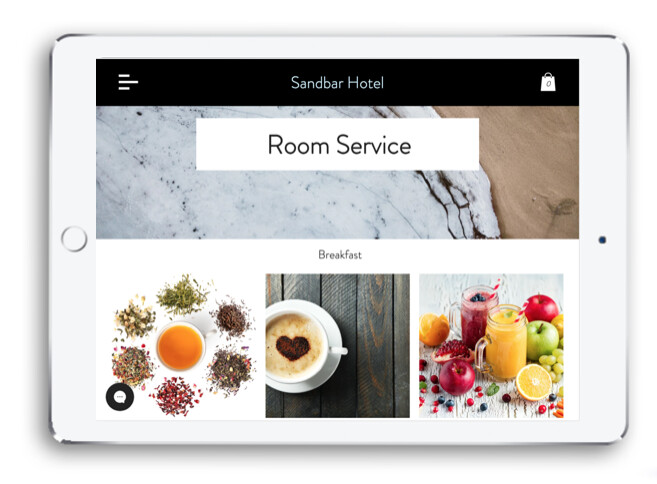
The same logic expanded beyond wine. Incentient's SmartTouch platform brought room service, valet, housekeeping, concierge functions and venue information onto tablets, televisions and guests' own devices. Its public materials emphasize real-time updates, multiple languages and compatibility across screen sizes. In 2014, when SmartCellar launched at Giada De Laurentiis's restaurant inside The Cromwell in Las Vegas, Incentient said its technology was installed in 19 countries. Its current company biography cites client acceptance in 27.
Software with table manners
Hospitality technology has a built-in paradox. The guest wants speed but resents feeling processed. The operator needs consistency but sells a sense of individual care. A bad interface makes both sides work harder: guests hunt, staff explain the screen, managers update the same information in several places. A good one behaves more like an attentive server. It offers enough information, notices context and leaves room for a person to choose.
Martucci's public comments return to empowerment. SmartCellar, she said, should help the person who knows nothing and remain enjoyable for the expert. That is a more demanding brief than “easy to use.” Novices need an obvious beginning. Experts need depth without condescension. Staff need current inventory. Management needs control. The venue needs its brand to survive the translation. Every one of those needs can collide inside a single screen.
The patent record shows how seriously Martucci and co-inventor Patrick Martucci treated those handoffs. One granted method covers room-service requests moving from a graphical interface in a guest room to a food-service server and onward to a fulfillment station or point-of-sale system. Other patents cover wine selection based on live inventory and prior preferences. The documents are dense. The situations are familiar: hungry in a hotel room, curious in a restaurant, reluctant to telephone, ready to decide.
In 2011, Fast Company placed Incentient at number 29 on a list of 101 Apple-affiliated achievers. The company sat in a lively ecosystem of people finding practical jobs for Apple's devices. Martucci and her colleagues were not merely shipping an app into a store. They were fitting software into places with uniforms, cellars, service standards, inventory systems and paying guests. The screen was only the visible part.
“We exist at the perfect intersection of technology and personal service.”Jennifer Martucci, Incentient CEO and co-founder
The founder as translator
Martucci's roles at Incentient have crossed product direction, application design, marketing and sales. Older coverage variously identified her as a founder and senior vice president of product development, sales or marketing; the company now presents her as CEO and co-founder. Titles moved around the work. The work itself required translation between a restaurateur's ambitions, a guest's hesitation, a designer's screen and the operational systems behind the wall.
That range helps explain the company's emphasis on bespoke software. At GIADA, Martucci described the design task in terms of the restaurant's own blend of Italian cuisine and Californian influence. Elsewhere, SmartCellar appeared with restaurants associated with Gordon Ramsay, Todd English, José Andrés, Wolfgang Puck and other recognizable names. The chef supplied the point of view. Incentient had to make the interface speak with it.
Her professional profile also lists startup consulting around go-to-market strategy and product roadmaps. It is a credible extension of the operating history. GPSTracks demanded hardware and an exit. Incentient demanded product-market timing, patents, partnerships and deployments across countries. In both cases, the founder's job stretched far beyond having the original idea. Ideas are charming at dinner. Companies must clear the plates.
A small theory of considerate technology
There is a consistent human pause inside Martucci's inventions. A pet is missing. A guest wants breakfast. A diner faces 10,000 bottles. Each pause contains uncertainty and the need for a next step. Her products answer with location, options or a path to fulfillment. They do not eliminate people from the scene. They make it easier for people to act.
That distinction matters more now than it did when an iPad at dinner could draw a crowd. Screens have become ordinary. QR menus have become a minor weather system. The novelty is gone, leaving the harder standard behind: does the technology respect the setting? Does it reduce stale information? Does it help a guest without making the staff apologize for it? Does the venue still feel like itself?
Martucci's public story offers no grand manifesto, and it benefits from the absence. The products carry the argument. A good interface can be commercially useful and socially gentle. It can help a restaurant sell from its cellar while helping a novice ask a better question. It can streamline a hotel request while preserving the possibility of personal service. It can be there at the precise moment it is needed, then recede before dessert.