Jennifer Cherry Foster began her company with an exit plan of sorts: if the work did not come, she would look for another job. Her coworking desk was above a bail-bonds office. She had a laptop and a few months to see what happened. It is an appealingly unceremonious beginning for someone whose profession involves making other people look ready.
Catalyst Media Factory reached its tenth anniversary in 2026. Foster, its founder and CEO, now works on the other side of that first uncertainty, helping businesses and organizations decide what they want to say, who might care and how to handle the questions that follow. The public part can last a few minutes. The preparation has a much longer working day.
A few months, perhaps
Foster had already spent 13 years at an agency before setting out on her own. Leaving was difficult. After a two-month break, she chose a coworking space because she wanted clients to have somewhere to meet her and a reason to believe the business would be there tomorrow. Early relationships in that shared workplace helped the company take hold.
Her route into public relations had begun with a writing class after a microbiology degree. An internship followed. An unfamiliar profession became a career. By 2016, she was senior vice president at Marx Layne. Starting Catalyst that year meant bringing an experienced practitioner’s judgment into a business whose prospects she still treated cautiously.
There is a useful distinction in that sequence. Knowing how to serve a client and knowing how to sustain a company are related skills, with different consequences when something goes wrong. A founder has to keep doing the work while making room for the next assignment, the next colleague and the next expense. The laptop is the easy part of the purchase.
In Foster’s case, the move also connected her name more directly to a particular kind of client: growing organizations that needed communications help. Catalyst’s published focus includes restaurants, retailers, nonprofits, events and professional services. These are businesses with actual activity to explain, often without a large internal communications department to explain it.
The other side of the questions
Within a year of founding the company, Foster was chairing the American Business Awards judging committee for corporate communications, investor relations and public relations. She served as Catalyst’s president. In 2019, she appeared on its entrepreneur awards judging committee. Her professional life now included assessing the work and claims of other organizations, alongside developing communications for her own clients.
A judging role requires a change of chair, in both senses. The practitioner who helps put a case together becomes someone asked to consider whether another case holds up. Awards programs put achievements into categories and descriptions. Public relations does something similar every day when a company’s internal explanation has to survive an outsider’s reading.
In March 2018, Foster joined a discussion organized by the Detroit Press Club and Southfield Public Library about journalism’s future. Fellow panelists included Eddie Allen, Ed Garsten and Matt Roush; Maureen McDonald moderated. The advertised subjects included changing readership, declining revenues and the disruptive power of social platforms and manipulated images.
Those subjects belong in a publicist’s working life. A relationship with a newsroom involves understanding the institution as well as the individual reporter. Who has time to cover an announcement? What does an audience need to understand? Which claims deserve another question? The panel placed Foster in a conversation about the conditions under which her own profession operates.
That July, she appeared on The Doers Network, a podcast devoted to creative and entrepreneurial people in Metro Detroit and beyond. The episode gave her 54 minutes to discuss her story and the firm. It was a longer appointment with the microphone than most of the news appearances her clients would be likely to receive.
Practice before the red light
Catalyst’s media training gives a concrete answer to a familiar professional problem: the person who understands a subject may need help discussing it in public. Its program starts with clear messages, then moves through interview techniques, an explanation of how journalists work, crisis preparation and mock interviews with working members of the news media.
The mock interview is a particularly practical detail. A speaker has to answer someone, aloud, rather than privately agree that the talking points look sensible. Feedback can identify an answer that wanders or an explanation that assumes too much knowledge. There is still time to try again. The audience for the first attempt is mercifully small.
This work asks an expert to consider the listener’s starting point. A reporter cannot carry an entire organization chart or product manual into a short segment. The spokesperson has to decide which information earns its place. Clarity involves selection, and selection can be uncomfortable when every detail feels essential to the person who knows it.
“This isn't bedtime.”Jennifer Foster, on her reluctance to call PR storytelling
Her impatience with the storytelling label fits that emphasis on substance. An organization has something real to communicate. The task is to make its relevance intelligible without decorating it beyond recognition. A prepared speaker should be able to handle the follow-up as well as deliver the opening line. The follow-up is where an audience often learns whether the explanation has foundations.
BEFORE THE INTERVIEW
- Find the messageChoose what the audience needs to understand.
- Meet the questionsPractice the interview with news professionals.
- Refine the deliveryUse feedback before the public appearance.
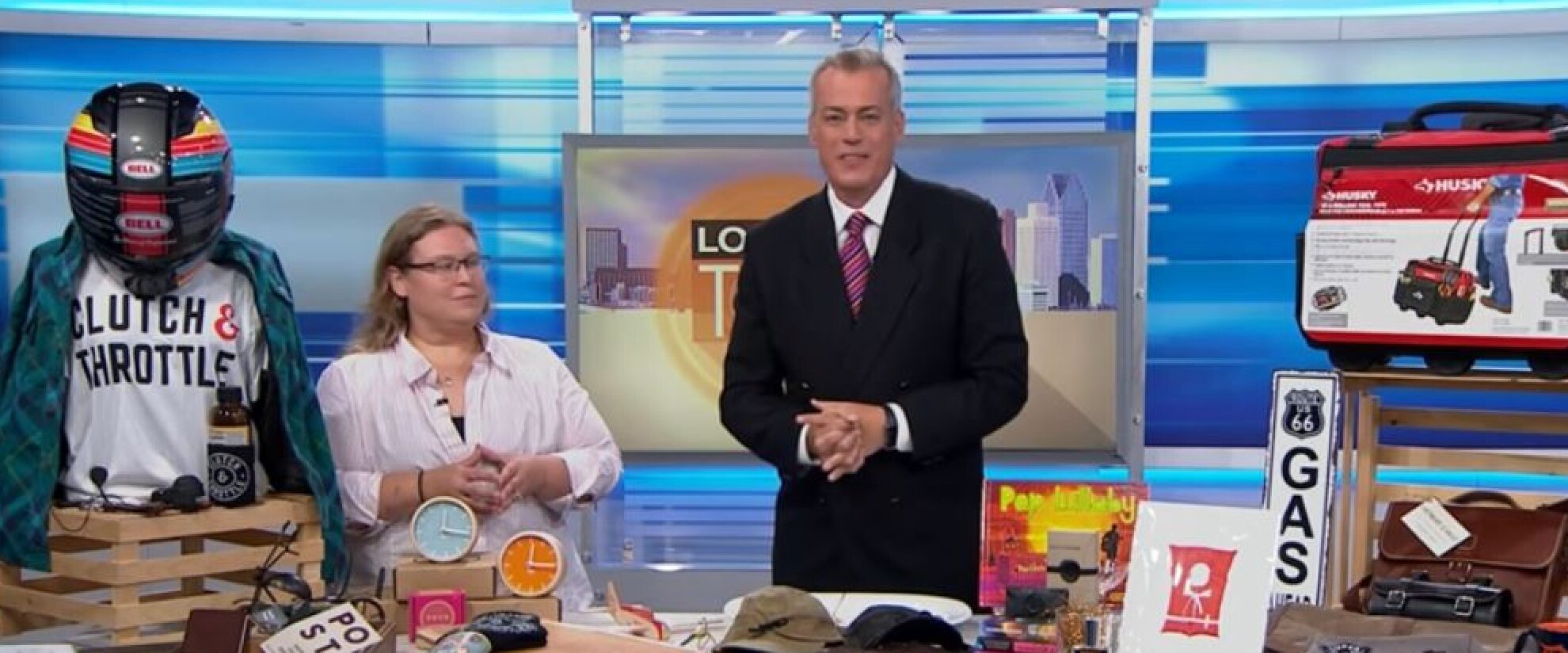
In her 2026 MITech TV appearance, Foster discussed that preparation alongside media relations and event management. Arts, Beats & Eats was among the firm’s early clients, and her team helped promote Detroit’s 2024 NFL Draft. Such assignments give the communications work a physical setting: people arrive, interviews happen and the schedule does not wait for a second draft.
A downtown is a chorus
Catalyst has a separate training offer for Downtown Development Authorities and downtown partnerships. It divides the work into two phases. Organizational leadership develops its messages and practices interviews. Business owners and other district spokespeople then work on identifying news, building reporter relationships, pitching and preparing engaging visual segments.
The division makes sense because a district has several scales of identity. Its leadership can explain the area’s plans. An individual owner can describe what is happening behind one particular door. A visitor needs enough detail to decide whether the trip is worthwhile. Good district communications must leave room for all three perspectives.
Foster’s advice to Downtown Berkley in 2021 shows how closely that work can follow the practicalities of a budget. She discussed the reach of mailed local newspapers, the performance of radio and the cost of magazine advertising. She also cautioned about the returns from banner advertising. Her recommendations concerned where a finite allocation could reach people, rather than how many formats a campaign could collect.
Advertising choices age as audiences and platforms change. The revealing part of the advice is its specificity: geography, frequency, price and reader behavior all entered the discussion. A downtown promotion has to operate within those constraints. A handsome advertisement that the budget cannot repeat has a different value from a modest placement that reaches nearby households.
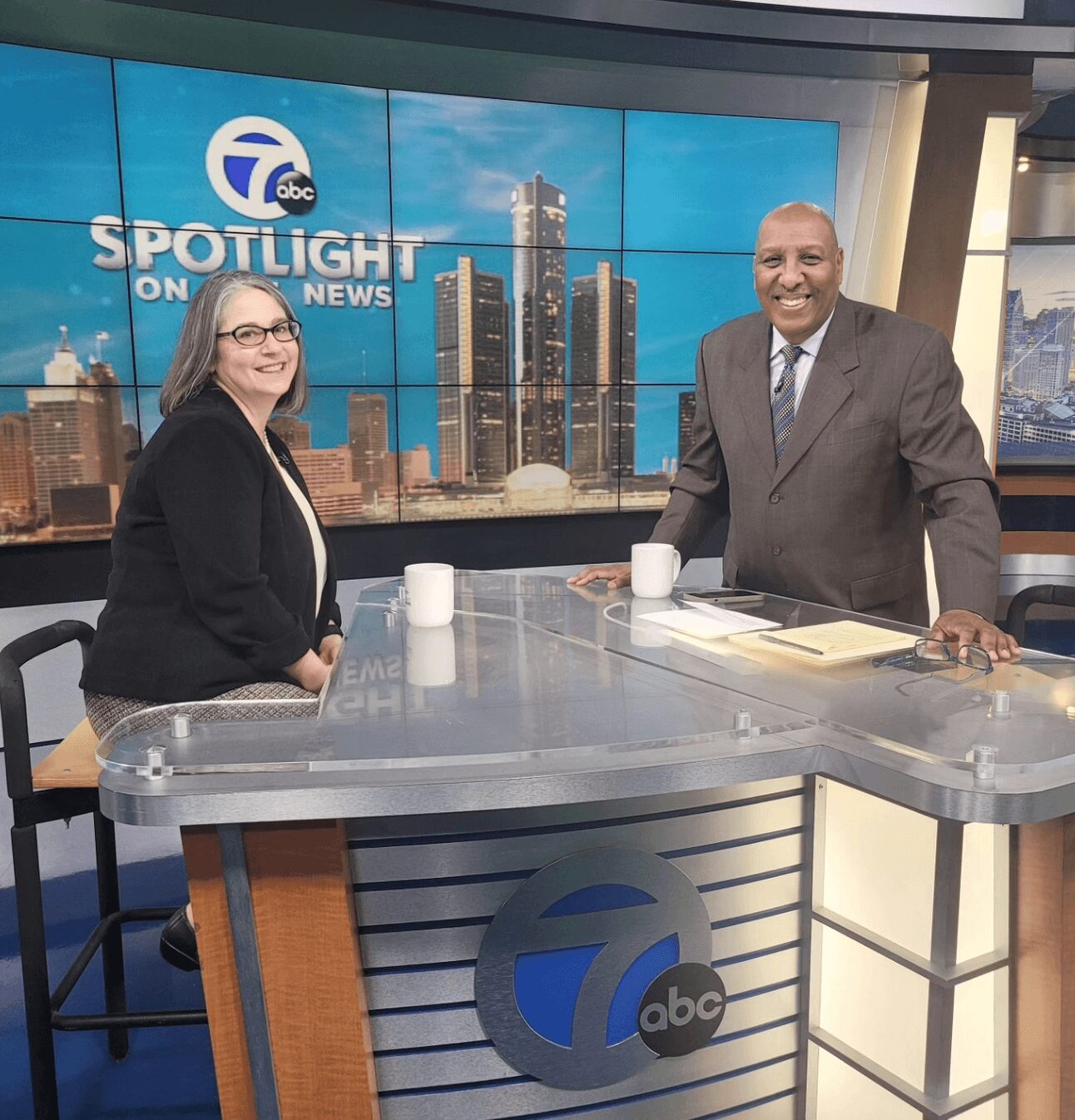
In April 2026, Foster joined Michigan Downtown Association executive director Dana Walker on In MI Downtown. Their conversation covered small-business marketing, PR, social media and community relationships. The audience was a natural fit for work that treats a district’s visibility as something shared among its businesses, institutions and visitors.
After the cameras leave
Coverage also needs to be found after it airs. Foster has discussed using media monitoring to locate broadcast clips and send them to clients. Teasers, radio reads and television segments appear across schedules that no single person can follow continuously. The placement may be brief; keeping a usable record takes another piece of work.
That administrative detail deserves space in a story about publicity. Attention is easy to discuss in the abstract. A clip gives the client something specific to review and share. It also gives the agency a record of what actually ran. The work continues after the spokesperson has left the studio and everyone has congratulated the person who remembered to silence their phone.
By June 2026, Foster was discussing a business ten years into its life. The anniversary interview covered a firm whose services also included websites, promotional writing and social media marketing. Those are different ways for an organization to meet the public, each requiring decisions about language, audience and timing.
The continuity with her own beginning is quietly satisfying. She once needed a place where a prospective client could arrive and take her business seriously. Today, her work includes helping other people prepare for their own encounters with an unfamiliar audience. An office meeting and a television interview both ask someone to make their purpose clear.
The early uncertainty gives the anniversary its shape. Foster could have returned to an agency job. Instead, enough people entrusted her with work for the company to continue, and the work acquired a team, repeatable services and a decade of history. There is room in that story for caution as well as ambition. It begins with a person making herself available, then having to be ready when somebody takes her up on it.