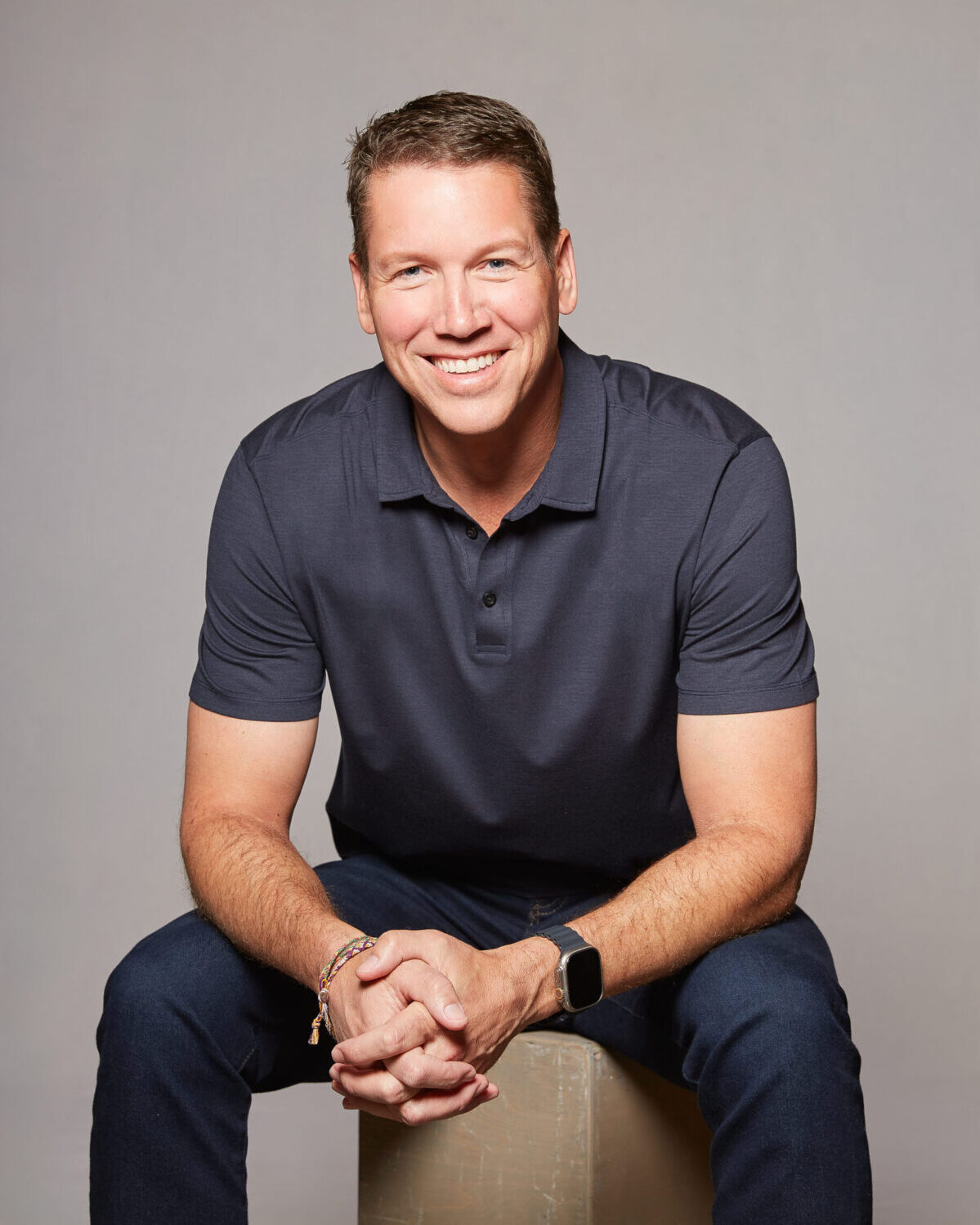
The Man Who Didn't Come from Money
Most venture capitalists arrive via investment banking or management consulting, carrying spreadsheets and frameworks but no scar tissue. Jeff Richards took a different road. He built two software companies. One sold. One didn't. The failure nearly derailed his personal life. Then he walked into GGV Capital in May 2008 - right as the global financial system was unwinding - and stayed for 17 years.
That detail matters. A lot of VCs talk about "founder empathy." Richards earned his version of it by watching a TPG-backed company he built - QuantumShift, a telecom software play - collapse beneath him. The timing was exquisite and brutal: the company failed shortly before his wedding. He wasn't recounting a cautionary tale from a safe distance. He was inside it.
Before any of that, he graduated from Dartmouth with a B.A. in Government and four years of varsity basketball in his legs. He then spent time at PricewaterhouseCoopers, not in Stamford or New York, but in Asia and Latin America - an unusual early chapter that gave him a global operating lens years before "global" became a Silicon Valley buzzword.
The Founder Years
The first company was QuantumShift. Telecom software. TPG backing. And an ending that humbled him. The second was R4, a supply chain SaaS company he also founded. R4 got acquired by VeriSign. He then spent three years inside VeriSign as an executive, learning what it actually feels like to be an operator navigating a large public company from inside a recently acquired team.
Thirteen years as an entrepreneur and operating executive before he ever wrote a check as an investor. That's the resume most VCs don't have - and can't fake.
When Jeff joined GGV Capital in 2008, the firm had been around since 2000 and was building its dual US/Asia identity. What he brought wasn't pedigree - it was pattern recognition earned from actually building things. The type that lets you sit across from a founder who's drowning and recognize the specific kind of drowning it is, because you've been there.
Build specifically for agents rather than just human users.
- Jeff Richards on the AI investment thesis reshaping Notable CapitalGGV, Geopolitics, and the Rebrand
GGV Capital ran as a dual-flag firm - US and Asia - for over two decades. Then U.S. lawmakers started paying close attention to the firm's exposure to sensitive Chinese technology sectors. In September 2023, GGV announced it would split. By March 31, 2024, the split was formalized into two distinct brands: Notable Capital (US-focused, ~$4.2B AUM) and Granite Asia (Asia-focused, ~$5B AUM).
Jeff Richards, alongside managing partners Glenn Solomon, Hans Tung, and Oren Yunger, now leads Notable Capital. The firm backs companies across North America, LatAm, Europe, Israel, and US-India cross-border. The website ggv.com now redirects to notablecap.com. The name changed; the conviction didn't.
What He Actually Bets On
The investment thesis at Notable Capital under Richards narrows to enterprise software, vertical SaaS, SMBTech, and fintech - with AI threading through all of them. His check sizes range from $250K to $25M, with a target around $10M. Stages: seed through Series B+.
On valuations, he's public about a contrarian view: chasing the highest valuation isn't a founder win. It can harm both the company and its backers long-term. The market learned this the hard way in 2021-22. Richards had been saying it for years before the correction made it fashionable.
On AI specifically, he's watching how companies shift from building for human users to building for agents. The distinction sounds technical. The commercial implications are enormous. His thesis: the next generation of enterprise software won't just assist humans - it will coordinate with other software agents directly.
The Board Diversity Work
Richards co-founded AllRaise's Board Xcelerate program, which drives board diversity in private tech companies. It's not a cause he endorses from a safe distance - he built the infrastructure for it. The bet is structural: diverse boards make better decisions, and the data on that is piling up fast.
He also serves on the Advisory Board of the Dartmouth Entrepreneur Network and supports entrepreneurship programs at Dartmouth's Magnuson Center. He's building pipelines, not just writing checks.
The Podcast, the Books, and the Broadcast Circuit
Richards co-hosts Evolving for the Next Billion, a podcast interviewing entrepreneurs and executives. He's a regular CNBC TechCheck commentator on VC market conditions, IPO landscapes, and tech valuations. He's appeared on 20VC with Harry Stebbings, Jason Calacanis's Angel (Season 4, Ep. 9), Howard Lindzon's Panic with Friends, and Eniac Ventures' Seed to Scale.
His recommended reading? Robert Rubin's In an Uncertain World: Tough Choices from Wall Street to Washington. It's a book about navigating complex decisions under genuine uncertainty - which is either a perfect description of venture capital or a perfect description of being in government. Possibly both.
On Deck for 2025
Notable Capital has moved quickly in 2025 - 14 deals already, including Wispr Flow, Fal, and Omnistruct (an AI developer platform). The trajectory is clear: AI-native companies that build the infrastructure for an agent-first software world. Richards believes companies that effectively adopt AI by 2026 will significantly outpace those that don't. He's putting capital behind that conviction.