Venture Capital / Marketplaces / Silicon Valley
"The man who helped eBay buy PayPal -
then left to fund the next generation of markets."
He ran the room before he wrote the check. General Partner at a16z, former CEO of OpenTable, former President of PayPal - and the investor behind Airbnb before anyone called it inevitable.
In July 2011, one month after joining Andreessen Horowitz as its fifth general partner, Jeff Jordan wired $112 million into a company most people thought was a quirky idea for letting strangers sleep in your spare room. That bet on Airbnb - made before the platform had proved it could escape San Francisco, before it had the brand recognition, before the hospitality industry took it seriously - became one of the defining investments of the decade. Jordan didn't get lucky. He saw something others missed because he had spent the previous fifteen years building the kinds of two-sided networks that Airbnb was trying to become.
Before venture capital, Jordan was an operator in the truest sense. As SVP and General Manager at eBay, he ran eBay.com at a moment when the company was rewriting the rules of commerce - and he personally oversaw the acquisitions of both PayPal and Half.com. That's not a footnote. PayPal went on to become one of the most valuable fintech companies ever built. Jordan then moved to lead PayPal as its President from 2004, giving him a rare operator-level perspective across payments, trust, and liquidity at scale.
Then came OpenTable. When Jordan became CEO in 2007, it was a useful but unspectacular restaurant reservation tool. By 2009, he had steered it through a full public offering - in May, during the teeth of the global financial crisis, a moment when the tech IPO window was largely shut. Shares rose 72% on the first day. It was a case study in knowing when to move and how to tell the story.
When Marc Andreessen and Ben Horowitz came calling in 2011, they weren't hiring a financial analyst with a Stanford pedigree. They wanted someone who had actually run the thing. Jordan brought something rare to a venture firm dominated by engineers and financiers: the operator's intuition for what makes a marketplace actually work - the flywheel mechanics, the liquidity problems, the trust architecture, the tension between buyers and sellers that can kill a platform if you get it wrong.
Over twelve years at a16z, Jordan built a portfolio around that thesis. Pinterest. Instacart. Airbnb. OfferUp. Incredible Health. Fanatics. Each of them a marketplace - each of them benefiting from a partner who had wrestled with the same problems from inside an operating company. He also wrote, prolifically. His essays on marketplace dynamics, startup metrics, and IPO strategy became standard reading. "16 Startup Metrics" - co-authored with colleagues at a16z - remains one of the most cited pieces of practical startup literature anywhere.
After stepping back from active investing in 2023, Jordan said he was "not the retiring type" and ready for his "next challenge." He has committed via the Buffett Pledge to give at least half his wealth to philanthropic causes - a quiet signal about where his priorities land. He still runs a basketball game in Silicon Valley that has become something of an institution: a standing court date where young tech professionals find themselves matched up against people who have been in the industry for decades. That's very much his style.
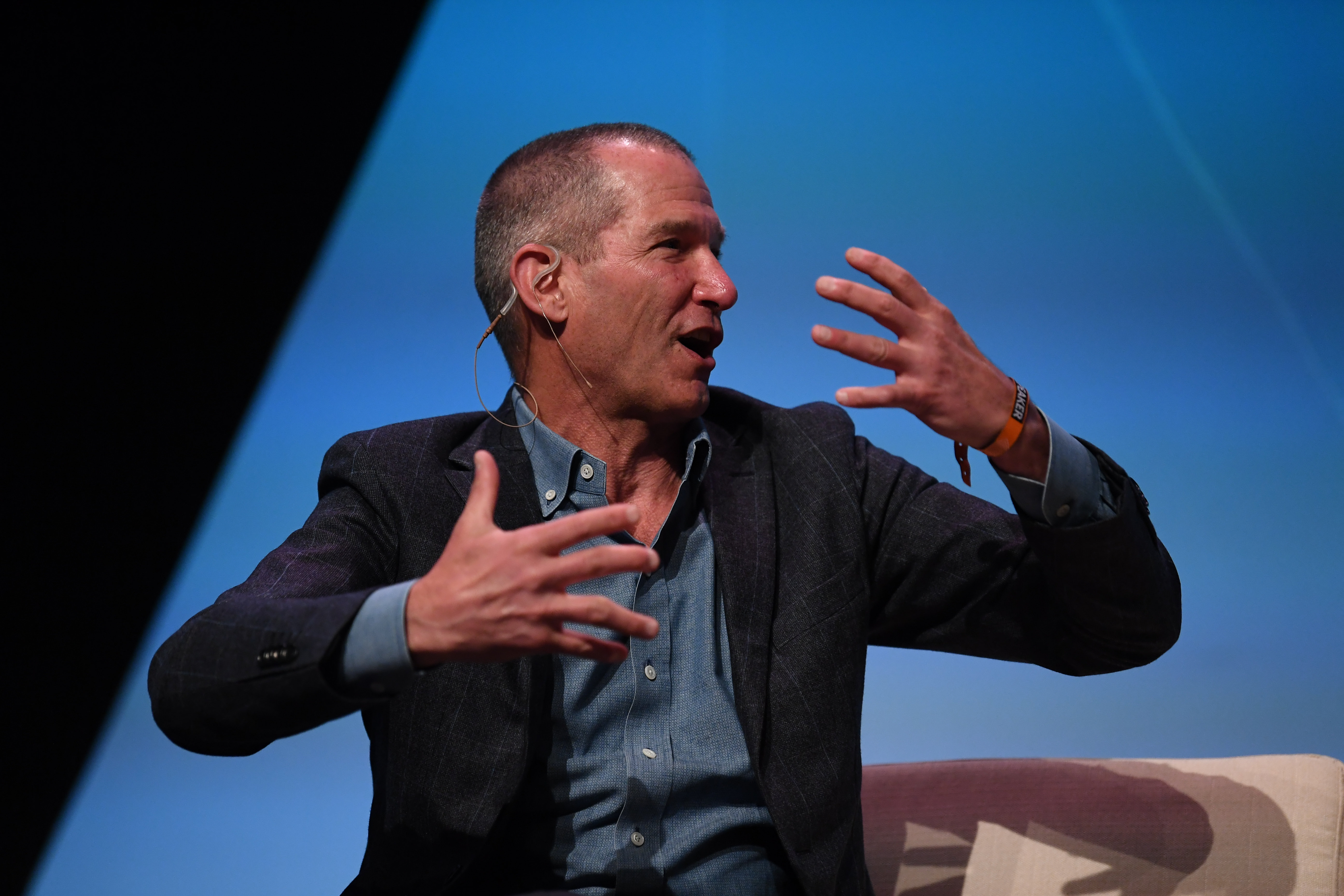
"The #1 job of anyone who manages a marketplace is to protect, maintain, and enhance these core principles."- Jeff Jordan on marketplace management
Most venture capitalists come from finance or engineering. Jordan came from running the thing. He had managed buyer-seller trust at eBay when fraud could kill a platform overnight. He had led payments at PayPal before digital wallets were a category. He had taken a restaurant SaaS company public during a recession. When a marketplace founder sat across from him in a pitch meeting, Jordan had already made every mistake - and fixed most of them.
That operational credibility is not something you manufacture. It accumulates over years of making payroll, hitting quarterly numbers, managing teams, and navigating the specific humiliation of an underperforming category on a platform you run. Jordan had all of it before he wrote a single venture check.
Jordan spent years developing and publishing his framework for what makes an online marketplace work - and what kills it. The foundation: five principles borrowed from economics and adapted to the digital age.
Every company on this list is a marketplace or consumer platform. That is not a coincidence. Jordan bets on the same thing, over and over, with different founders in different sectors - because he believes the marketplace model is the most durable structure in commerce.
"Good metrics aren't about raising money from VCs - they're about running the business."- Jeff Jordan, co-author of "16 Startup Metrics" (a16z, 2015)
Most people in venture capital spent their whole careers in finance. Jordan spent the first half of his building things - and only then started writing checks.
| Period | Role | Company | What He Learned | Phase |
|---|---|---|---|---|
| 1987-early 90s | Consultant / Banker | BCG, L.A. banking | Strategy frameworks, capital markets | Operator |
| Mid-1990s | SVP Finance | Disney Stores | Consumer retail, brand operations | Operator |
| Late 1990s | President | Reel.com | Early e-commerce, online UX | Operator |
| 1999-2004 | SVP & GM, N. America | eBay | Marketplace dynamics, trust, GMV at scale, M&A | Operator |
| 2004-2007 | President | PayPal | Payments, network effects, global expansion | Operator |
| 2007-2011 | President & CEO | OpenTable | B2B2C, SaaS + marketplace hybrid, public markets | Operator |
| 2011-2023 | General Partner (#5) | Andreessen Horowitz | Venture portfolio construction, board leadership | Investor |
| 2023-present | GP Emeritus | a16z (portfolio boards) | Stewardship, philanthropic focus | Investor |
"I'm not the retiring type. I'm ready for my next challenge - bring it on!"
"The #1 job of anyone who manages a marketplace is to protect, maintain, and enhance these core principles."
"Good metrics aren't about raising money from VCs - they're about running the business."
"Competition in every eBay category was dynamic, but each of those categories gravitated towards equilibrium."
"eBay has driven over $800 billion of GMV over the past 10 years, most of which is earned by individual sellers around the world."
Two decades of operating experience - eBay, PayPal, OpenTable - before a single venture check. When founders pitch him on marketplace liquidity problems, he's solved them before.
"16 Startup Metrics" and his marketplace framework essays are curriculum, not content marketing. He publishes to clarify his own thinking - and the field benefits from it.
He runs a regular pickup game in Silicon Valley that connects young tech professionals with veterans. It is, quietly, one of the most effective mentorship programs in the Valley - and it doesn't have a logo.
He took OpenTable public during the 2009 financial crisis. He co-wrote "16 Things CEOs Should Do Before an IPO." When his portfolio companies prepare to go public, he is the person in the room who has actually done it.
He publicly committed to giving away at least half his wealth. In a world where billionaires perform philanthropy, Jordan signed a pledge that binds the commitment to numbers.
Airbnb, Pinterest, Instacart - all pre-consensus bets on marketplace models that hadn't yet proved themselves beyond their home cities. Jordan's pattern recognition runs on operator intuition, not spreadsheet optimization.
He was the 5th general partner ever hired at a16z - a founding-era team that is now one of the most storied in venture history.
His first deal at a16z was Airbnb's Series B. He closed it one month after joining the firm, before he'd even settled in.
He helped eBay acquire PayPal - then became PayPal's President. Very few people have that depth of perspective on a single company's acquisition from both sides.
He grew up as the middle child between Philadelphia and Washington D.C. The quiet one who watches, calculates, and then moves.
He met his wife Karen at Stanford Business School. They have twin children. He does not talk about his family in the press.
His basketball game in the Valley is an institution - a standing court date that has connected more careers than most formal mentorship programs.
His OpenTable IPO in 2009 is still discussed as a case study in timing. Launching a tech IPO in the middle of a global financial crisis - and watching shares rise 72% - is not standard operating procedure.
Jeff Jordan is not the venture capitalist who shows up on panels to talk about the future of AI. He is not the partner whose face appears on the cover of Wired. He is the one who shows up to board meetings knowing more about your customer retention curve than your CFO does - because he's been the CFO.
He has described himself as competitive, framework-driven, and community-minded. People who have worked with him describe a partner who asks harder questions than he appears to be asking - who lets conversations run long enough for founders to reveal what they're actually worried about, then addresses the thing behind the thing.
He is, by Silicon Valley standards, a quiet person. Not reserved - quiet. He does not perform expertise. He demonstrated it in boardrooms and operating reviews for twenty years before he started expecting founders to trust his judgment. That history is readable in how he engages. He doesn't need you to think he's smart. He already knows what he knows.
The basketball game is perhaps the most telling detail. He could have hosted a dinner series, a lecture, a scholarship fund - all the standard formats through which successful people distribute time to the next generation. Instead, he plays basketball. It is egalitarian in the way that only sports can be. No one is performing at the table. Everyone is competing on the court.
May 2009. The financial system had just nearly collapsed. Tech companies were not going public. OpenTable did. And on day one, shares jumped 72%. Jordan didn't get lucky - he understood that the story of a company going public in a crisis is itself a compelling story.
The Giving Pledge, co-founded by Warren Buffett and Bill Gates, asks signatories to commit to giving the majority of their wealth to philanthropy. Jordan signed it. No press release. No announcement tour. Just the commitment.