The first machine Jeff Geerling made speak to an audience was a radio station’s computer. Its music system wrote the title of the song on air to a file. His father, a radio engineer, wondered if that bit of information could appear on the station’s website. Jeff built an interface that looked like a car radio, with the song title set in what he remembers as something like Courier. It ran for five or six years. A visitor could hear a record, open a browser and see the invisible machinery of the broadcast made legible.
There is a good chance that if Geerling were building it now, he would also publish the wiring diagram, test the network connection on camera and write down exactly where the first version failed. The mediums have multiplied, but his favorite move is familiar: take a system people treat as a sealed object and show what is happening inside it.
A workshop above the airwaves
His technical education began around the equipment his father Joe brought home from work. There were spare computer parts, electronics and a workshop where Jeff was encouraged to try things until they worked. Sometimes the experiments ended in a dead computer. More often, they taught him how to recognize what a machine was doing. He went along to tower sites and worked as an engineering assistant for Infinity Broadcasting and CBS Radio from 1999 to 2002.
Radio also taught him that computers are physical objects in a physical world. A station may sound effortless to a listener, but behind that smooth voice are transmitters, networks, cables and people who have to notice when something goes wrong. As a child, Jeff soldered a voltmeter. He has said he still uses it, despite its imperfect accuracy. It is a funny sort of family heirloom: less a polished keepsake than a tool that continues to earn its drawer space.
His interests widened into web design, servers and networking. He built computers, helped organizations with networks, and learned enough web development to make that radio-song display. He studied at Saint Louis University and Kenrick-Glennon Seminary; in a later interview he described earning a philosophy degree and studying for the priesthood before choosing a different path. Then Drupal drew him into the open-source world. He liked that the community rewarded people willing to contribute, whatever their background.
The server room becomes a classroom
Drupal led to larger websites, and larger websites led him back toward infrastructure. A couple of servers can be managed by hand. A growing fleet needs a repeatable method. Geerling picked up Ansible in early 2013, when it answered a problem he was already facing. He began blogging about it because there was little material to read. Those posts became chapters; the chapters became Ansible for DevOps.
It was an unusual way to write a technical book: in public, while readers could still see it changing. Leanpub reported that the book earned more than $25,000 before it was finished. Geerling told the publisher that some readers checked his changelog so closely they proofread his updates. He also wrote a small script to graph his own writing progress. It is hard to imagine a more Geerling solution to a writer’s problem than giving the writer a dashboard.
“It’s like taking down the wall of magic that you thought existed between really cool products and your own abilities.”Jeff Geerling, on learning through Raspberry Pi projects
His working life crossed several kinds of institution. He directed web development for the Archdiocese of Saint Louis, served as Flocknote’s chief technical officer, developed applications for Mercy, and worked as a senior technical architect at Acquia. From 2019 to 2021, he consulted for Ansible by Red Hat. Alongside those posts, he has owned Midwestern Mac since 2009. The job titles differ, but the same question runs through them: how do you make a system reliable enough to serve people who cannot spend all day tending it?
The books widened his reach. Ansible for Kubernetes and Kubernetes 101 joined Ansible for DevOps. On GitHub he kept publishing the code behind his experiments. A reader could copy a playbook, see the assumptions, then change it for a different machine. Teaching, for him, did not end at an explanation. It included the parts list.
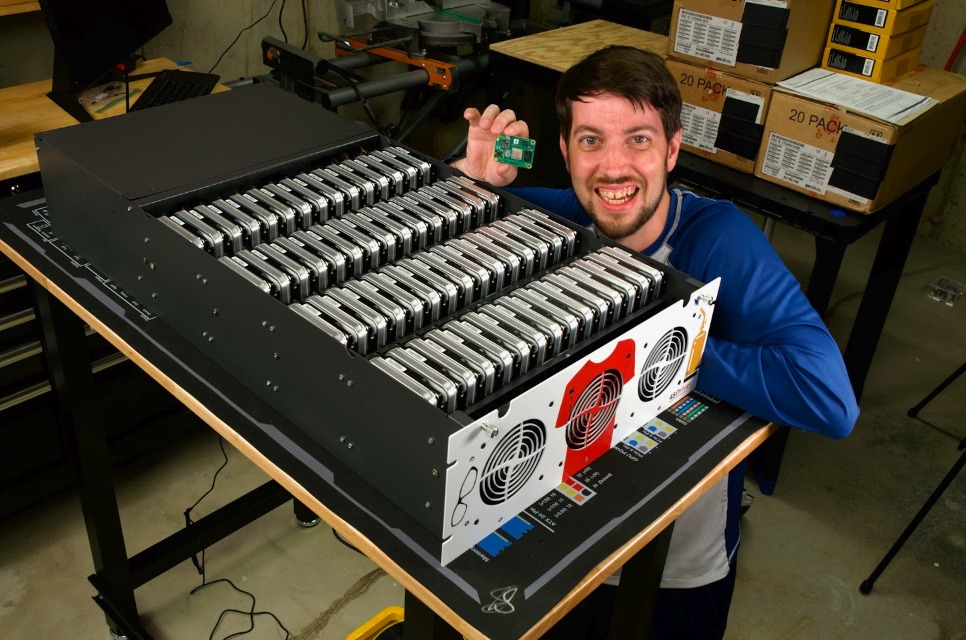
The storage build was experimental; its reported capacity is not a claim about everyday performance.
A small computer with large questions
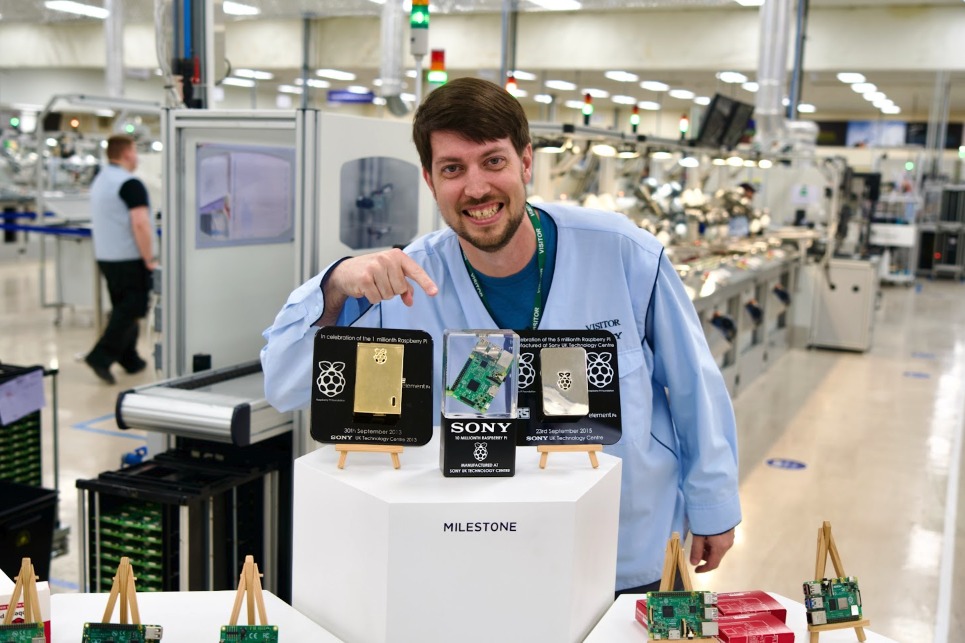
Geerling bought his first Raspberry Pi, a Model B, in September 2012. Small boards fit his teaching style. They are inexpensive enough to invite tinkering, visible enough to point at, and capable enough to make a real network behave in interesting ways. He calls clusters of them “brambles.” The Dramble, a Raspberry Pi cluster running a Drupal site, began in 2014 and became one of his enduring demonstrations of what several modest machines can do together.
His YouTube channel had existed in some form for years. During the pandemic, a live Ansible 101 series and videos about a Raspberry Pi Kubernetes cluster found a much larger audience. He calculated the viewership needed to make video a viable business, then stopped software consulting when the numbers worked. The videos are demonstrations, but they also preserve the pauses, caveats and wrong turns that documentation often edits out.
Consider the one-petabyte Raspberry Pi. The idea was to attach an enormous storage volume to a single tiny computer. It took more than two years and help from Broadcom engineers, Raspberry Pi engineers and 45Drives. Geerling has called the result impractical and said it barely worked. This is precisely why the project is worth watching. The machine strains at its limit; the limit explains the machine.
He is equally willing to pursue a less noble joke. He built a Raspberry Pi-powered detector that recognized “Red Shirt Jeff” and fired a leaf blower at him. He has said his children’s laughter made that contraption especially memorable. The gag and the petabyte build belong to the same workshop: the result may be absurd, but the process can still teach.
Back to the towers
In 2021, Jeff persuaded Joe to appear on camera and the two launched Geerling Engineering. The channel returned to the world where the story began: broadcast towers, radio signals and the engineering needed to keep them on the air. It also gave their shared knowledge a new shape. Joe brings decades of broadcast experience; Jeff asks the kinds of questions a viewer might ask from the other side of the fence.
That pairing explains something about Geerling’s tone. He can describe an enterprise deployment, then admit he is a beginner at electronics or microcontrollers. In a Raspberry Pi interview, he suggested that his gift was explaining work that others might do with greater technical mastery. Modesty can be a useful teaching instrument. It leaves a door open for the person watching at home.
It also helps that the projects are often useful in his own life. He told the same interview that Raspberry Pis run parts of his home network, including internet monitoring and a VPN. His interest in local control is practical: systems for lights and household equipment can keep working when the outside connection fails. When he dislikes a device that demands a cloud account or cannot be repaired later, he says why in terms a buyer can understand.
A smaller rack, a bigger table
By 2025, his fascination with compact machines had acquired a frame. Project MINI RACK is an open resource for ten-inch equipment racks: parts, compatibility notes and examples of complete builds. Its premise is simple. Many people have room for a shelf, not a server closet. A small rack can hold a surprising amount of computing equipment if someone has already worked out what fits and what needs a custom mount.
One 2026 version traveled in carry-on luggage. Geerling built the portable network to support a vintage-computer demonstration, with battery power, several internet options and twelve wired Ethernet connections. He called it overkill. He was also trying to avoid debugging the network and the old Macs at the same time. That is the cheerful engineer’s paradox: the complicated-looking setup exists to make the day simpler.
The old web projects have also changed shape. In January 2026, he moved his personal site from Drupal to Hugo. Drupal had hosted it since 2009, but publishing a post had come to mean managing images, caches and a chain of maintenance steps. The migration involved more than 3,500 posts. He wanted the blog to be a place to write again. For a person whose career includes years of Drupal work, the choice shows an allegiance to the job at hand rather than to any one tool.
Now he is trying to turn a dispersed hobby into an in-person gathering. In September 2026, Geerling announced HomelabFest for September 12 to 14, 2027, in the St. Louis area. He described a space for energy-efficient servers, self-hosted software, old hardware, racks and the people who enjoy them. It is a larger version of the workshop his father opened to him: a place where people can bring a build, point to the awkward bit and ask another person how they solved it.
A radio station’s song title was once a small mystery waiting to be put on a screen. Today the mysteries have more ports and much larger storage arrays. Geerling’s answer has stayed appealingly concrete. Open the case. Follow the signal. Tell the next person what happened.