"The engineer who learned to speak in basis points - and never stopped."
Andreessen Horowitz's quiet architect of real assets. He turned a derivatives trading desk into a two-decade education in how serious money actually works - and now he's doing it for the people who built Silicon Valley.
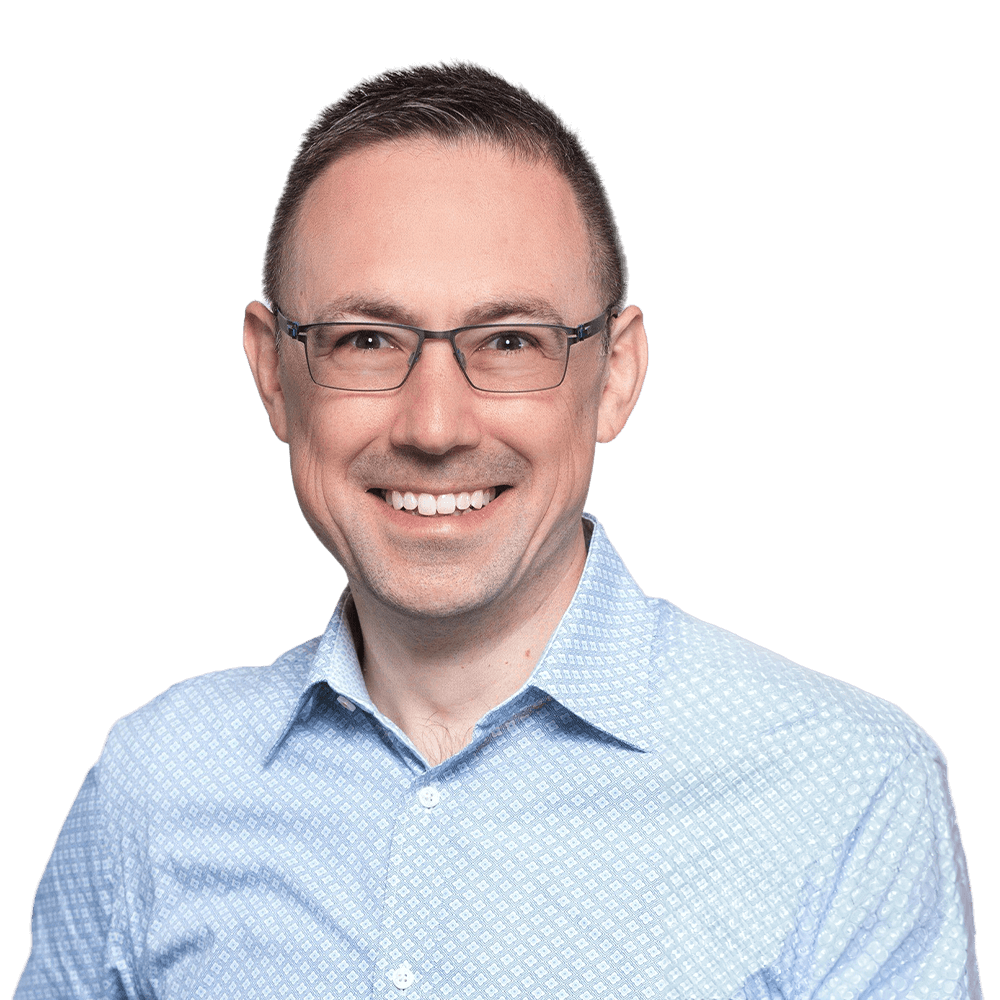
Most people who land at Andreessen Horowitz got there by building a company, writing a check, or crafting the right blog post. Jeff Bramel took a different route: he spent two and a half decades quietly managing more money for more serious institutions than most VC partners will ever see - and then a16z hired him to run real assets for the founders those partners had backed.
The origin story starts at Caltech, which is already a tell. You don't double-major in mechanical engineering and economics at Caltech unless you want every problem to be a system - with inputs, outputs, variables to optimize, and failure modes to model. That instinct followed Bramel to Stanford, where he earned his MS in management science and engineering. Both degrees, notably, are less about money than about how things work. That matters when you spend a career deciding which things are worth owning for thirty years.
He started where few allocators start: a proprietary options trading desk. Options traders live in a world where time itself has a price, where liquidity can evaporate in seconds, and where the gap between what you model and what actually happens is where fortunes are made and lost. It's a counterintuitive entry point for someone who would later become a patient capital advocate - but that tension is probably the point. You learn the true cost of illiquidity by trading liquid markets at high velocity.
From the trading desk, Bramel moved into the endowment-adjacent world of institutional alternatives. At Jasper Ridge Partners - the investment advisor to Stanford's endowment - he got his postgraduate education in how the world's best portfolios are actually built. Long time horizons. Real assets. Private credit. Infrastructure. The kind of investments that don't show up on a brokerage statement but generate returns over decades, not quarters.
Then came one of the more interesting lines on his resume: co-founding managing member of the Sequoia Heritage Fund. This wasn't Sequoia Capital the VC firm - it was the multi-family office purpose-built to manage the accumulated wealth of Sequoia's founders, partners, and portfolio families. In other words: people who had just participated in Apple's early financing, Google's Series A, YouTube before anyone knew what YouTube was. Managing that kind of wealth, for that kind of person, at that particular moment in Silicon Valley history, is not a job that rewards conventional thinking.
The stint at Jordan Park Group - another sophisticated multi-family office, this time managing $18 billion across taxable and tax-exempt portfolios - deepened Bramel's experience with the specific challenges of tech-wealth management: tax efficiency, estate structures, philanthropy, the kind of liquidity planning that matters when your net worth is tied up in a company that's about to go public. These aren't textbook problems. They're bespoke puzzles for people with permanent capital and generational ambitions.
Before joining a16z, he spent time at UBS Asset Management as Managing Director and Head of Taxable Real Assets - overseeing a slice of roughly $150 billion in private real assets within UBS's $1 trillion platform. That's a different kind of institution: global, publicly accountable, operating at a scale where individual decisions ripple across pension funds and sovereign wealth portfolios. The experience of managing real assets at institutional scale, inside a major bank, rounds out a career that has touched nearly every corner of the serious-money universe.
The move to a16z made sense the moment you understand what a16z Perennial is actually doing. This isn't a traditional VC fund. Perennial is Andreessen Horowitz's in-house family office arm - built specifically for the founders, executives, and institutions in a16z's orbit who need the endowment model adapted to their specific circumstances: taxable capital, concentrated positions in tech, multi-generational wealth transfer, and a very long time horizon. Jeff Bramel, who has spent his entire career building exactly that, was the obvious hire.
The endowment model isn't just an investment strategy. It's a philosophy about time - the idea that the most powerful thing you can do with serious capital is give it permission to be patient.
- A16Z Perennial Investment PhilosophyA double Caltech + Stanford pedigree in engineering and systems science gives Bramel a structural edge most allocators lack: he thinks in systems, optimizes across constraints, and models failure modes before they happen.
Time at Jasper Ridge Partners - Stanford's endowment investment advisor - instilled the long-game philosophy that now defines a16z Perennial's entire approach. He didn't just study the endowment model. He practiced it where it was invented.
Being a founding member of the multi-family office for Sequoia Capital's ecosystem means Bramel has operated at the intersection of venture capital and generational wealth management for longer than most people in his role.
Starting as a proprietary options trader is a counterintuitive background for a patient-capital advocate. But understanding the price of liquidity - by working in its absence every day - makes you a sharper long-term allocator.
Leading $150B+ in private real assets at UBS gave Bramel exposure to capital at a scale that few individuals ever touch - across geographies, structures, and institutional mandates that span pension funds to sovereign wealth.
Based in Seattle, not Menlo Park. In a world where proximity to Sand Hill Road is treated as a credential, choosing to work from the Pacific Northwest says something about an investor's confidence in their own network and judgment.
A16Z Perennial is Andreessen Horowitz's in-house investment platform for ultra-high-net-worth individuals and families - particularly the founders, executives, and institutions that have been part of a16z's orbit. It's the firm's answer to the question: "Okay, we helped you build a $10 billion company. Now what do you do with the money?"
The platform draws heavily from the endowment model - favoring long-duration, illiquid alternatives with structural return advantages. But it adapts that framework for the specific challenges of taxable capital: estate planning, concentrated positions, philanthropic vehicles, tax efficiency, and the liquidity needs of people who don't have a university's 30-year spending horizon to rely on.
Bramel's real assets mandate within Perennial covers the physical side of the portfolio: real estate, infrastructure, natural resources, and other tangible, inflation-sensitive asset classes that provide diversification against a portfolio otherwise dominated by technology equity.
Double-majored in mechanical engineering AND economics at Caltech - simultaneously doing problem sets in thermodynamics and macroeconomics. Most people pick one or the other.
Started his career on a derivatives trading desk - the kind of job where you price volatility by the second. It's about as far from hiking in the Cascades as you can get. Both are apparently non-negotiable parts of his life.
Outside of work: hiking, skiing, kayaking, and rock climbing. He builds things with his hands and makes music. For someone who spends his days managing billions, the analog pursuits seem entirely on purpose.
Based in Seattle, Washington - not Silicon Valley. In an industry where proximity to Sand Hill Road is treated as mandatory, Bramel works from the Pacific Northwest. The contrarian geography suits the long-game philosophy.
As a co-founder of Sequoia Heritage Fund, he helped manage wealth for people who invested in Apple, Google, and YouTube before any of those companies were household names. Front-row seat to how legendary returns actually compound.
He's a father. Which, combined with the endowment-model investing philosophy, the multi-generational wealth focus, and the patient-capital approach, suggests someone who thinks about time horizons in every context - not just professionally.