Software updates have a public-relations problem. Nobody gathers around a dinner table hoping to hear about patch management. Jay Prassl helped build a company around it anyway. A career spent inside the machinery of enterprise computing had given him a useful suspicion: a familiar task could still conceal a business worth building.
Consider the peculiar status of maintenance. Everyone agrees it matters. Everyone would prefer that someone else had already done it. In corporate computing, that gap can stretch across laptops, servers, operating systems and applications. Each machine needs attention; the person responsible has a finite afternoon. Prassl’s work at Automox grew out of that stubborn mismatch.
His route there ran through Boulder’s storage industry, two companies acquired by larger technology businesses, and an early patching product with an admirably literal name. Along the way, he became interested in a question that extends well beyond computers: how much effort disappears into keeping things running?
Employee number five, then another beginning
Before Automox, Prassl spent a decade at LeftHand Networks. He was its fifth employee and worked across different parts of the business. LeftHand developed distributed storage technology, and HP acquired the company in 2008. For someone interested in young companies, joining at number five offers a particular education. The organisation is small enough that the distance between an idea and its consequences is very short.
At SolidFire, his work included marketing and branding for a business built around flash storage. NetApp acquired SolidFire in 2016. The products changed; the professional setting remained recognisable: infrastructure companies trying to persuade customers that an established technical arrangement could be rebuilt.
Sales and marketing in that setting require a willingness to discuss what happens underneath the visible product. A storage system has to earn its place through what it enables other people to do. Prassl’s career repeatedly put him in that conversation, translating the workings of infrastructure into reasons for customers to care.
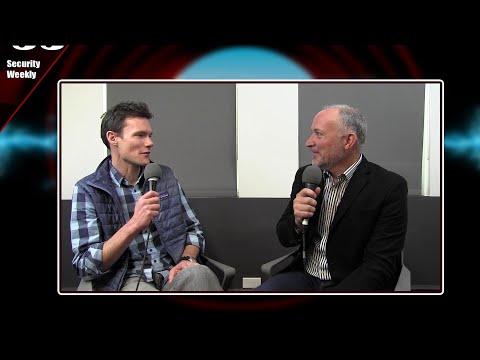
In a 2014 discussion of SolidFire’s storage controls, he described administrators being able to adjust performance for individual applications. His emphasis fell on delivering the service promised to a customer without wasteful over-allocation. Even then, the interesting part of a faster technology was the control it gave the person operating it. Speed had to become something useful at the other end.
The business hidden inside a yawn
Prassl’s next opening began with PatchSimple, a product for automating Linux patching. Through the Boulder technology community, he connected with its technical founder. The work expanded to Windows and Mac machines. A small website and an early product were already attracting companies, giving the team a reason to examine a task that sounded thoroughly unglamorous.
“I love that 0 to 250-person stage,” he said in 2018. That preference helps explain the return to a small company after two acquisition journeys. At the beginning, the work is still close enough to touch. Customer questions can change the product, and a handful of sign-ups can matter more than a polished presentation.
Patching invited an obvious objection: surely computers updated themselves already. Yet the customers arriving at Automox had practical questions about what equipment they owned, what condition it was in, and how to correct problems. A task can sound solved in conversation while remaining awkward in the room where somebody actually has to perform it.
By August 2017, Automox was offering custom policies through its system-management capabilities. Windows, Mac OS X, Linux and third-party software could be managed through a single dashboard. The service was cloud-based and could reach machines without requiring an on-premises patching installation or a VPN connection. Geography was becoming a poor excuse for an unfinished update.
That early product detail matters to Prassl’s story. An administrator’s day contains many small decisions, and each separate tool adds another place to make them. Bringing several operating systems into one view was a practical proposition. The customer could spend less time moving between consoles and more time deciding what needed to happen.
Installation is only the beginning
Automox also expanded into automated software deployment. Keeping an endpoint in the desired condition meant more than applying an operating-system update. Required applications needed to be present, and approved software needed to remain installed as the machine moved through its working life.
The company described a problem with master machine templates, often called golden images: their contents could fall behind soon after creation. The name suggests something fit for a museum. Unfortunately, a working computer has little respect for a museum label. Software changes, requirements change, and yesterday’s carefully prepared starting point becomes another thing to maintain.
Prassl’s argument was that administrators needed continuing authority over that process. A machine could not be considered finished simply because it had once been configured correctly. This gave Automox a wider job than delivering patches. It was helping customers keep their intentions attached to their equipment over time.
“The only true competitive advantage in security today is speed.”Jay Prassl, February 2020
In February 2020, Automox announced a $30 million Series B round, bringing its total funding at that point to $42 million. Prassl framed its purpose around preventing avoidable exposure. Security teams had tools for finding adversaries inside an organisation; his pitch concerned closing the openings they might use to enter.
There is a salesperson’s economy to that image. Windows and doors are easier to picture than a catalogue of endpoint settings. It also puts the attention on action. Once a weakness is understood, the useful question is how quickly someone can do something about it. A beautifully organised warning still leaves work waiting on a desk.
More money, more people, the same unfinished work
April 2021 brought a larger financing: $110 million in Series C funding led by Insight Partners, with participation from funds managed by Blackstone and existing investors. Automox said its total funding exceeded $152 million. Around 2,000 customers across 30 countries were using the service at the time.
Those figures describe a company at a particular moment. They also mark the distance travelled from a product concerned with Linux patching. The planned investment included broader enterprise capabilities and a larger sales organisation. A company selling a way to manage complexity was acquiring more organisational complexity of its own.
The leadership hires made that expansion tangible. Jeff St. Clair joined as chief revenue officer in March 2021, taking responsibility for global sales and pathways strategy. Prassl pointed to his experience building sales organisations. In September, Justin Talerico arrived as chief marketing officer, with a brief to extend the brand and develop demand across customer segments.
For a founder who had previously led marketing himself, hiring that function carried a familiar professional logic. A growing business needs people who can take responsibility for particular jobs. The founder’s early reach eventually becomes a constraint if every task must still return to the same person.
The product’s connections were widening too. In September 2021, Automox announced a partnership with SentinelOne. Vulnerability information could pass from SentinelOne into Automox, where customers could address the issues across Windows, macOS and Linux devices. The arrangement connected detection with the work of fixing what had been detected.
This is a useful way to understand Prassl’s place in cybersecurity. His public arguments returned to the operational handoff: a problem has been identified, an administrator has a queue of jobs, and something needs to close the distance between the two. The glamorous moment of discovery still needs a reliable next step.
A six-out-of-ten meeting
Inside the company, Prassl was examining another queue of recurring work: meetings. By March 2022, he described a practice called “Vote the Meeting.” Participants scored a meeting from one to ten. The useful follow-up asked what would move the score up a point.
It is an appealingly modest question. Nobody has to redesign corporate life before lunch. A six can become a seven. His wider approach to distributed work included deliberate onboarding, written knowledge and a handbook-first practice borrowed from GitLab. Information needed to travel without requiring everybody to be in the same room.

The connection with his product work is hard to miss. Both ask where a routine has become unnecessarily dependent on someone’s presence. A documented answer can spare a meeting; a repeatable policy can spare another manual task. The comparison is an editorial reading of his work, but the recurring concern is visible: people should have a workable way to keep things moving.
The founder and the company’s next chapter
On August 23, 2022, Automox announced Tim Lucas as its new CEO. Lucas had joined in June. Board chair Dmitri Alperovitch thanked Prassl for his contributions as a founding member, chief executive and board member over the preceding six years.
The distinction matters when looking back at a founder’s career. Automox’s subsequent development belongs to a company with its own continuing leadership. Prassl’s chapter includes the early product, the expansion of its remit, its financing and the work of building an organisation around a problem that was easy to dismiss.
There is something quietly funny about that choice of problem. Enterprise technology promises the future; eventually, somebody must install the update. Prassl made a business out of taking that second sentence seriously. His career gives the overlooked task a place in the story, and gives the person doing it a little more room in the day.