The awkward thing about Jay Madheswaran’s first AI business was that it worked. Customers bought it. Revenue arrived. There were employees and existing commitments, the sort of evidence a founder is supposed to welcome. Yet the business that would become Eve required him to question what those encouraging signs actually meant. Having something to preserve made changing direction harder.
In his account, the earlier company had reached a few million dollars in revenue while selling language-processing automation across industries. By 2022, the team was small and the product was spread across legal, finance and other uses. Madheswaran saw a need to concentrate on work valuable enough to support larger contracts. Improvements in AI also made deeper workflows possible. The familiar business and the emerging technology were pulling toward different destinations.
He and his colleagues chose plaintiff law. They eventually shut down the old service, even as customers were still interested in buying it. That decision gives Eve’s later funding announcements a less tidy beginning. The company’s history contains a working product that had to be left behind, and people who had to decide which kind of work they wanted to spend their next years doing.
A different destination.
The predecessor began in 2020. Eve’s legal AI chapter arrived in 2023.
The bear-shaped elevator
Long before the customers, Madheswaran had a smaller transport problem. As a child, he built an elevator from a bear-shaped jello container. Its passengers were broken toys, going up and down on what he described as important toy business. Even a damaged toy, apparently, can have appointments.
He initially considered becoming a chemist or materials scientist. Computer science changed his plans because its pace of progress appealed to him. He went on to study the subject at the University of Illinois Urbana-Champaign. The childhood contraption and the later career have one useful detail in common: he liked turning an idea into something that could do a job.
His recollections keep returning to that activity. He talks about building applications to test ideas and making his own coffee table. Furniture is a modest but persuasive detail in a technology founder’s biography. It suggests the attraction of making things survives even when there is no software market to address and no investor waiting for a presentation.
An engineer takes the investor’s chair
Madheswaran worked at Facebook before its IPO, then became Rubrik’s first engineer. At Rubrik his responsibilities ranged from a distributed job-scheduling framework to front-end code, followed by management. A young company gives an engineer plenty of chances to discover how little of the job can be neatly contained inside one technical specialty.
By the time Lightspeed announced his arrival as a partner in December 2018, he had helped Rubrik’s product engineering organization grow from a few people to hundreds. The firm highlighted his experience in enterprise infrastructure and his interest in open-source and cloud software. It also emphasized what he had learned about culture and mentorship. A larger team needs ways to pass on judgment, as well as ways to divide up tasks.
The move put him on the other side of a familiar conversation. Founders would bring him problems, teams and proposed solutions. He could examine more possibilities than an operator could pursue personally. But he continued making sample applications. Investing gave him a wider view of the market; writing software gave him a way to check what he thought he saw.
“what can we build next?”
Jay Madheswaran
The customer’s clock
The choice of plaintiff law becomes clearer when Madheswaran talks about how those firms get paid. Many operate on contingency: compensation depends on the result of a case. Their incentive to complete work efficiently is built into the business. Time saved can create room for another client or more attention to an existing matter.
That made document-heavy legal work an appealing place to build. Incoming information must become an assessment, an argument, a draft or a decision. A lawyer may need to find a fact, compare accounts, prepare discovery or work through a pile of documents before moving a case forward. Each task belongs to a larger sequence. Helping with one piece is useful; carrying context into the next piece could make the help more valuable.
The point also makes his market choice more specific than the phrase “AI for lawyers” suggests. A product has to make sense to the people paying for it. Their economics influence which improvements matter, how quickly they adopt and what they expect next. Madheswaran’s account of the pivot turns repeatedly toward those practical questions. A general capability needed a customer with a concrete reason to use it.
Three colleagues, another beginning
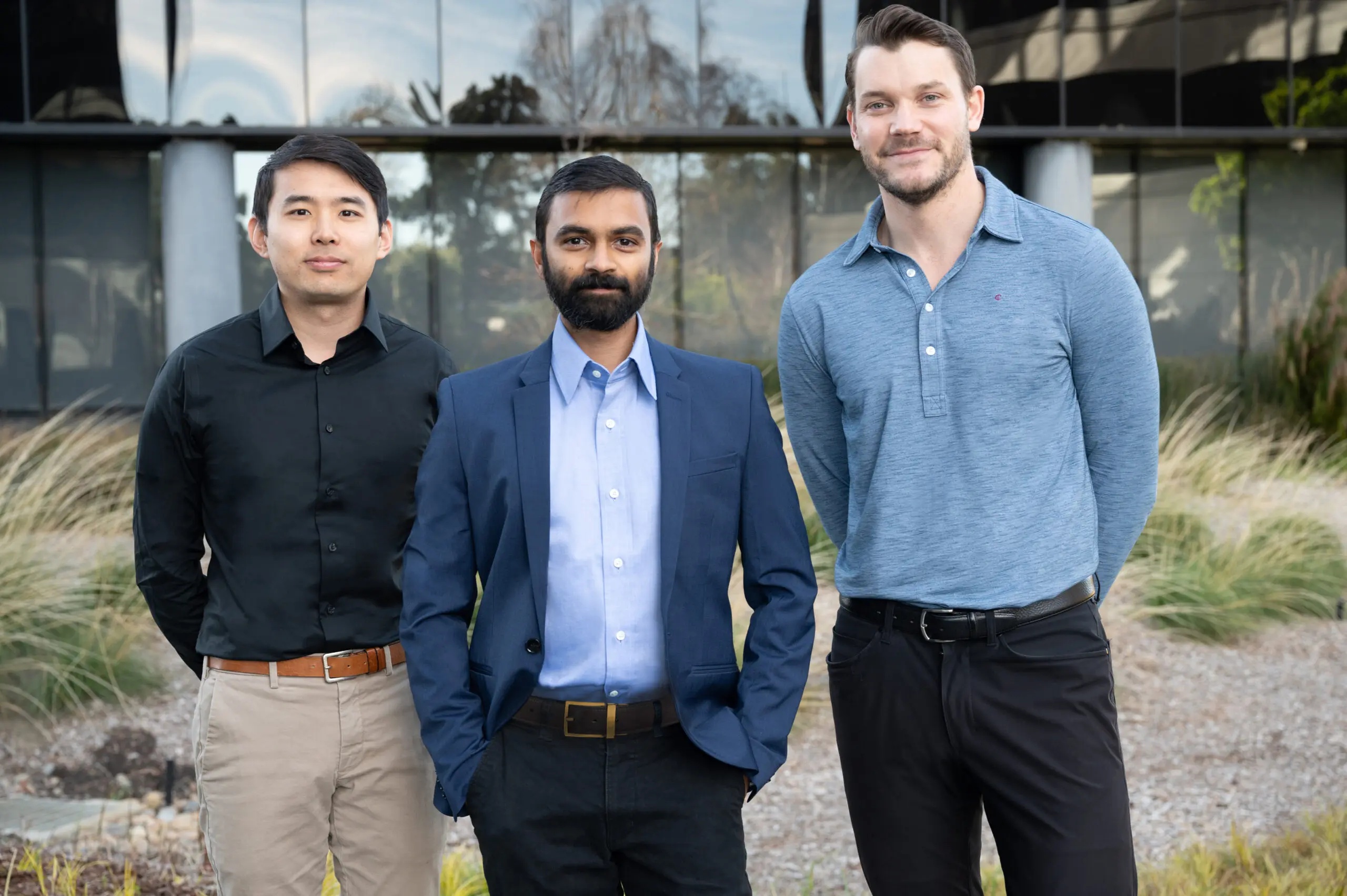
He had company for the change of direction. Eve’s other co-founders, David Zeng and Matt Noe, had worked with him at Rubrik. Zeng became its engineering leader; Noe became chief product officer. Their shared experience meant the team arrived with more than three separate résumés. They already knew something about how to work together while a company was taking shape.
In a March 2025 conversation, Madheswaran recalled giving an early customer three months to adopt the product. The firm’s attorneys spread access themselves, and adoption took about three weeks. The planned rollout had been overtaken by the people it was meant to guide. That is a useful sort of trouble, although the engineering team still has to deal with the trouble.
The anecdote is revealing because it concerns behavior rather than a compliment. People can say a demonstration looks promising and return to their previous routine. Here, the customer pulled more colleagues into the product. Madheswaran described word of mouth becoming a larger part of growth, with the company putting more resources into product development. Enthusiasm had become something the team needed to support.
A good answer still needs a working day
His early advice to legal teams was grounded in the same practical test. In 2023 he recommended assessing security, workflow fit and the underlying technology, then making the value tangible through a real case. An impressive demonstration is easier to arrange than a useful change to someone’s routine. The latter has to survive the tasks around it.
That perspective gives product design a substantial role. The person using a tool needs to understand what to do, where the result belongs and what requires attention. Every extra explanation or confusing handoff can eat into the time the software supposedly saves. The question is how a piece of work moves from its starting information to something the professional can use.
Madheswaran has described remaining involved in that practical work inside Eve. He uses coding tools to make small applications for the sales team, and the company analyzes customer conversations to help inform product priorities. The CEO’s engineering background appears in everyday operations. The former investor still has a habit of reaching for a tool when he wants to test or improve something.
From the case file to the whole firm
The money followed the legal focus. Eve announced a $47 million Series A in January 2025, led by Andreessen Horowitz with Lightspeed and Menlo Ventures participating. In September it announced a $103 million Series B led by Spark Capital at a valuation above $1 billion. Those are company financing milestones. Their significance in this story is the scale of the next assignment they funded.
At the Series B, Eve reported serving more than 450 law firms. By its June 2026 EveOS launch, it reported more than 1,400. The figures describe the company’s announced customer base at particular moments. Behind them is a product expanding from helping with casework toward coordinating more of the firm’s operations.
Two dated snapshots of adoption, rather than a forecast.
EveOS connects several jobs: Atlas organizes incoming case data, agents carry out configured tasks, Auditor reviews matters for issues, and Analyst answers questions about firm performance. Research sits within that broader system. The design asks information to travel between activities instead of being copied into a succession of separate tools.
The June introduction was followed by an August 25 announcement of general availability, including Atlas and Analyst. The scope had grown again. Madheswaran’s earlier interest in deeper workflows now extended beyond a single document or case to the questions a firm’s leadership asks about its whole business.
The queue moves to review
As the product’s scope expands, Madheswaran describes a new constraint: human review. In his August 2026 discussion of automation, he said attorneys must check outputs before sending them out. Producing drafts more quickly creates more material for someone to assess. The signature at the end still belongs to a person.
It is a fitting problem for an engineer to notice. Improving one stage of a system can reveal the limit in the next. A faster draft leaves more time for judgment, but enough faster drafts can also create a queue at the reviewer’s desk. The product has to help that person understand the work, as well as produce it.
Madheswaran’s career has moved through several versions of the same question: what can be built, and what will make it useful? The broken toys had their elevator. Rubrik needed engineers, then an engineering organization. Investing offered possibilities to inspect. Eve gave him another company to make, and a reason to change one that already existed. Now the work arrives at a lawyer’s desk, ready for the next decision. The builder still has something to build.
Read, watch, follow
- Eve’s website ↗
- Jay on LinkedIn ↗
- Jay on X ↗
- Watch: The Managing Partners Podcast ↗
- Listen: the pivot conversation ↗
- The childhood elevator and early career ↗
- Lightspeed’s 2018 partner announcement ↗
- The co-founders and Series A ↗
- Jay’s Series B announcement ↗
- EveOS introduction ↗
- The August 2026 conversation ↗
- EveOS general availability ↗