Forty years is an unusually long time to put in a company name. It leaves room for careers, children becoming adults, and several generations of office software apologizing for an unexpected error. Jason Sussman’s firm uses it. His firm, 2065 Capital, was established as a separate business in 2025. The arithmetic is straightforward. The ambition requires rather more work.
Sussman is its founder and chief executive, as well as a managing director and investment committee member at The Pritzker Organization. The firm’s name refers to a generational horizon for compounding after-tax value. Read as a statement of intent, it poses a question that runs through his career: how do you arrange an investment so that the partnership has time to develop?
His route to that question passed through tax law, a bank’s structured-finance business, and a family investment organization. It also passes through classrooms. There is something pleasing about an investor with a forty-year ambition teaching an eight-week seminar. The calendar is adjustable; the attention to financial structure persists.
years in the stated horizon
An ambition, not a performance forecast.
A date far enough away to matter
2065 Capital arrived with a predecessor portfolio already behind it. Its business continues an investment strategy developed within TPO. The strategy’s dedicated TPO page dates its execution there to 2014. The separate firm’s own account describes a twelve-year track record within the organization. The new name therefore belongs to an existing body of work as well as a future aspiration.
Its stated territory lies between traditional debt and common equity. It lists junior capital, insurance strategies and structured vehicles among its approaches. Those categories are less conversational than a business owner’s actual questions: how much capital is needed, what obligations come with it, and what happens to control? The details determine whether the money fits the business.
A forty-year horizon gives those details a long life to contemplate. It does not make the future predictable. It does require thinking beyond the announcement. An agreement must work for people whose circumstances will change, and whose first-day enthusiasm cannot do all the subsequent negotiating for them.
“Alignment and mutual trust support durable results”
Jason Sussman, on 2065 Capital’s approach
The fine print comes first
Before he allocated capital, Sussman worked on its legal surroundings. He began as a tax associate at Davis Polk; his TPO biography also describes corporate-law work. He then became a vice president in structured finance at Barclays Capital, where he held a proprietary investments role. In 2013, he joined TPO.
The sequence is useful because it changes the perspective on a transaction. Tax law examines the consequences of an arrangement. Investing puts money behind an assessment of those consequences. Both demand an interest in what an agreement actually does, beyond what someone hopes it will do. A promising idea still has to survive its own paperwork.
At Columbia University, Sussman earned a BA summa cum laude, with Phi Beta Kappa honors, and a JD with high honors. He is also a CFA charterholder. The combination places legal training alongside investment credentials. It offers a concrete explanation for the subjects he later chose to teach, without requiring a dramatic conversion story between law and finance.
- Davis PolkTax and corporate law
- Barclays CapitalStructured finance
- 2013 · TPOJoined the organization
- 2025 · 2065 CapitalSeparate firm established
The through-line is structure. Who has a claim, who has a choice, and who receives the benefit when a business does well? These are questions about relationships as much as calculations. Their importance tends to become clearer when a transaction moves from the closing documents into ordinary working life.
An agreement with room to grow
In June 2021, TPO announced a $100 million minority investment in Steward Partners, an employee-owned wealth-management business. The agreement gave TPO two seats on Steward’s independent board. Sussman explained that the organization had studied the wealth-management industry for several years before selecting the company. The relationship followed a period of looking.
His explanation centered on finding partners with whom TPO could build a business. The ownership arrangement matters here. A minority investment and board representation create a relationship between the incoming investor and an existing organization. The transaction has to accommodate people who already have responsibilities, customers and plans.
Governance gives that relationship somewhere to operate. Board seats let an investor participate in oversight; a minority stake leaves other owners in the picture. Neither detail answers every future question. Together, they describe a more specific arrangement than the word partnership can convey on its own. The legal shape belongs in the business story because it determines how the participants work together.
At the time, Steward’s chief executive, Jim Gold, described intended uses for the capital that included technology, additional advisers, acquisitions and liquidity for partners. There was work to fund, and people to consider. A large number in a headline becomes more intelligible when it is translated into those practical choices.
“Our focus is on long term growth.”
Jason Sussman, June 2021
The relationship remained part of Steward’s story in December 2025. The company announced $475 million in strategic capital from Ares Credit funds, combining an expanded lending relationship with a non-controlling minority investment. Ares joined TPO and Cynosure as institutional partners. Steward said its leadership and partners retained strategic direction and day-to-day decision-making.
Sussman’s comment looked ahead: “We look forward to the next leg of growth.” The later announcement supplies an observable continuation of the partnership. It does not turn every development at Steward into his personal achievement. It does show TPO still alongside the business more than four years after the original investment.
TPO’s minority investment in Steward Partners
New strategic capital from Ares; TPO remained a partner
Keeping the family office itself
Another partnership brought the same questions closer to a family-office setting. On September 15, 2025, Wellspring Family Office announced its agreement with TPO. Wellspring, founded by Michael Novak in 2007 and based in Cleveland, described a plan to expand its capabilities while preserving its independence.
The intended additions were specific: investment, tax and trust services; stronger banking and advisory relationships; improvements in technology and operations; and growth in the team. Wellspring said its leadership, advisory teams and investment philosophy would continue. For a firm built around ongoing family relationships, continuity was part of the proposition.
Sussman spoke about “people and families at the center” of Wellspring’s work. That focus puts human consequences into the ownership discussion. A client’s relationship with an advisory business takes place through people and recurring decisions. New capital has to fit around that daily experience if preserving continuity is one of the agreement’s aims.
Steward and Wellspring are different businesses. What connects these episodes in Sussman’s public career is the stated effort to support growth alongside existing leadership. The agreements make the idea of partnership easier to examine. Readers can ask what changed, who continued to decide, and what the businesses intended to build.
Eight weeks at the blackboard
Sussman has served as a Lecturer in Law at the University of Chicago Law School since 2014. He created its eight-week seminar, Structuring Financial Instruments. The course description spans tax, legal, accounting and economic principles, with instruments ranging from forwards, swaps and options to convertible bonds and securities containing derivatives. A short course can have a substantial reading appetite.
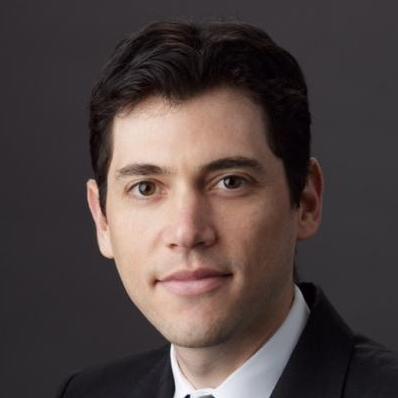
At the Corporate Lab, he is listed as a special adviser. Its speaker-series records include him in 2017-18 and 2020-21. The Lab gives students contact with practitioners and work for real clients; its annual Transactional Challenge introduces rising second-year students to corporate exercises. It is a setting where a transaction becomes something to investigate rather than simply admire.
His Booth appointment adds another audience. As an adjunct associate professor of entrepreneurship, he created Structuring Investments and Investing in Structure for Winter Quarter 2026. The title reverses its nouns with almost legal tidiness. It puts the design of an investment beside the decision to invest in a particular arrangement.
The classroom subjects also give a reader a way into Sussman’s investing work. A convertible bond, for example, sits at a meeting point between a lending arrangement and an ownership interest. Thinking about such instruments means examining the choices built into them. The course’s range makes that meeting of disciplines explicit, bringing economics and accounting into the same discussion as law and tax.
Teaching offers a useful companion to practice. An explanation must make room for someone else’s questions. A seminar asks the practitioner to expose the reasoning that a familiar term can conceal. That is especially apt for a career spent across legal documents, financial instruments and the organizations expected to live with them.
The calendar keeps moving
The university connections extend to advisory councils, including the Pritzker School of Molecular Engineering and the Booth Family Office Initiative. Invest for Kids also lists him on its advisory committee. His documented board experience spans current and past positions at Wellspring, Ferian Re, Steward Partners, Portfolio Group, GreyCastle Holdings and Financeit. These roles place his work in several institutions rather than a single firm.
There are nearer dates on his calendar than 2065. He is listed among confirmed speakers for the Chicago Booth Real Estate Alumni Group’s November 11-12, 2026 conference. Booth’s published schedule also lists his investment-structuring course for Spring 2027. Both are forward appointments: the ordinary calendar continues beneath the generational ambition.
That is where the story settles. Sussman’s career offers a sequence of concrete choices: legal work, proprietary investing, company partnerships, teaching, and a firm named for a distant year. The year supplies the question. The agreements, board responsibilities and classrooms supply places to work on it. Forty years may fit neatly into four digits. A partnership has to make sense on Tuesday, too.