In early 2002, an accountant told Janet Chihocky that her company should file for bankruptcy. For someone whose profession was helping other people explain their businesses, this was a particularly unwelcome story to be handed. The business had a future on paper, just a very short one. She later made that reckoning the subject of a memoir. The title kept the uncomfortable part: Facing Chapter 11.
There had been a split with a business partner after 9/11. She had put her house on the line. In her account, prayer and her desire to help people bring their missions to life helped her continue. Those details belong near the beginning of her career story. Without them, the subsequent work in branding, defense and buildings can look like a smooth progression through adjacent specialties. It was a progression with something personal at stake.
Today, Chihocky leads JANSON, whose work spans mission environments and data intelligence. Her public language still returns to purpose, trust and doing the promised work. A useful way into that vocabulary is to follow the people who helped shape it: teachers, a military mentor, clients, and someone she met while handing out food.
The degree came after the working day
Chihocky’s interest in communications began before her business. She was an award-winning public speaker in high school and enjoyed the possibility of motivating people through what she said. Later, she joined the corporate marketing team of an aerospace company. Public speaking and marketing gave her different versions of the same assignment: understand an audience, decide what matters to it, and make the message land.
Her education happened alongside that work. She studied at Strayer University while holding a full-time aerospace job, earning a Bachelor of Business Administration in 1996. She described academic study as a way to build on the professional success she had already found. The order is worth pausing over. The experience was underway before the credential arrived; the degree helped her prepare for what came next.
In the late 1990s, she started JANSON. Its early clients were in aerospace, the industry she knew. The company’s beginnings included a two-person office. Defense was an intended destination, but knowing where you want to go does not provide the language, relationships or judgment needed when you arrive. Her aerospace background gave her a starting point. It left more to learn.
Strayer University
The memoir’s turning point
Learning with a mentor
Lessons become episodes
Aerospace beginnings revisited
A colonel’s education
When JANSON entered defense in 2006, Chihocky was a woman without a military background approaching a market dominated by men. She worked with retired Army Colonel Mark Flavin, who helped her understand the industry. Her later advice to newcomers is consistent with that experience: find someone who knows the field and can teach you.
This makes mentorship a working part of the business story. Flavin supplied knowledge she needed to serve the market. Chihocky did not present learning as an embarrassment to be hidden once the company had contracts. She continued to recommend it. Her advice gives research, questions and follow-through a place beside ambition.
By 2010, she was also teaching. At the Go Global III conference in Rockford, Illinois, she was announced to lead workshops on branding acquisitions and assessing global market opportunities. These were specific commercial questions: how a business carries its identity through a purchase, and how it evaluates an unfamiliar market. The assignments connected her communications experience to decisions about where a company might go next.
At that stage, JANSON’s services included market research, branding, communications planning, public relations and social media strategy. Its founder worked on client strategy and new customer relationships. The combination explains something about her subsequent career. She was dealing with the meaning of a business and the practical conditions under which that meaning had to travel.
“Performance will speak for itself.”
Janet Chihocky, on entering an unfamiliar industry
Small enough to answer
At JANSON’s 25th anniversary in 2023, the company described a business with three main locations, in Virginia, Georgia and Florida, 30 full-time staff, and a nationwide network of specialists. Those are figures from that moment in its history. More revealing than the headcount was Chihocky’s concern about what growth could do to the relationship with a client.
She wanted clients to feel that their individual needs still received attention. In a conversation about advice for budding entrepreneurs, she explained her preference for competing as a small business. Money and capacity needed careful handling. Staying smaller also helped preserve a personal atmosphere inside the company.
There is an everyday difficulty buried in that preference. A founder can promise responsiveness easily when there are two people in an office. Keeping the promise as the organization develops takes choices about resources and work. Chihocky’s comments make size part of the operating argument. She cared about the conditions under which the company could deliver.
The chapter she kept talking about
The financial crisis became more than a private memory. Her memoir places Christian faith at the center of its account of adversity. The publisher’s description begins with the accountant’s advice in early 2002 and the question of whether she could trust a different outcome. This is how Chihocky chose to tell that period of her life: through the relationship between professional uncertainty and religious conviction.
Retired General Ann Dunwoody endorsed the book, as did Janet Greco, a senior lecturer at Wharton Executive Education. Those connections brought a founder’s personal account into conversations about leadership. The book gives failure a visible place in a career otherwise described through clients, capabilities and contracts.

She also appeared among the contributors to Mission Matters: World’s Leading Entrepreneurs Reveal Their Top Tips to Success, Business Leaders Volume 5, announced in 2021. In 2022, she joined a Liberty University panel on leadership through the eyes of women CEOs. Her public work had expanded to include explaining what she had learned as an owner.
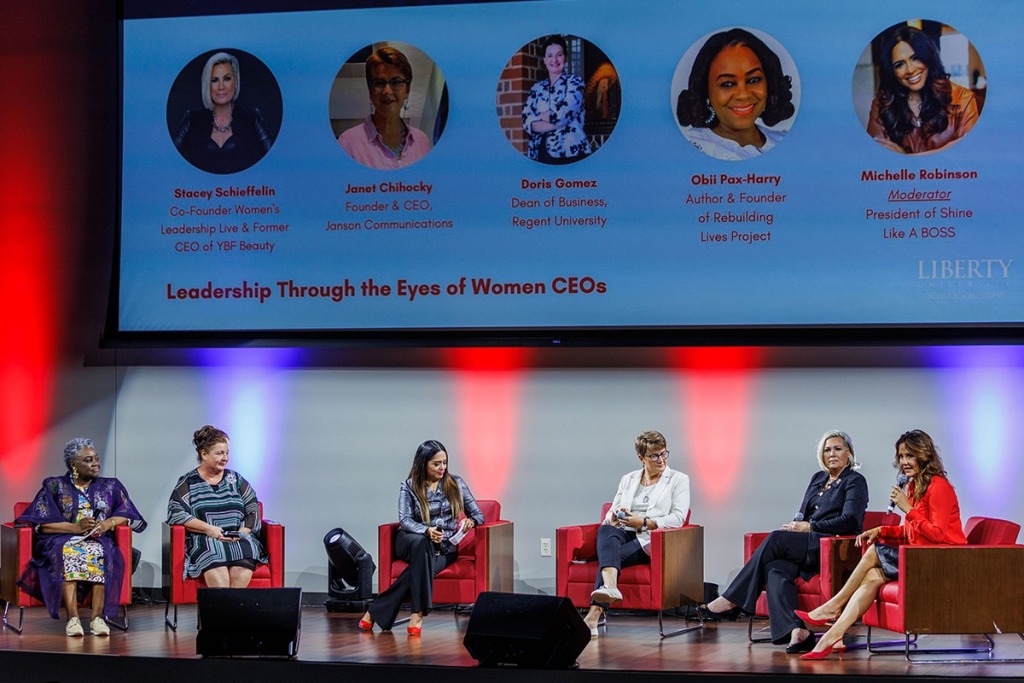
A book trip took a useful detour
In a 2019 personal essay, Chihocky recalled a trip to Las Vegas connected with her book. During the visit, she volunteered with a faith-based organization distributing food to people experiencing homelessness. She met a woman named Meeco and left her contact information. They stayed in touch over the following year.
The detail that held Chihocky’s attention was the woman’s gratitude. It made her reconsider the ordinary things she could take for granted: another day, the chance to work, food served on a plate. The essay asked what people might do for others with the blessings they had received. Its scale is different from a contract announcement. A conversation continued after an event, and changed how she thought about her own circumstances.
JANSON’s current description of its giving culture carries that concern into the company. It connects early financial hardship with a desire to give back and describes support for charities and missionaries. Faith appears in both the personal account and the organization’s stated values. Chihocky has made that connection public herself.
Teaching the value bridge
In March 2021, Chihocky announced The Communications Podcast. Its topics included strategy, structure, promotion and an idea she called the communications value bridge. The bridge concerns translating experience into the particular value a person brings to the organization or individual they are helping.
That is a useful extension of her working life. A résumé can list experience; a client still needs to understand why that experience matters to the task at hand. Her podcast turned such questions into lessons for business owners and working professionals. The format allowed her to move from making communications for clients to talking about how communication works.
In July 2023, she joined Adam Torres for a conversation about Workplace Transformation for the 21st Century, JANSON’s white paper. The discussion coincided with the company’s anniversary. By then, the subject of communications had widened to include the setting in which people worked.
The building gets a speaking part
For Chihocky, a building can carry an organization’s story. In an interview about JANSON’s work at IMCOM-Europe’s headquarters in Germany, she described the task as “using the canvas of a building.” Her account included studying where people moved and spent time, learning the organization’s mission, and considering architecture and engineering alongside visual design.

She also recalled the reaction of an executive secretary in a redesigned building. The secretary’s pleasure particularly mattered to her because that person would keep using the space after a commander rotated out. In the story she chose to tell, the daily occupant had a claim on the founder’s attention. A room had to mean something to the person who remained.
Still learning the next assignment
Her recent public conversations extend to artificial intelligence and workforce transformation. In a post sharing an appearance on John Register’s Lightning Leader Podcast, she discussed responding to disruption by examining markets, offerings and the way a company develops its staff. The language of chapters returned: a difficult period had to be accepted as reality before a leader could work toward the next one.
She was also listed as a speaker for NVTC’s April 30, 2026 event on trust between CEOs and chief marketing officers. These subjects remain close to the questions her career has repeatedly raised. How does a person earn trust? How does an organization adapt? How does experience become useful to someone else?
Chihocky’s answer keeps coming back to attention. Learn the market. Understand the assignment. Consider the people who will use the result. Her work now reaches into buildings, but the habit began with communications. Before a room can speak, somebody has to listen.