A banking career can look wonderfully orderly when reduced to a biography. Cambridge. Harvard. Goldman Sachs. McKinsey. Citi. Put the names in a row and the destination appears almost inevitable. Jane Fraser’s actual route involved a rather less tidy collection of choices: working part time after making partner, taking charge of a mortgage business when mortgages were an uninviting subject, and eventually shrinking the international consumer footprint of the bank she had spent years helping to run.
On March 1, 2021, Fraser became the first woman to lead a major U.S. bank. That sentence belongs in the history books. The more revealing question is what she did with the job. Leading Citi required her to examine an institution whose international reach was both its attraction and a source of formidable complexity. Keeping the reach while reducing the complication became the assignment.
There is something pleasingly inconvenient about Fraser as a corporate character. She talks about empathy and accountability in the same breath. She has publicly acknowledged the compromises of combining children and a career. And she can enjoy a practical joke at the expense of people whose day jobs involve taking risk very seriously. A bank may require solemn controls; its chief executive need not be solemn every minute.
Before the corner office, a kitchen at 3 a.m.
Fraser was born in St Andrews, Scotland, in 1967. She studied economics at Girton College, Cambridge, then began in mergers and acquisitions at Goldman Sachs in London in 1988. A spell at the Madrid securities broker Asesores Bursátiles followed. She earned her Harvard MBA in 1994 and joined McKinsey, working on financial services and global strategy. Long before she ran an international bank, her own working life already crossed borders.
Consulting supplied another kind of apprenticeship. Fraser co-authored the 1999 book Race for the World: Strategies to Build a Great Global Firm with Lowell Bryan, Jeremy Oppenheim and Wilhelm Rall. The subject would follow her into banking: how an organization operates across countries, and what makes that presence economically useful. A map full of offices is an impressive object. It still needs a business argument.
Her rise also involved a decision that rarely features in the conventional executive instruction manual. As a McKinsey partner, she worked part time while her children were young. Bryan later recalled finding her at a computer in the kitchen at three in the morning. The arrangement made room for family, but the recollection makes clear that the work did not politely disappear at the end of a shortened day.
“You cannot have it all.”Jane Fraser, 2012
She has spoken candidly about the things that had to give, professionally and personally. That admission is more useful than a polished account of effortless balance. It leaves room for ambition without turning every compromise into a failure of organization. Her biography includes a husband and two children; it also includes years of adjusting how work fitted around them. The eventual CEO title did not erase those choices.
The assignments with the awkward edges
Fraser joined Citi in 2004. By 2007 she was leading global strategy and mergers and acquisitions, placing her close to the decisions about the bank’s shape as the financial crisis approached. In 2009 she became chief executive of Citi Private Bank. The timing mattered. Wealth management after a financial crisis called for more than a reassuring brochure and a comfortable meeting room.
One change addressed the relationship between advice and sales: the private bank stopped paying bankers commissions for selling investment products. That decision put a familiar financial question into practical form. What should the adviser be rewarded for doing? Incentives are a remarkably candid description of an institution’s priorities, whatever its public language may say.
In 2013 Fraser moved to CitiMortgage. Demand for refinancing was falling, offices were closing and jobs were being cut. This was a business whose problems could not be settled by an elegant strategy presentation alone. A mortgage operation connects interest rates and balance sheets to households, employees and local offices. It offered an education in the human consequences of decisions made at the top.
Leadership of Citi’s U.S. consumer and commercial banking businesses followed, then Latin America in 2015. In October 2019 she became Citi’s president and head of Global Consumer Banking. These roles gave her experience of different customers, products and operating environments. By the time she succeeded Michael Corbat, the résumé contained both the planning of change and responsibility for carrying it out.
A smaller footprint, a clearer purpose
Within weeks of taking over, Fraser announced plans to leave 13 consumer banking markets across Asia and Europe, the Middle East and Africa. Wealth management would remain a focus, anchored by hubs in Singapore, Hong Kong, the United Arab Emirates and London. The decision asked shareholders to distinguish between being international and running a consumer bank in every place where Citi had a presence.
The ambition was to concentrate resources on activities that fitted together: serving institutions with cross-border needs, managing wealth, and personal banking in the United States. For a company associated with global breadth, choosing where to stop was a consequential act. There is little romance in exiting a business. There can be considerable discipline in admitting that ownership alone does not make it the right business to keep.
In September 2023, she changed the reporting structure. The heads of five businesses would report directly to her. The previous Institutional Clients Group and Personal Banking and Wealth Management layers were removed, along with regional management structures. The objective was quicker decisions and clearer responsibility. Anyone who has watched a decision travel through a large company can appreciate the appeal of shortening its itinerary.
Business names as announced in 2023. Fewer intervening management structures; direct responsibility at the leadership table.
By her letter covering 2023, Fraser could point to the elimination of more than 60 internal management committees. Committees seldom receive affectionate retirement parties, but removing them changes how people spend their days. Fewer reports and meetings were intended to free time for customers. The test, of course, was whether the time saved translated into better decisions and service rather than simply a different calendar.
The unglamorous work that cannot be skipped
Restructuring has a visible vocabulary: exits, appointments, new reporting lines. Repairing a bank’s infrastructure is harder to photograph. In 2023 Fraser described consolidating 20 cash equities trading platforms into one and introducing a consistent model for wholesale credit activity. Those details explain why modernization takes years. The machinery beneath the organization chart must change too, while the bank continues serving its clients.
The difficulties were substantial. In July 2024, the Federal Reserve and the Office of the Comptroller of the Currency announced penalties totaling approximately $135.6 million. The Fed said Citi had made insufficient progress fixing data quality management problems and had failed to implement compensating controls. That was a serious setback during Fraser’s tenure, and a reminder that announcing a transformation and satisfying its requirements are separate achievements.
The stakes extend well beyond an investor presentation. Payments, custody, foreign exchange and trade finance help companies operate across countries. A client needs money to arrive, information to be accurate and risks to be understood. To that client, the internal history of a system is beside the point. Reliability is the product being purchased, even when the service has a more elaborate name.
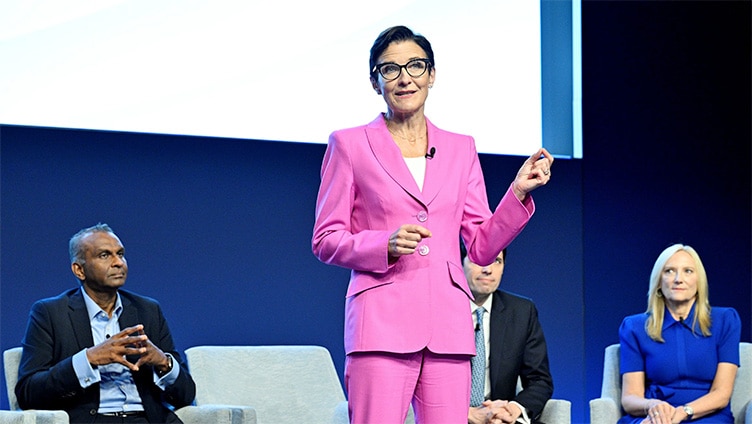
Big ears, thick skin, occasional mischief
Fraser has recalled advice from board member Peter Henry: listen closely and withstand criticism. Her account of the early strategy review involved talking with investors, employees and clients, then examining business mix, investment and culture. Listening becomes demanding when the answer involves something your own organization has been doing for years. It is easier to invite feedback than to reorganize around it.
Her humor supplies a less formal glimpse. At Stanford, she described sending senior colleagues waiver forms for a supposed nighttime skydiving exercise before a management offsite. The general counsel spotted the insurance problem. Others supplied excuses or agreed to participate. The joke was revealed ahead of April Fool’s Day. It was an unusually efficient way to discover who reads the paperwork.
That anecdote sits beside a serious argument about empathy: understand the position of the person across the table, including when delivering difficult news. It does not remove the consequences of layoffs or closures. It makes the manner of communicating them part of a leader’s responsibility. Fraser’s public persona allows room for both blunt decisions and an awareness that someone else must live with them.
The next result still matters
In October 2025 Citi elected Fraser chair, combining the position with her CEO role. John Dugan became lead independent director. In March 2026 the New York Fed announced her appointment to the Federal Advisory Council for a one-year term that began that January. Her responsibilities now reach from Citi’s boardroom to a formal forum advising the Federal Reserve on banking and economic developments.
Reported October 13, 2026. Company results, not personal earnings.
The latest quarterly figures give the story a measurable checkpoint. Citi reported $23.8 billion in revenue and $5.2 billion in net income for the third quarter of 2026. Fraser said the bank expected to exceed its return target for the year while continuing investment. Those numbers concern an operating institution, shaped by markets and thousands of employees as well as the person leading it. They are evidence to assess, rather than a reason to declare the work finished.
Fraser’s distinction began with a first. Her record will accumulate in less ceremonial increments: businesses sold, systems repaired, clients retained, decisions improved. The thread running through her career is an appetite for assignments with inconvenient details. A giant bank offers plenty of those. Making it easier to run, while preserving the connections that make it useful, is a task large enough to occupy even someone prepared to make it smaller.