James Rhee was already far along with another potential acquisition when ZincFive appeared. Introduced through the SparkLabs network, the battery company arrived late enough to complicate an existing plan. Rhee and his colleagues chose to pursue it anyway. In August 2026, describing the introduction, he reached for a phrase more commonly associated with a dinner date: “love at first sight.”
The attraction had a practical setting. ZincFive makes nickel-zinc battery systems for applications including data-center power. Spark I Acquisition Corporation, where Rhee is chairman and chief executive, had been looking for a company to take public. On June 11, 2026, the two announced a proposed business combination. The battery maker needed resources for expansion; the acquisition company was offering a route into public markets.
For Rhee, the proposed match adds another stop to a career that has already passed through international monetary policy, management consulting, personal computers, electronic connectors and commercial aviation. Read as a list of industries, it looks restless. Read as a sequence of operating problems, it becomes easier to follow. Again and again, he has worked on how a business enters a market, equips itself and finds the money to proceed.
That reading of his career is an interpretation, rather than a claim that he planned every turn. A biography can look wonderfully tidy once someone else has removed the awkward joins. Rhee’s actual record is more interesting with those joins showing. An economist becomes a consultant. A computer executive becomes an airline executive. An airline founder becomes a partner in a startup network. Now the next gate is a battery business.
Before the boarding pass, the balance sheet
Rhee began his career as a research officer at the International Monetary Fund. His aviation-era biography describes work advising former Soviet Union countries on monetary policy. The setting placed him close to questions of how economies organize money and institutions. It is a substantial distance from selling an airline ticket, but both subjects eventually demand an answer about what resources are available and how they can be used.
His education includes a bachelor’s degree in economics from the University of Minnesota and an MBA from Northwestern University’s Kellogg School of Management. His public LinkedIn profile dates the Kellogg period to 1998-2000. After that, he worked at McKinsey & Company as an engagement manager, with responsibilities involving financial institutions and telecommunications. The early career moves kept economics close to the decisions of actual organizations.
Dell brought a different scale and a different kind of responsibility. From 2003 to 2010, Rhee held leadership roles in the company’s Asia Pacific and Japan business. His remit included enterprise marketing and the PC business. The work covered a broad set of products and services, from computers and servers to storage, software and cloud offerings. Geography was part of the job description, rather than an occasional flight attached to it.
His SparkLabs biography credits him with helping Dell’s Japan business reach first place in the commercial computer market for the first time in its history. The distinction is worth its precise wording: helping a business achieve a position is a team accomplishment, not an excuse to erase everyone else from the photograph. It nevertheless gives the marketing titles a concrete outcome. A regional operation had changed its competitive standing.
- 1989IMF
Monetary policy research - 2003Dell
Asia Pacific / Japan - 2010TE Connectivity
Global PC business - 2012AirAsia
North Asia leadership - 2016Aero K
Founder and president - 2021Spark I
CEO and chairman
The small parts of a large transition
At TE Connectivity, formerly Tyco Electronics, Rhee became vice president and general manager of the global PC business. The assignment put him closer to the components inside the finished product. As computing moved toward greater mobility, the product line had to evolve for higher-speed connectivity. A device may be sold on its elegance, but somewhere inside it a decidedly unglamorous connection still has to work.
Next came a senior advisory role at Octave Private Equity. Rhee worked on an acquisition strategy for a global technology business and on raising capital for the establishment of AirAsia Japan. This was a bridge between his technology experience and the aviation chapter that followed. The connection involved financing as well as strategy, a combination that would reappear later in his SparkLabs work.
The progression is revealing without requiring a theory about his private motivations. Dell involved bringing products to customers across a region. TE involved adapting what those products depended on. Octave involved assembling an acquisition and capital strategy. Each role exposed a different piece of expansion. Customers, components and financing occupied separate lines on the résumé, though a growing company has to keep all three in the same conversation.
An airline is a startup with a departure board
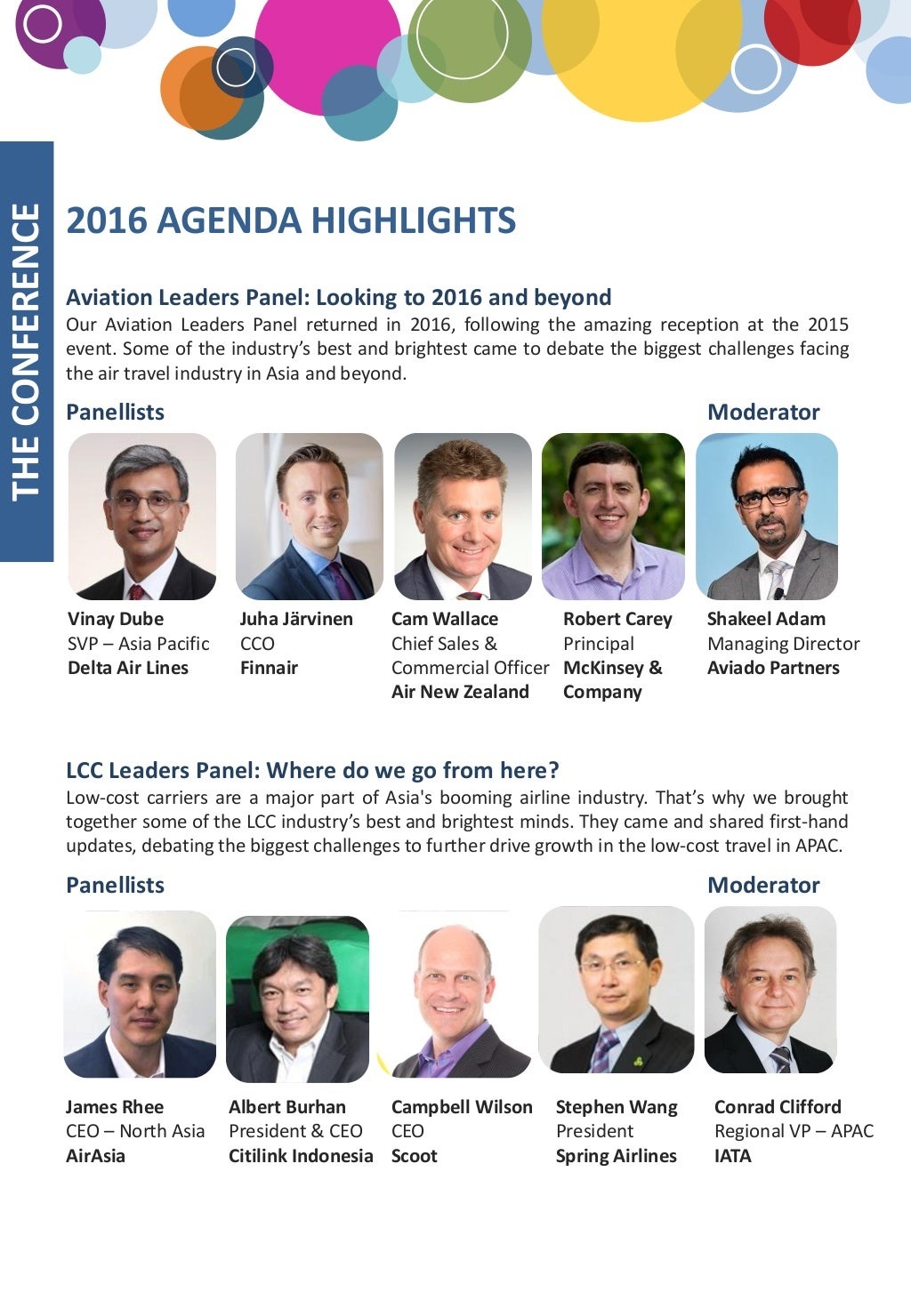
Rhee served as AirAsia’s chief executive for North Asia from November 2012 to March 2016. His responsibilities included expanding the business in markets such as Japan, Korea and China. In 2016, he appeared on Aviation Festival Asia’s low-cost-carrier leaders panel alongside executives from Citilink Indonesia, Scoot and Spring Airlines. The panel’s question was straightforward enough to survive any industry: where do we go from here?
He then helped found Aero K, serving as president of its holding company and airline. Established in 2016, the venture approached aviation as a business in which technology could change the customer experience. Its published description included data analytics and social media, putting the passenger relationship alongside the aircraft. The ambition was to evolve how an airline did business, including the experience surrounding the flight.
There is an appealing complication in that choice. Software can be revised after lunch. An airline has a departure board. The business makes expansion tangible: a new market has passengers, routes and an operation that must function. Rhee’s move from an established airline group into a venture he helped create also changed his place in the story. He now had founder experience to add to the executive roles.
The aviation chapter helps explain why his later work cannot be reduced to the word investor. He has occupied positions inside businesses as well as around their financing. A founder raising money and an executive responsible for a regional business meet different versions of the same question: what must happen before growth can actually be delivered? His career gives that question an unusually varied set of settings.
A long acquaintance becomes a new assignment
Rhee’s relationship with SparkLabs preceded his partnership. He had been an adviser and mentor since 2013, and became a partner in 2022. By July 2021, he was already chief executive and chairman of Spark I. That overlap matters. The acquisition vehicle grew out of an existing startup network and an established relationship, rather than a newly assembled introduction to the world of entrepreneurs.
His colleagues at Spark I include chief financial officer Ho Min “Jimmy” Kim, a SparkLabs co-founder, and chief operating officer Kurtis Jang. These connections put Rhee within a group whose work spans startup support, venture funds and international relationships. His own assignment extends into later-stage financing and the route to a public listing. An accelerator can help a young business start; its older portfolio companies eventually need different kinds of assistance.
Spark I’s IPO raised $100 million in October 2023 through an offering of 10 million units at $10 each. At the time, its stated focus was late-stage technology businesses in Asia or with a substantial Asia presence or strategy. That figure belongs to the acquisition company’s offering. It is neither Rhee’s personal wealth nor a measure of the entire SparkLabs Group.
A special purpose acquisition company raises money before combining with an operating business. For the executive leading it, selection is a central part of the job. The eventual target must justify the move into a public structure. Rhee’s work therefore sits at an awkward and consequential junction: the enthusiasm of private-company expansion meets a transaction whose terms will be examined by public shareholders.
10 million units offered at $10 each
The next gate has a power supply
ZincFive brings that junction back to physical technology. Its batteries serve infrastructure that has to keep delivering power, including data centers. In a June presentation, Rhee described AI workloads as creating rapid, repeated power spikes. The company’s proposed role in that market is immediate power support. The fashionable conversation concerns intelligence; the equipment behind it still needs electricity at the right moment.
The June announcement contemplated roughly $100 million in committed private investment in public equity, commonly called a PIPE. That financing was part of the proposed transaction, with proceeds intended to support the business rather than evidence of a completed capital raise. Planned uses included expanding manufacturing in the United States. The distinction between a commitment and money received remains important even when a transaction has an attractive story.
On October 1, 2026, ZincFive and Spark I announced the public filing of their registration statement on Form S-4. The combination remained subject to shareholder approval, the registration statement becoming effective and other closing conditions. The companies expected completion in the fourth quarter of 2026. At the time of this profile, that was a timetable for a proposed deal, with the result still ahead.
It is a fitting place to leave Rhee’s story open. His experience includes a computer business entering markets, a component business adapting to mobility, an airline expanding internationally and a venture created from scratch. The new assignment brings him back to the machinery supporting technology, this time through financing. Each setting gives the word expansion a different texture: a customer, a connection, a flight, a factory.
The next chapter will be judged by what happens after the announcement. For now, the verified achievement is assembling a proposed route forward and moving it through the public filing process. The batteries still have to be made, the business still has to serve its customers and the transaction still has to close. Rhee has reached another gate. The departure remains on the board.
“We support entrepreneurs and we do VC funds.”
James Rhee · SPACInsider, August 2026