Passing Galway during the 2022 Sevenstar Round Britain & Ireland Race, James McHugh considered stopping. His parents came from there. Other boats had retired. He was still relatively new to this kind of sailing, competing in only his third Class40 race. A familiar coastline offered a tempting exit from an unfamiliar ordeal. He carried on.
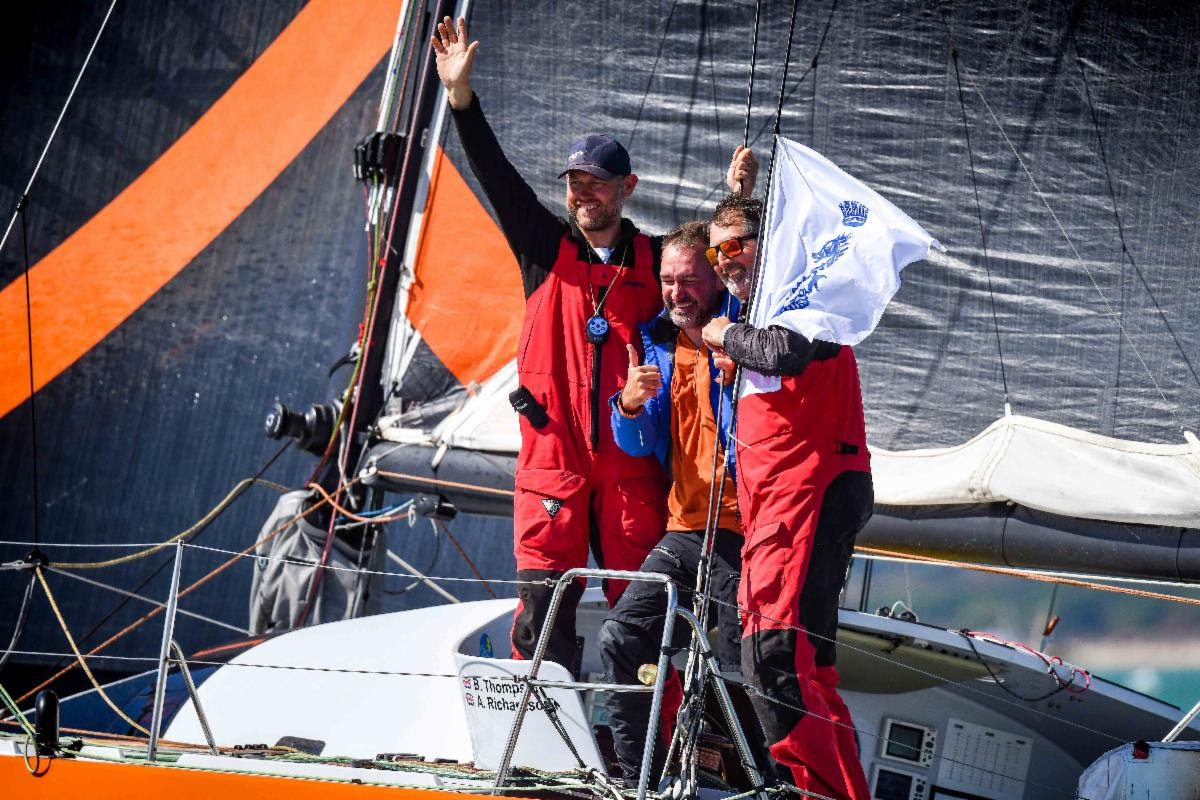
By the time Tquila reached Cowes, McHugh and his crewmates, Brian Thompson and Alister Richardson, had been racing for just over thirteen days. They were the first Class40 home. On land came cold beer and a proper meal. Even an enterprise technology investor can appreciate a business model with immediate delivery and no implementation phase.
The episode makes a useful introduction to McHugh, whose working life has involved finding capable people, starting something with them, and staying involved as it grows. He founded K2 Partnering Solutions in 1997 and Tquila in 2010. His companies have worked across the United States, Britain, Japan and Australia. But offshore, the founder joins a crew. Experience belongs to other people, too.
The recruiter behind the software story
McHugh began K2 in the comparatively unglamorous business of enterprise staffing. Companies using complex software needed specialists who could make it work. Recruiting those specialists put K2 close to a recurring problem: buying a system and finding the people to implement it are separate purchases. A software licence does surprisingly little interviewing on your behalf.
By March 2017, when Inflexion invested, K2 drew on a proprietary database of more than 600,000 enterprise software consultants. It supported projects across four continents, including implementations and upgrades of SAP and Salesforce. The scope had widened to fields such as cybersecurity and advanced analytics. McHugh’s original niche had become an international operation.
The investment’s structure mattered. Inflexion took a minority position, while the founder shareholder and management collectively retained a majority. The arrangement brought resources for expansion without immediately transferring control of the whole company. It was a negotiated next chapter for a business approaching its twentieth anniversary.
McHugh chose that moment to step down as chairman, marking the handover during the week of St Patrick’s Day. His message dwelt on the leadership team receiving a platform to move faster. There is something revealing in a founder celebrating the quality of the people who will carry on after he relinquishes a particular seat.
K2 kept developing under its management. Inflexion reinvested in 2022, when the business served more than 520 clients through nineteen offices and a network of 750,000 contractors. Those later figures belong to the company and the team running it. They help explain what a handover can preserve: the capacity of an organisation to keep growing beyond its founder’s daily direction.
A consultancy hidden inside a staffing company
In November 2010, K2 incubated the Salesforce partner that became Tquila. McHugh’s account of its beginnings gives an unusual casting choice centre stage. Two experienced recruitment professionals helped lead the new business. Their understanding of enterprise hiring helped bring in its first twenty recruits and establish a culture that could survive further expansion.
For a consultancy, this was a practical advantage. The service being sold depended on people who could deliver it. McHugh described hiring ahead of demand, bringing in an operating leader during the first year, and later giving that person the chief executive’s role. Leadership changed as the business’s requirements changed.
Within eighteen months, the company had fifty employees and had moved offices three times. By early 2015, McHugh put its headcount at 170. Fast recruitment also meant the less poetic duties of growth: finding desks, changing addresses, and ensuring that the next person through the door had somewhere to sit.
Salesforce Ventures invested in the consultancy. On 6 May 2015, Accenture acquired Tquila UK. The transaction brought more than one hundred Salesforce specialists into the buyer and more than doubled its UK capability in that field, to approximately 185 people. The purchase made the value of the assembled team unusually visible.
Salesforce specialists joined Accenture through its acquisition of Tquila UK.
The UK consultancy was acquired; Tquila continued building other ventures.Accenture wanted both technical depth and the ability to serve more clients. Tquila UK brought implementation, integration, development, governance and support skills, backed by more than 270 certifications. To a buyer with global reach, a functioning specialist team could be more useful than starting recruitment from an empty room.
The sale also supplied a clear ending to that particular venture. McHugh’s later work would repeat the broad sequence with different partners and technologies. Assemble the business, help it operate, and eventually find an appropriate destination for it. Each stage asks a different question about the people involved.
Build, operate, hand over
Tquila describes its approach as build-operate-transfer, alongside early-stage and scale-up investment. In ordinary language, the firm helps create and grow technology services businesses, sometimes through joint ventures with software companies or larger consulting organisations. Capital goes together with work on recruitment, operations and growth.
Partner, capital, leadership.
People, clients, delivery.
A new owner or partner.
One example came in artificial intelligence. Publicis Sapient AI Labs launched in 2020 as a venture involving Publicis Sapient, Elder Research and Tquila. The participants brought different resources: an established consulting business, data science expertise, and experience recruiting and expanding technology services practices.
In May 2023, Publicis Groupe acquired the full stake in AI Labs. Its announcement placed the transaction within an effort to strengthen enterprise data and AI capabilities, including work involving language models, computer vision and autonomous systems. The deal terms were undisclosed. The visible result was the team becoming part of Publicis Sapient.
This example gives McHugh’s AI interests some chronology. A business he helped back was operating before the recent rush of conversational AI into everyday work. By the time buyers were considering new enterprise applications, a joint venture already had people and capabilities to bring across.
The pattern travelled to Japan. In March 2024, ServiceNow announced an investment alongside Tquila, the lead investor, in AoraNow. The company was a subsidiary of Pasona and Circlace, and ServiceNow described it as its first pure-play partner in Japan. The ambition included customer and IT service transformation, generative AI implementation and technical training.
Local relationships were part of the arrangement. Pasona’s staffing and training experience and Circlace’s consulting work sat beside ServiceNow’s platform. For McHugh, this extended a career spent connecting technology with the workforce required to use it. A market opportunity still needed people with the right skills, in the right place.
Capital with a crew attached
April 2024 brought a more formal investment vehicle. Tquila announced the launch and first close of its Paloma Fund, with $40 million in commitments against a $60 million target. Those are different measures: money committed at first close and the amount the fund intended to raise.
Two-thirds of the target committed at first close.
Carsten Jorgensen, formerly chair and chief executive of the Mittal Family Investment Office and head of investments at Inter IKEA Fund Management, would chair the fund. Its stated purpose was to support Tquila’s existing portfolio and expand into additional technologies and geographies.
At launch, Tquila said its ventures had created more than $1 billion in equity value since inception. That is the firm’s reported aggregate measure of its business-building activity. The portfolio covered data, AI and services around platforms including Salesforce, Microsoft Dynamics, Google Cloud, UiPath, AWS and Snowflake.
McHugh’s response to a later gathering of portfolio leaders had a less ceremonial flavour. He said he needed to improve to keep up with his chief executives and partners. That admission fits the role he has repeatedly chosen: backing specialists who bring capabilities he does not claim to possess himself.
Room for the person who surprises you
There is a smaller story from his recruiting days that makes this approach less abstract. McHugh recalls nearly ending an interview after a candidate explained a twelve-month gap with a tropical fish shop, house renovation and golf. He doubted the fit for a demanding sales job. The candidate asked for another minute and challenged his assumption.
McHugh hired him. Months later, the recruit mischievously suggested that the gap had actually been spent in prison, holding his expression before laughing. It was a joke, and an effective one. McHugh says they were still working together twenty years later, after the colleague had held successive leadership roles and gone on to run his own business.
The story leaves the founder looking fallible, which is part of its charm. His first assessment almost closed the door on a lasting professional relationship. He tells it with affection for the person who proved him wrong. His own brief description of himself offers another useful interruption to the investor biography: “A wannabe farmer”.
“A wannabe farmer”
James McHugh, describing himself on LinkedIn
Eleven sunsets, another crossing
In January 2025, McHugh took on his first transatlantic race, at the helm of Tquila with Richardson skippering and David Vela completing the crew. They finished the Lanzarote-to-Grenada course in eleven days, seventeen hours, twenty-eight minutes and twenty-one seconds, winning Class40 and IRC Two. His later comment compressed the crossing into two words: eleven sunsets.
By December, he was discussing agentic AI and the future of enterprise systems with James Reed. In May 2026, his Tquila crew received the individual race-eight trophy at the Etchells Worlds. The business meetings and race starts continue to alternate, each with its own demands on judgement and cooperation.
Back in the account of that first Atlantic crossing, McHugh described the pleasure of a night watch: stars overhead, the boat moving well, and a moment alone on deck. He also credited the professional sailors beside him. The finish belongs to the crew, even when the name on the business belongs to the founder.