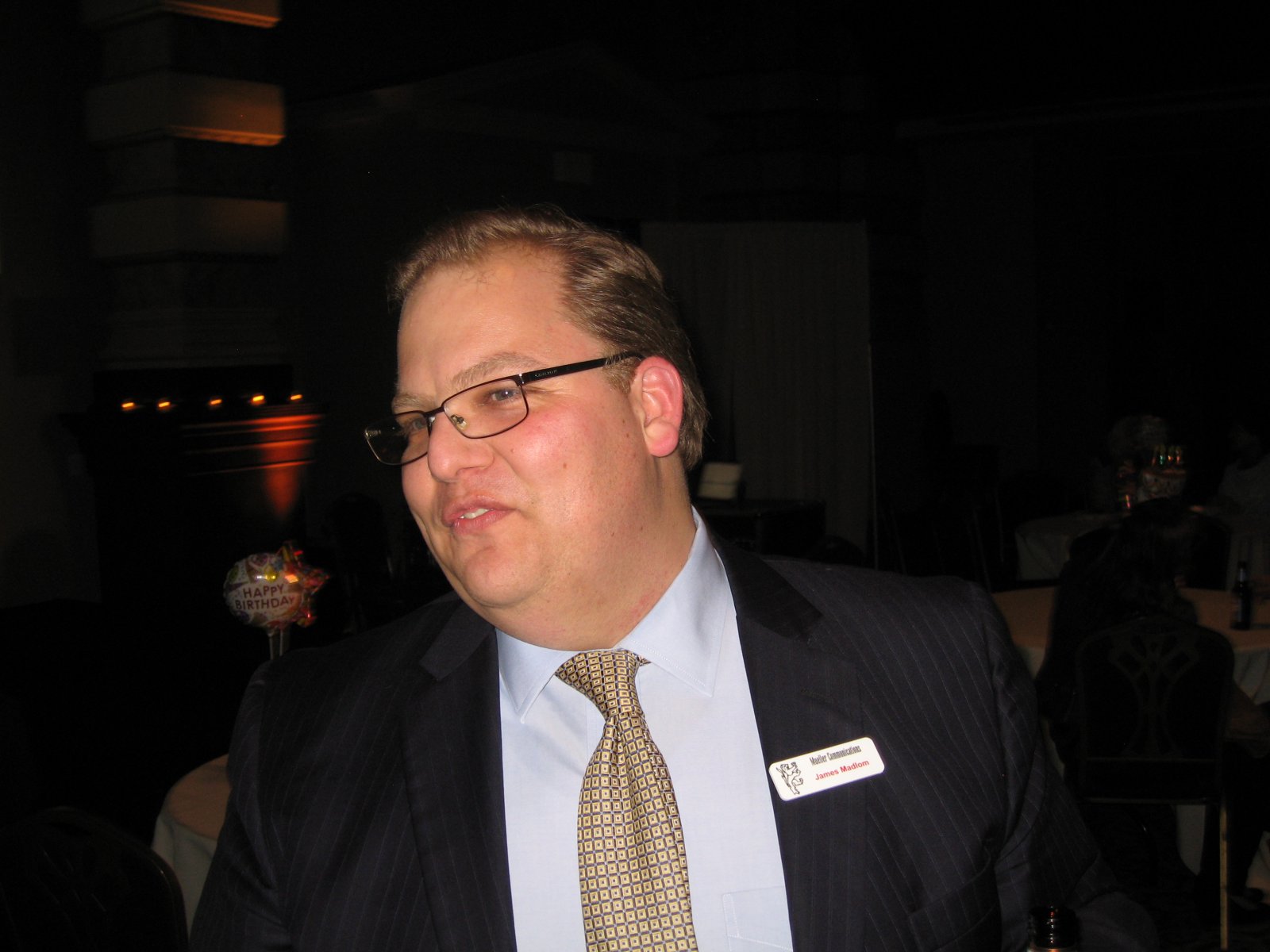
When James Madlom wanted to explain why Milwaukee needed more kinds of housing, he reached for a duplex. His family’s first home stood on a block of single-family houses and duplexes. It gave them an affordable way into ownership, then a financial stepping stone to a larger home as their family grew. In a July 2024 letter supporting the Growing MKE plan, he remembered the block as a place that worked for people at different stages of life.
There is a small advantage to discussing city planning through a house you have actually lived in: the argument comes with a front door. Madlom supported increasing the range of housing available in Milwaukee and endorsed the mayor’s ambition to grow the city to a million residents. But the duplex made the policy legible. A particular kind of building had made a particular kind of life possible.
He signed the letter as chief executive officer of Mueller Communications. That title belongs to a career spent helping organizations explain consequential decisions, from public financing to neighborhood redevelopment. The household memory belongs to a father of three who lives in Whitefish Bay. Both voices fit on the same page. Read together, they offer a useful entrance into his story: a communications executive whose public arguments sometimes begin very close to home.
Learning how to get people in the room
Before the executive titles, there were students, families, volunteers, and the formidable administrative problem of getting everybody where they needed to be. At Marquette University, Madlom’s work included implementing a five-day orientation program for new students and their families. He also worked on Hunger Clean-Up, a service project involving more than 2,300 volunteers and 100 community organizations. A gathering of that size requires considerably more than a stirring invitation.
The scale is telling. Orientation means explaining an unfamiliar institution to people arriving with questions. A volunteer project means connecting willing participants with organizations that can use their help. Each depends on the unromantic details of participation: instructions, timing, coordination, and a reason to show up. Those early responsibilities make a fitting prelude to his later community outreach work.
Madlom earned a bachelor’s degree and a law degree from Marquette, both magna cum laude. His LinkedIn profile dates law school to 2006–2011 and records a judicial internship with Judge Diane Sykes of the Seventh Circuit, along with research work for Dean Joseph Kearney. It also lists CALI awards across subjects including contracts, civil procedure, and appellate writing and advocacy.
The combination gives his professional biography an unusual texture. There is the practical organizer and the student trained to read an argument closely. His earlier agency experience included communications for large companies, government agencies, and nonprofits. By the time he moved into leadership at Mueller, the audiences in his working life were already varied. The challenge was to make an institution understandable to the people encountering it.
An ownership change with a Milwaukee address
In June 2015, Carl Mueller brought two longtime employees into the firm’s ownership: Lori Richards and James Madlom. Richards became president; Madlom became chief operating officer. Mueller remained chairman and CEO. It was a succession step built around people already doing the work, with the next generation of leadership drawn from inside the office.
Five years later, in 2020, Richards and Madlom became CEOs and majority owners. Their partnership is central to the business story. The firm’s leadership did not turn over to a stranger arriving with a new business card and a theory about Milwaukee. The two had worked within the company before taking responsibility for its future.
Madlom describes Carl Mueller as a founder and mentor. The agency’s short guiding phrase, “Do the Right Thing,” gives its culture an unusually plainspoken vocabulary. His own account of the job emphasizes colleagues, complex assignments, and work that serves clients, employees, or communities. Among the projects he singles out is Near West Side Partners, which he helped establish and grow as a founding steering committee and board member.
The work spans public financing for redevelopment, corporate reputation during litigation, internal employee communications, and neighborhood revitalization. These assignments have different audiences and different pressures. A redevelopment discussion concerns money and place; an employee communication concerns the organization people spend their working day inside. They share the need to explain decisions to people with a stake in them.
The residents who hear about a decision too late
One of Madlom’s clearest explanations of public participation appeared in September 2022, when he wrote about Mueller’s work with Fond du Lac. The city was hearing regularly from a small group at council and committee meetings. Other residents learned about decisions after the action had happened, then called once policies were already being implemented.
That timing problem is familiar to anyone who has discovered a public decision at the moment it begins affecting daily life. The formal opportunity to comment may have existed. The practical opportunity depends on knowing about it. An agenda can satisfy a procedural requirement while leaving many residents unaware that a conversation is taking place.
Fond du Lac asked people how they wanted to receive information. Over three weeks, a survey gathered feedback from more than 1,200 residents. The responses helped the city understand which topics interested people and which communication methods they valued. Madlom’s argument was that broader participation takes deliberate outreach, including making the invitation itself visible.
The distinction matters to his kind of work. Public affairs often appears to be a contest over the most persuasive message. Here, the useful first move was a question. Before explaining more effectively, the city needed to understand how residents preferred to hear from it. The resulting picture of communication is patient and practical: discover where the audience is, then give people a usable way into the discussion.
A room with a past, and space for what comes next
In September 2021, Mueller announced plans to leave the East Side mansion that had housed the firm for more than 15 years. Its next address would be the Milwaukee Fortress in Brewers Hill, with more than 8,200 square feet on the ground floor and access to additional meeting and event space. The agency had nearly 30 staff members and more than 100 client organizations at the time.
The move put the company inside a historic redevelopment project, the sort of undertaking that already figured in its professional life. There is a pleasing consistency in helping explain urban reinvestment and then choosing an old building for your own office. The surroundings could carry some of the argument without requiring a slide deck.
By October 2025, the firm reported a team of 50 and eight staff additions during the preceding year. Elizabeth Hummitzsch became chief operating officer, while Andy LeDuc took the newly created chief growth officer role. For Madlom and Richards, this was another stage of making room within the leadership structure as the organization expanded.
A June 2026 TEMPO panel biography described their approach in specific terms: hiring for fit, investing in employee growth, and trusting people to do their work. That same month, Madlom and Hummitzsch appeared in a Mueller Mic’d episode following a recruitment and retention keynote for the Kenosha Area Business Alliance. The subject was workplace culture. The office, the leadership appointments, and the conversation all concern the same practical question: how a growing firm keeps people willing to stay.
The family that came before the board title
Madlom’s connection to foster care began with his grandmother. During visits to his father’s family in Iowa, he met the children she was fostering and saw the care she gave them. He and his future wife discussed becoming foster parents while they were still dating. Years later, they became licensed through the organization then known as SaintA, now Wellpoint Care Network.
They adopted their first placement and eventually adopted all three of their children from foster care. In July 2025, he described them as three teenagers. “You become parents instantly,” he said. The sentence is brief enough to leave room for everything it implies: a household changes before anyone has acquired the comfortable feeling of being ready.
His involvement with Wellpoint continued through its board. In May 2025, Clyde Tinnen succeeded him as chair, and Madlom remained a director. His chairmanship included the leadership transition from Ann Leinfelder Grove to Reggie Newson. He also took on leadership of the newly created Program Committee.
He has urged support for young people leaving foster care, pointing to employment, housing, and higher education as needs that persist into adulthood. That concern gives the board service a personal foundation. Parenting teenagers makes the distance between legal adulthood and practical independence fairly easy to recognize. The organization that helped his family form became an organization he would help govern.
“You become parents instantly.”James Madlom, July 2025
Even civic devotion leaves room for dinner
Public life has its smaller scenes, too. At Milwaukee’s 170th birthday celebration in 2016, Madlom was among the people gathered around the city’s civic festivities. Afterward, he and Journal Sentinel assistant editor James B. Nelson went downstairs to the Swingin’ Door for a meal. City pride, apparently, travels better when it has been fed.
His civic commitments have continued across organizations serving young people, families, and the arts. United Way named him a Philanthropic 5 honoree in 2021. Marquette later included him among alumni recognized on BizTimes’ 2025 Wisconsin 275 list and the Milwaukee Business Journal’s 2026 Power Players list. The recognition accompanies a record of professional leadership and volunteer service rather than replacing it.
His public conversations have also moved into schools. In a February 2026 Mueller Mic’d episode, Madlom joined Hummitzsch and Quarles & Brady partner Lindsey Davis to discuss school crisis communications, including transparency and legal responsibilities. It is another setting where the way an institution speaks affects people who rely on it.
The duplex, the survey, the adopted family, and the expanded office are distinct chapters. Together they show the recurring concern that makes this career worth following. A place can be available on paper and still be difficult to enter. Madlom’s story keeps finding practical ways to widen the entrance: another housing option, an earlier invitation, a supported young adult, a colleague with room to grow. Milwaukee is the setting. The people who get to participate are the point.