Jake
Taylor
He wrote America's quantum playbook from inside the White House. Now he's building AI that has to show its work - or it doesn't ship.
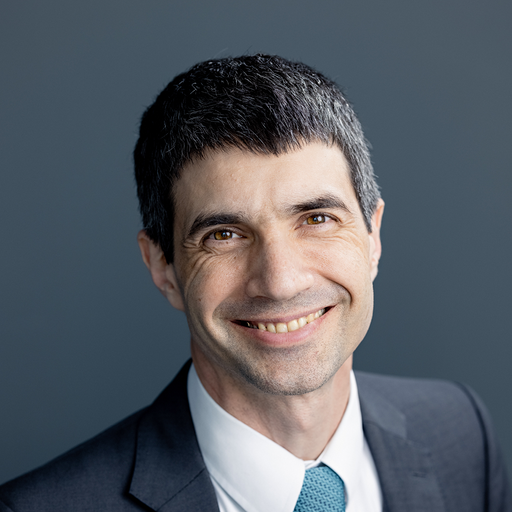
An AI that can't lie about physics
Most AI will happily draw you a semiconductor. Jake Taylor wants AI that can prove the thing will actually work once it's etched into silicon.
That distinction is the whole company. Taylor is CEO of Axiomatic AI, a Cambridge, Massachusetts startup building what the team calls "Axiomatic Intelligence" - frontier AI models wired to formal mathematical and physics-based verification. The pitch is simple and a little subversive: an answer isn't an answer until it survives a confrontation with reality.
The fields he's aiming at - semiconductors, photonics, advanced manufacturing - share a brutal property. They don't grade on a curve. A chip either obeys Maxwell's equations or it's scrap. In those worlds, a confident, fluent, wrong answer isn't a minor annoyance. It's a fab run set on fire.
So Axiomatic's platform checks results at three levels at once: fundamental physics, design rules, and logical reasoning. Engineers automate the tedious sweep of a design space; the machine hands back not just a candidate but a receipt. The company runs an early-access program with semiconductor manufacturers, chip-design firms, photonics shops, and research institutions feeding it the hardest problems they have.
In March 2026, investors agreed the idea had legs. Axiomatic closed an $18 million seed round led by Engine Ventures, with Kleiner Perkins, Big Sur Ventures, G Vision Capital, Propagator Ventures, and Liquid 2 Ventures along for the ride. Total funding to date: $25 million.
Read the company's framing closely and you can hear the physicist underneath the founder. Taylor doesn't describe a chatbot for engineers. He describes a shift in what counts as a good answer. "Machine learning systems must move beyond assistance into accountable collaboration," he says - a sentence that sounds like product marketing until you remember he spent two decades around hardware where unaccountable collaboration means a wrecked wafer. The promise of Axiomatic Intelligence is interpretability and proof, not vibes. The platform is meant to justify its reasoning the way an engineer would have to justify it to a skeptical colleague who signs off on the tape-out.
"AI that cannot justify its reasoning to the level needed for engineering cannot scale into high-stakes technical domains. Our focus must be on shifting the baseline of technical intelligence to verifiable outcomes that connect to physical reality."
The diamond, the White House, and the long way around
Taylor didn't arrive at "verifiable AI" through a hackathon. He arrived through a diamond.
Early in his career he turned the atomic defects inside a diamond into a sensor so precise it could run a magnetic resonance scan on a single cell - even a single molecule. A microscopic MRI. It was the kind of trick that earns a young physicist a reputation, and it did: Harvard's Mikhail Lukin called him "one of the most creative young scientists I have ever seen." Nobel laureate William Phillips praised the work as "cutting-edge theoretical physics," adding that Taylor "thinks about reality and the practical application of his complex work."
That phrase - reality and practical application - turns out to be the throughline of an entire career. Taylor took his A.B. in astronomy, astrophysics, and physics at Harvard, then went back for a Harvard PhD in physics, did a stint at MIT as a Pappalardo Fellow, and in 2009 set up his own research group at NIST. He'd go on to author more than 200 papers, pioneer machine learning for quantum control, and lead the first experimental validation of fully automated calibration of semiconductor quantum dot devices - teaching machines to tune quantum hardware that humans could barely tune by hand.
Then he did the thing most lab scientists never do. He went to Washington. From 2017 to 2020 he became the first Assistant Director for Quantum Information Science at the White House Office of Science and Technology Policy, where he architected and stood up the National Quantum Initiative and founded the National Quantum Coordination Office - building a federal office from an empty room. For that, the Commerce Department handed him a Gold Medal in 2020. With his earlier Silver and a later Bronze, he quietly completed the full medal set.
In 2025 he closed out 16 years at NIST. The lab-to-policy-to-startup arc isn't a detour. It's three different vantage points on the same obsession: making the invisible measurable, then making the measurable accountable.
A physicist with an unusually wide map
Specialists go deep on one problem. Taylor's research record reads more like an atlas.
His group's work at NIST and the Joint Quantum Institute spanned quantum computing, quantum measurement and control, quantum optics, optomechanics, superconducting circuits, quantum noise reduction, and even dark matter detection and novel quantum foundations for gravity. The judges who handed him the Service to America Medal pointed to three separate domains at once - medical imaging, quantum computing, and data transmission - and noted he'd made fundamental contributions in all of them. He also proposed using light instead of electrons to move data through next-generation internet routers, the kind of bandwidth-and-energy bet that photonics people are still chasing.
That breadth is not a party trick. It's the reason Axiomatic makes sense as his next move. To build AI that can verify a photonic circuit, you need people who actually understand photonic circuits at the level of physics, not pixels. Taylor's career was a slow accumulation of exactly that kind of ground truth - the hard-won knowledge of how real devices behave when the equations meet the fab. When he says an AI's output has to "connect to physical reality," he is describing the precise gap he spent twenty years living inside.
There's a pattern in how he works, too: he keeps automating the parts of science that humans do badly. Machine learning for quantum control. Automated calibration of quantum-dot devices. Now, agentic verification for engineering design. Each time, the move is the same - take a slow, error-prone, expert-bottlenecked process and hand it to a machine that can be checked. Axiomatic is that instinct turned into a business.
Three checkpoints, one verdict
The trouble with generative AI in engineering isn't that it's dumb. It's that it's persuasive. It can produce something that looks exactly like a working design and is quietly, catastrophically wrong.
Axiomatic's answer is to refuse to take the model's word for it. Every output runs a gauntlet - does it obey the physics, does it obey the design rules, does the chain of reasoning actually hold? The bet Taylor is making: in domains where human time is the binding constraint, the AI you can audit beats the AI that's merely fast.
And the constraint really is human time. The engineers who design chips and photonic circuits are scarce, expensive, and already overbooked. The promise isn't to replace their judgment but to multiply it - to let one engineer explore a hundred verified design candidates in the time it used to take to hand-check one. That only works if the verification is trustworthy. A faster way to generate wrong answers would just move the bottleneck downstream to the people cleaning up the mess. Taylor's whole argument is that for high-stakes hardware, "trust me" was never an acceptable answer, and AI shouldn't get a pass that no human engineer would get.
He didn't build it alone
Chief Science Officer
Dirk Englund - MIT EECS professor, working at the seam of quantum technologies and AI acceleration.
Head of Photonics
Kavitha Buddharaju - co-founder of Advanced Micro Foundry, a silicon-photonics and integrated foundry veteran.
Head of AI Research
Leopoldo Sarra - scientific reasoning and machine learning for physics; AI built for discovery.
Founding Physics Stars
Co-founders include MIT MacArthur Fellow Marin Soljacic, ICFO's Frank Koppens, and Toronto's Joyce Poon.
Three Cities
The team runs across Boston, Barcelona, and Toronto - a physics lab that happens to be a company.
Also On His Card
Co-founder of the U.S. Center for AI Standards and Innovation. The standards habit dies hard.
It's what gets me up in the morning - the feeling I can really change the world.- Jake Taylor
From astrophysics to Axiomatic
Wins the AAAS Newcomb Cleveland Prize.
Starts his research group at NIST; becomes a Joint Quantum Institute Fellow.
Receives the Presidential Early Career Award for Science and Engineering.
Honored with the Service to America Medal for emerging leaders.
Co-founds QuICS; wins the IUPAP Young Scientist Award and a Commerce Silver Medal.
Becomes the first White House Assistant Director for Quantum Information Science.
Founds and leads the National Quantum Coordination Office.
Awarded the Department of Commerce Gold Medal.
Co-founds Axiomatic AI with a roster of physics and photonics leaders.
Leads Axiomatic's $18M seed; total funding hits $25M.
Things that don't fit on a slide
Started In The Stars
His first Harvard degree was in astronomy and astrophysics - before quantum pulled him down to earth.
A Microscopic MRI
He turned a diamond's flaws into a sensor that could image a single molecule. Patents pending.
Office From Scratch
He built a federal coordination office out of an empty room and a national mandate.
The Full Medal Set
Commerce Gold, Silver, and Bronze - collected across a single decade of public service.
Taught Machines To Tune
Led the first fully automated calibration of semiconductor quantum-dot devices.
Lab. Policy. Product.
Few people have run all three. He's done it on the same idea: make reality accountable.