Jae Bin Park found a curious way to describe a year of growth: he counted the mistakes. Looking back on 2025, the co-founder and CEO of Beauty Selection wrote that the business had grown 80%, then added, “we failed more than we succeeded.” A beauty executive might ordinarily offer a polished surface. Park had left the working marks showing.
The admission is a useful entrance to his story. Beauty Selection, the company behind Biodance, has travelled from social commerce into international beauty retail. Along the way, Park has changed the scale and focus of his work. A promising experiment became a company; a company with several interests concentrated on one brand. Now the founder has to organise the consequences.
There is a temptation to read a rising business backward, as though each decision was pointing towards a result everyone could see. Park’s own account resists that neatness. His public reflection allows for attempts that failed and learning that came afterward. The interesting question becomes how he kept deciding what deserved another attempt. Success, in this telling, has been rather untidy at its desk.
“we failed more than we succeeded.”JAE BIN PARK · REFLECTING ON 2025
A technology career meets a beauty question
Before Beauty Selection, Park worked at Hyperconnect. From 2016 to 2019, he led the global business team responsible for the Middle East. His education listing includes New York University. The career that followed would keep its international dimension while exchanging a technology business for the more physical complications of products, parcels and retail shelves.
Taking a business overseas involves decisions that a map cannot answer. Where does a customer encounter it? What makes the proposition intelligible? Who can explain it persuasively? These are questions that link the two chapters of Park’s career. A new market may be reachable long before the company understands how someone there makes a choice.
His co-founder, Mihwa Kim, brought experience in beauty commerce. By 2019, they were testing whether selected products could find customers through emerging social channels. Beauty Selection became a corporation in 2020. Its name contained the proposition in plain sight: choose products worth putting in front of a customer. Before there was a Biodance expansion story, there was a selection problem.
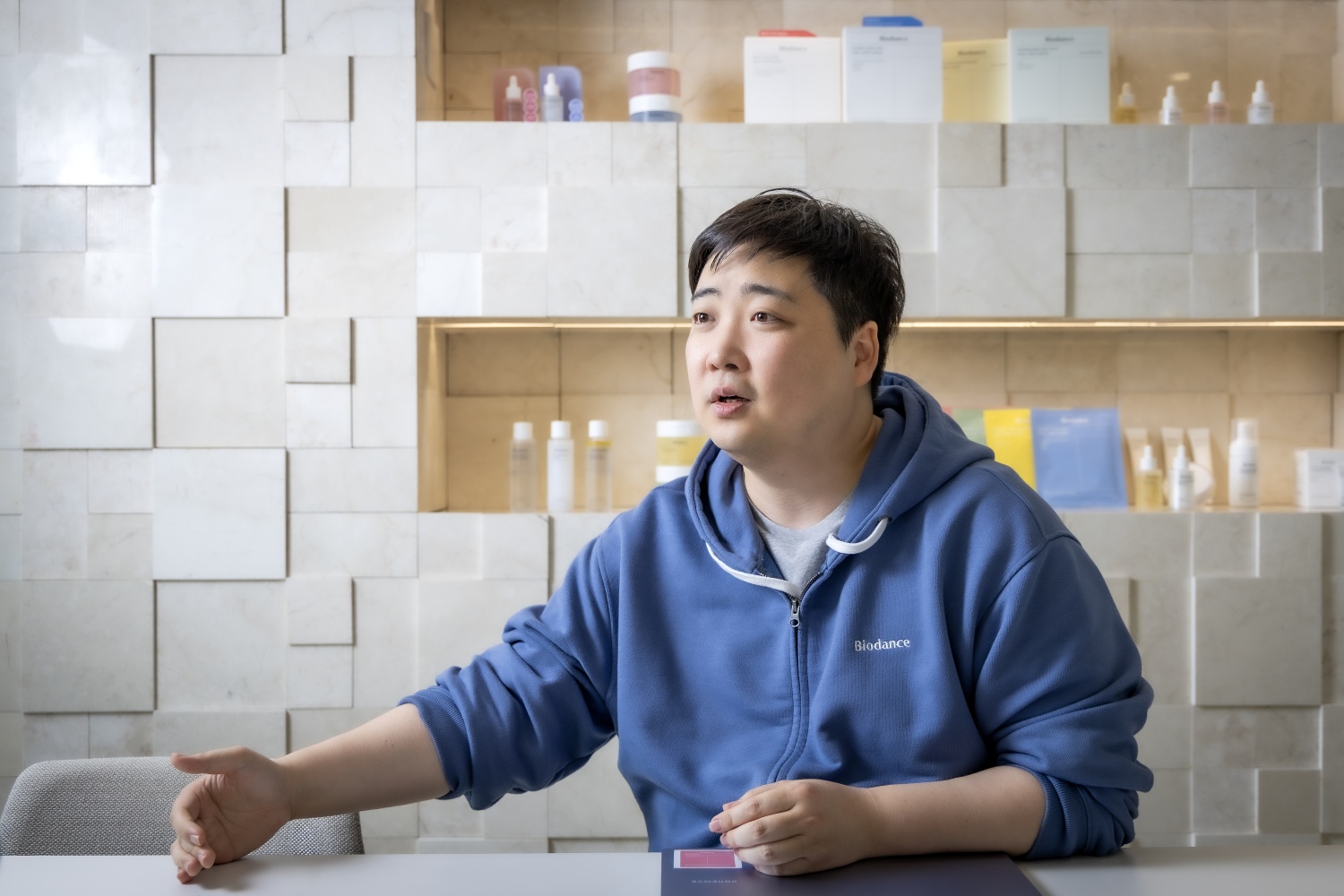
The audience had to want the conversation
Park had already encountered influencer marketing at Hyperconnect, where campaigns could be bought through agencies. In his later explanation of Beauty Selection’s approach, he drew attention to the economics of repeating those campaigns. Once an audience had seen the message, paying to reach the same people again could become less attractive. Commerce offered a different reason to continue the relationship.
A customer could return for another purchase. A creator could keep discussing a product they used. Beauty Selection could work with that relationship over time. Park described collaborations reaching dozens of selling rounds. The arrangement gave the company an incentive to care about the experience after the parcel arrived. A disappointed customer has a remarkably good memory for who recommended the purchase.
His distinction between audiences was equally practical. Someone watching a creator for entertainment might have little interest in a sudden product discussion. Someone following a person’s everyday choices might welcome it. Audience size alone could miss the point. The relevant question was whether the conversation belonged there in the first place.
A complaint needed an address inside the business
By April 2022, Park was describing customers as participants in product planning and marketing. Their unvarnished reactions travelled through influencers to brand managers, informing improvements and new development. The company’s role extended across making, selling and explaining products. Feedback could therefore reach people responsible for changing what the buyer received.
This is a more demanding version of listening than collecting agreeable comments. A useful complaint creates work. Someone must understand it, decide whether other customers share it and translate it into a decision. The customer does not need to admire the process. They need the next encounter with the product to justify having spoken up.
That structure also mattered to investors. In 2022, Altos Ventures led a Series A investment, initially announced at ₩11 billion and subsequently reported as a completed ₩13 billion round. The investment rationale included the company’s ability to take customer feedback into product improvement through close creator relationships. Money followed a view about how the business learned.
An editorial diagram of the early model: each sale creates another opportunity to understand the customer.
By 2023, the company was reporting that 70% of past customers bought the same product again within a year. That historical measure deserves its time frame. It described an established buying relationship rather than a launch-day crowd. For a founder arguing that the product experience mattered, the return visit was a particularly useful piece of evidence.
The discipline of leaving things behind
Beauty Selection tried multiple categories, including fashion. Its development was accompanied by mistakes: an early surge in demand exposed a gap between production spending and the arrival of sales cash. Management went without salary and put personal resources into the business. Cash-flow management subsequently received closer attention. A successful sale, it turned out, could still arrive at an inconvenient hour.
The company also withdrew from fashion after recognising errors in its judgment. These episodes give substance to the language of experimentation. An experiment has a cost, and sometimes the conclusion is to stop. Adding an opportunity is easy to explain at a meeting. Removing one requires accepting that the earlier explanation was insufficient.
Biodance launched in 2021. After seeing its international potential, the company concentrated resources on its global expansion in 2024. The decision gave Park’s work a sharper centre. A collection of brands had offered several possible futures; a concentrated commitment made the next allocation of people and money more consequential.
Focus also creates exposure. When one brand carries much of a company’s business, its continued appeal matters more. The choice deserves to be understood with that responsibility attached. A clearer priority can help colleagues act, but it does not relieve the founder of judgment. It makes the judgment easier for everyone to see.
An explanation crosses the border
Biodance entered Amazon’s US marketplace in July 2022. The mask’s presentation eventually supplied a small, revealing example of localisation. Park said instructions about wearing it for hours had failed to communicate effectively to American shoppers. Presenting it as an overnight mask gave the intended routine a more recognisable shape. The team had to reconsider how it was asking for someone’s time.
The episode illustrates the difference between providing information and making it usable. An instruction can be accurate while leaving a person wondering how it fits their evening. For Park, overseas expansion included that ordinary act of interpretation. The commercial opportunity depended partly on a customer understanding what the company was proposing.
He also credited Kim’s role in the products, describing her involvement throughout their development. Their partnership matters to the shape of his career: Park’s responsibilities sit alongside a co-founder whose attention is concentrated on product detail. A founder story can accommodate more than one pair of hands. In this case, it needs them.
Reported annual company sales
Beauty Selection totals, including its brands. Rounded figures; annual sales, not company valuation.The internet acquires a shop window
In March 2025, Biodance announced availability in more than 400 Sephora stores across the United States, as well as online. The range included masks, toner pads and cream. For a business that had learned through digital relationships, physical retail introduced another way to meet someone who had yet to make up their mind.
A shop changes the encounter. A customer can notice a package without searching for it, compare products close together and ask a question in person. Behind that brief moment sits a longer relationship between brand and retailer. Someone must coordinate the range, keep stock moving and make the explanation survive beyond the company’s own screen.
The milestone therefore expands the founder’s job as much as the customer’s access. There are more people involved in delivering the same promise. The pleasurable photograph of a product on a shelf has an unphotographed companion: the work required to keep it there. Retail is quite capable of turning a celebration into a calendar invitation.
Who gets to make the next decision?
By October 2026, Beauty Selection was adding responsibilities to a broader senior team. Sanghoon Lee joined as chief operating officer, with production and supply-chain responsibilities; Geonsik Shin became chief commercial officer, overseeing overseas business. Andrew Stanleick joined the advisory board. The appointments put names against distinct parts of an expanding operation.
For Park, this is a further change in the work. A founder can help set the direction while colleagues take responsibility for the systems that carry it. More markets bring more simultaneous decisions. Clarity about who owns them becomes part of the product experience, even if the buyer never sees an organisational chart.
The company’s stated plans now include using AI and agents for recurring work, giving people more attention for other tasks. Its public language emphasises customer perspective and detail. The practical test is what that combination permits the team to do: how an observation becomes a decision, and how promptly a decision becomes something useful.
Park began his 2026 reflection with a willingness to acknowledge unsuccessful attempts. The work ahead will require the same ability at a larger scale. There will be more colleagues to hear, more customers to understand and more opportunities to decline. A business built on selection eventually asks its founder to practise the habit on everything, including his own time.