One of Jack Hidary’s childhood jobs was in a warehouse. His father’s family made sports clothing in Brooklyn, and young Jack helped among the boxes and inventory. It is a useful opening scene for a career usually told in the language of IPOs, quantum computing and artificial intelligence. The warehouse had none of that vocabulary. It offered a simpler lesson: a business is a place where people have to make, move and organize things well enough that someone else can use them.
Hidary also went to computer camp. He has called himself a nerd, cheerfully, and remembered getting a computer while he was young. A child of a family business with a taste for machines: the combination matters. The family warehouse taught him that ideas need operations. The computer suggested that operations could be redesigned. He would carry both instincts from Brooklyn into the early web, city politics and, eventually, the laboratory-minded software he now sells as chief executive of SandboxAQ.
The cobbler’s children find a website
By the mid-1990s, developers were making websites and software for nearly every industry. Hidary saw an awkward omission. The people building the digital economy had fewer useful online places of their own. In a later interview, he compared them to “the cobblers’ children with no shoes.” The line has a founder’s neatness, but it also identifies a market: programmers needed explanations, code and each other.
In 1995, Hidary co-founded EarthWeb with his brother Murray and Nova Spivack. The company offered technical tutorials and resources. Hidary recalled building a site dedicated to Java and a shared library of code, an early attempt to make developers’ work easier to find and reuse. EarthWeb went public in 1998, when the dot-com boom rewarded even ambitious promises with astonishing speed. More consequential than that first-day excitement was a purchase the following year.
Dice.com was a small technology jobs site in Iowa, with about ten employees by Hidary’s recollection. EarthWeb acquired it in 1999. As the careers business grew, the company changed its name to Dice Inc. The move said something about Hidary’s eye: a portal for technical knowledge had found a practical adjacent need. A programmer who learned a language might also need a job. The answer was sitting in a modest Midwestern office, far from the glamour of a New York public offering.
Hidary left Dice in 2001 and turned to other interests, including microfinance and civic work. He later described helping small business owners through Trickle Up and becoming involved in issues around New York and Washington. Those interests can look like a departure from technology. They fit more comfortably beside the old EarthWeb question: what would let more people take part? In one case the missing resource was code. In another it was capital, training or a workable policy.
A founder runs for City Hall
In July 2013, Hidary declared an independent run for mayor of New York City. The launch was held in a Manhattan co-working space, a location so apt it almost sounds arranged for a magazine cover. He used the occasion to talk about expanding creative workplaces across all five boroughs. His party line was called Jobs and Education. The words were plain enough to fit on a ballot; the program behind them was full of the founder’s faith in practical infrastructure.
He proposed more technology training, school partnerships and spaces where small companies could begin. He talked about broadband access and asked public education to do more than reward memorization. The campaign also reflected a personal geography. Hidary was born in Brooklyn and raised near Coney Island. He had seen a family business at close range. Now he was arguing that the benefits of a growing technology sector should reach neighborhoods beyond its fashionable addresses.
“My vision is to bring this kind of creativity to all five boroughs.”
The voters were not persuaded. Hidary received a small fraction of the citywide vote, and Bill de Blasio won. The campaign also ended with an administrative blemish: in 2017, New York City’s Campaign Finance Board assessed $14,433 in penalties against the campaign for reporting and other finance violations. That belongs in the record alongside the platform. His attempt to move from company building to public office was earnest, specific and unsuccessful.
Yet the campaign is a revealing middle chapter. Hidary spoke like a person convinced that the tools around an economy shape who gets to enter it. He had built a website for developers and helped turn a jobs site into a business. As a candidate, he wanted incubators and training to become part of a city’s everyday machinery. The office eluded him; the question stayed.
A moonshot with a manual
After politics, Hidary spent six years at Google working with teams in artificial intelligence and quantum technologies. The setting had changed again, from New York’s co-working spaces to one of technology’s largest research organizations. In his account of the period, he built a division focused on problems that were difficult to approach with conventional tools. It was also the incubator for SandboxAQ, which became an independent company in 2022.
During those years he wrote Quantum Computing: An Applied Approach. The title is almost disarmingly literal. Published by Springer and now in a second edition, the book couples the mathematical foundations of the field with code, examples and problem sets. Its companion repository on GitHub lets readers work through algorithms themselves. A person who helped create developer resources on the early web had, decades later, written another tool for technical learners. The machines were stranger; the instinct was familiar.
Quantum computing is a phrase that invites grand predictions. Hidary’s textbook offers a smaller and more useful promise: here are the concepts, and here is something you can run. That distinction helps explain the direction of SandboxAQ. Its name retains the initials for artificial intelligence and quantum, while its current pitch emphasizes quantitative AI. The company builds software and models meant to handle numerical and physical problems, including materials and energy applications, as well as cryptography.
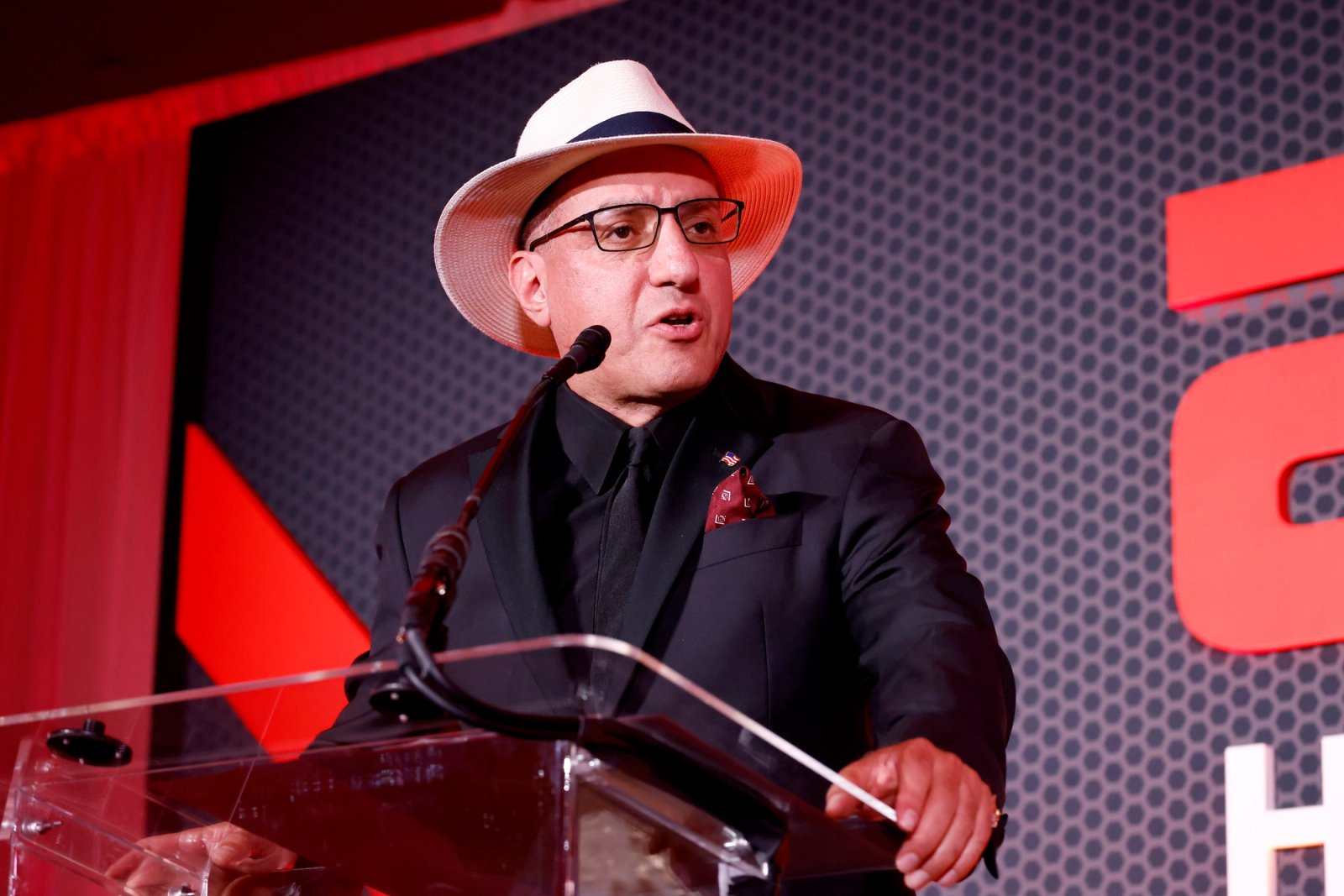
The pitch requires care. A language model handles text and related data; a model aimed at the physical world needs measurements, equations and experimental checks. Hidary describes SandboxAQ’s approach as large quantitative models, or LQMs. The company says this can help researchers sift through many possible materials and chemical structures before deciding what to test in the real world. It is an ambitious claim, and the real measure is whether users can save time, money or failed experiments.
Hidary has a line for the difference: “While LLMs are about working faster with what already exists, LQMs are about discovering what does not exist yet.” It is a sharp piece of positioning. It also captures his long-standing preference for tools that create a next step. A useful model should lead to a better calculation, a candidate material, a decision that can be checked. The applause at a demonstration matters less than the work the next person can do with it.
The scale of the next question
SandboxAQ’s 2022 spinout brought a prominent chairman in Eric Schmidt and large backing from investors. The company says it has raised more than $950 million since the separation from Alphabet. Such capital gives a team room to pursue difficult technical problems. It also raises the standard of proof. A generous research budget is one thing; dependable products, adopted across industries, are another. Hidary now has to turn a wide technical thesis into a company customers can use repeatedly.
He has pushed that thesis onto an international stage. In 2025, he discussed SandboxAQ’s work while traveling through Gulf business and technology gatherings. In an August 2026 interview, he spoke about using quantitative models for materials discovery and easing supply constraints in batteries and electronics. He argued that better models could help identify substitutes for inputs whose processing is concentrated in a few countries. The ambition extends well beyond a single laboratory or a single market.
It is tempting to draw a perfectly straight line through such a varied career. That would be too tidy. An internet company, a mayoral race, a quantum textbook and an enterprise software venture are very different undertakings. Some succeeded; one conspicuously did not. The through-line is less a master plan than a repeated choice of problem. Hidary has kept noticing specialists who need a better way to reach their work, their peers or their next experiment.
There is a modest joke tucked inside the grand vocabulary. After all the talk of quantum, the useful question may still be one a Brooklyn warehouse could understand: what has been made, where does it go, and who can use it? Hidary learned early that an idea becomes a business only when people can act on it. EarthWeb gave programmers a place to learn. Dice helped them find work. His mayoral campaign tried to make technical opportunity a city service. SandboxAQ asks whether sophisticated science can become software that ordinary teams can put to work.
That final proposition is still being tested. Hidary has made a career out of arriving before the answer is obvious, then building something for the people who have to find it. The next question is waiting at the bench, in the code and in the customer’s hands.