At Halifax Shipyard, a ship begins as a scheduling problem. Plates must be cut, pipes routed, cables pulled and equipment installed before steel walls make the useful corners impossible to reach. Irving Shipbuilding's Arctic and Offshore Patrol Ship method turns 63 small units into 21 blocks, then three mega-blocks. Only at the end does the thing resemble the 103-metre grey vessel the public was promised. The choreography is the product long before the ship is.
That distinction matters because Canada did not merely hire Irving to fabricate hulls. Under the National Shipbuilding Strategy, Ottawa selected the company in 2011 as its strategic builder of naval combat vessels. The assignment was to revive a domestic capability that decades of irregular orders had allowed to thin out. Irving invested more than C$400 million in a modernized Halifax yard. The federal government supplied a rare asset in heavy industry: a pipeline stretching across generations of workers.
Today more than 2,400 people work in the business. Their order book includes six Harry DeWolf-class patrol ships delivered to the Royal Canadian Navy, two modified patrol ships for the Canadian Coast Guard, up to 15 River-class destroyers, and repair work that keeps the existing Halifax-class frigates available. The customer is mostly one government. The users are sailors, technicians, fisheries officers and rescue crews. The consequence of failure belongs to taxpayers and to a fleet that cannot download a replacement ship.
The first ship is where the ghosts live
The first Harry DeWolf-class vessel made visible what every revived industrial base prefers to learn privately: new facilities do not arrive with experienced habits installed. Design maturity, material flow, workforce sequencing and supplier timing all had to settle while construction was already moving. HMCS Harry DeWolf was once expected in 2018 and was delivered in 2020. A federal audit later concluded that Canada's broader shipbuilding strategy had not supported timely fleet renewal during the period it examined. Then COVID-19 shut most Halifax production temporarily and disturbed labour and supply chains.
What failed first was not one cinematic weld. It was the schedule's assumption that drawings, people and parts would mature in concert. First-of-class naval construction punishes optimism. A late design decision moves through purchasing, fabrication, outfitting and testing. A component trapped behind another component can turn a small planning miss into hours of rework. The hull is enormous; the tolerances for disorder are not.
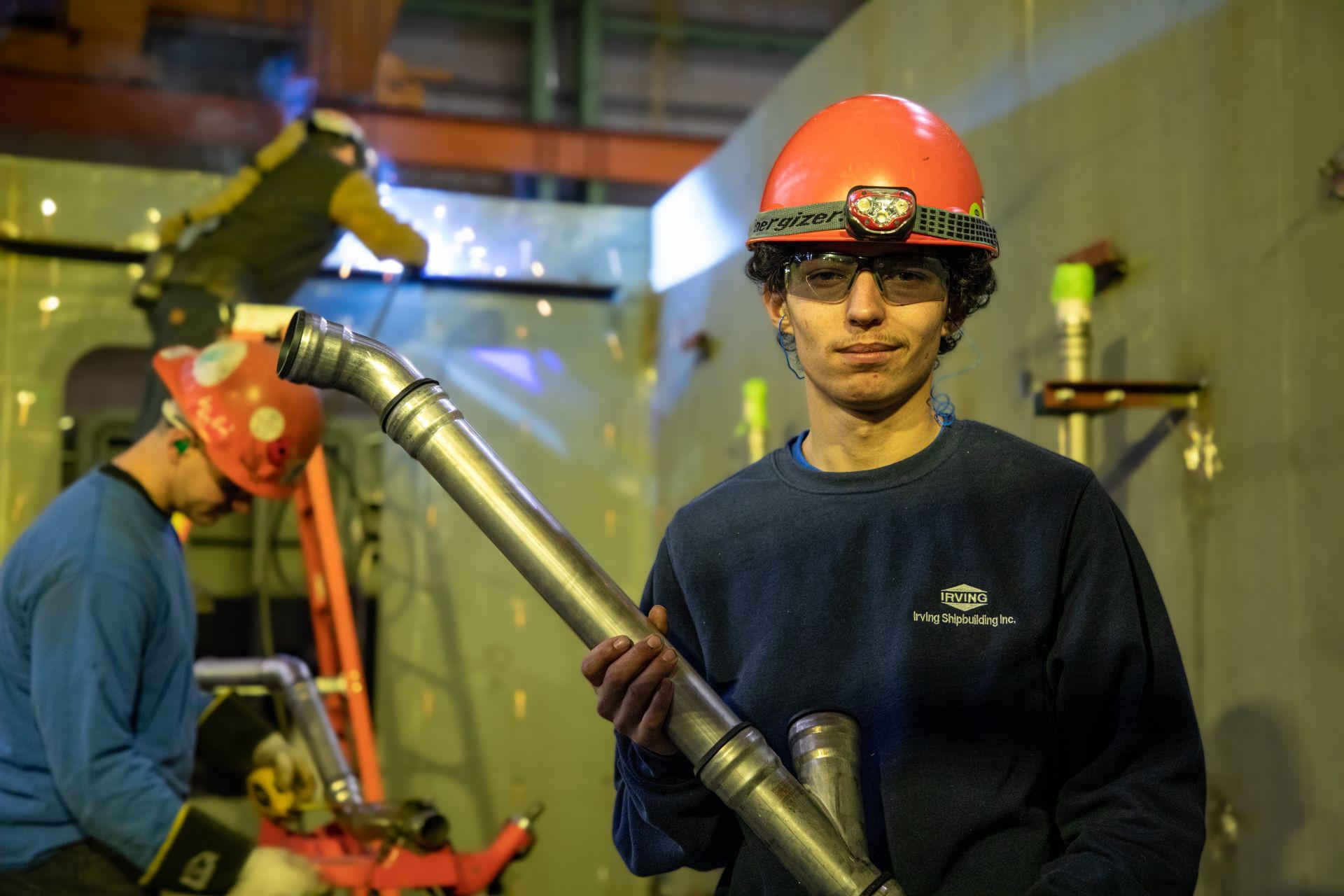
Irving's answer was repetition with measurement. The company adopted continuous-improvement training, worked on first-time quality and carried lessons from one hull into the next. Its own figures put first-time quality at 80 percent in 2020 and 97 percent in 2023. The fourth patrol ship was delivered in 51 months, eight months faster than the second. The fifth was launched two months ahead of its then-current schedule. Those are company-reported measures, but they describe the only mechanism that makes a long ship order rational: later hulls must pay back the tuition charged by the first.
First-time quality, company-reported
“Shipbuilding at its core is about people.”Dirk Lesko, President, Irving Shipbuilding
It sells sovereign capacity, not boats by the foot
Irving is a private company inside the J.D. Irving group, but its economics resemble infrastructure. It wins federal definition, design, construction and maintenance work measured in years or decades. Cash follows negotiated contracts and milestones rather than subscriptions or retail demand. In exchange for that durability, the business lives under political scrutiny over cost, schedule, domestic content and regional benefit.
The numbers require careful labels. Canada currently estimates C$56 billion to C$60 billion for the 15-ship River-class project. The first three-ship batch is estimated at C$22.2 billion, but that total includes much more than Irving's build contract: government-furnished weapons and systems, ammunition, initial spares, training, logistics, infrastructure and contingency sit in the same envelope. The construction contract recorded in March 2025 was about C$8.01 billion. Collapsing those figures into “cost per ship” makes a satisfying argument and a poor calculation.
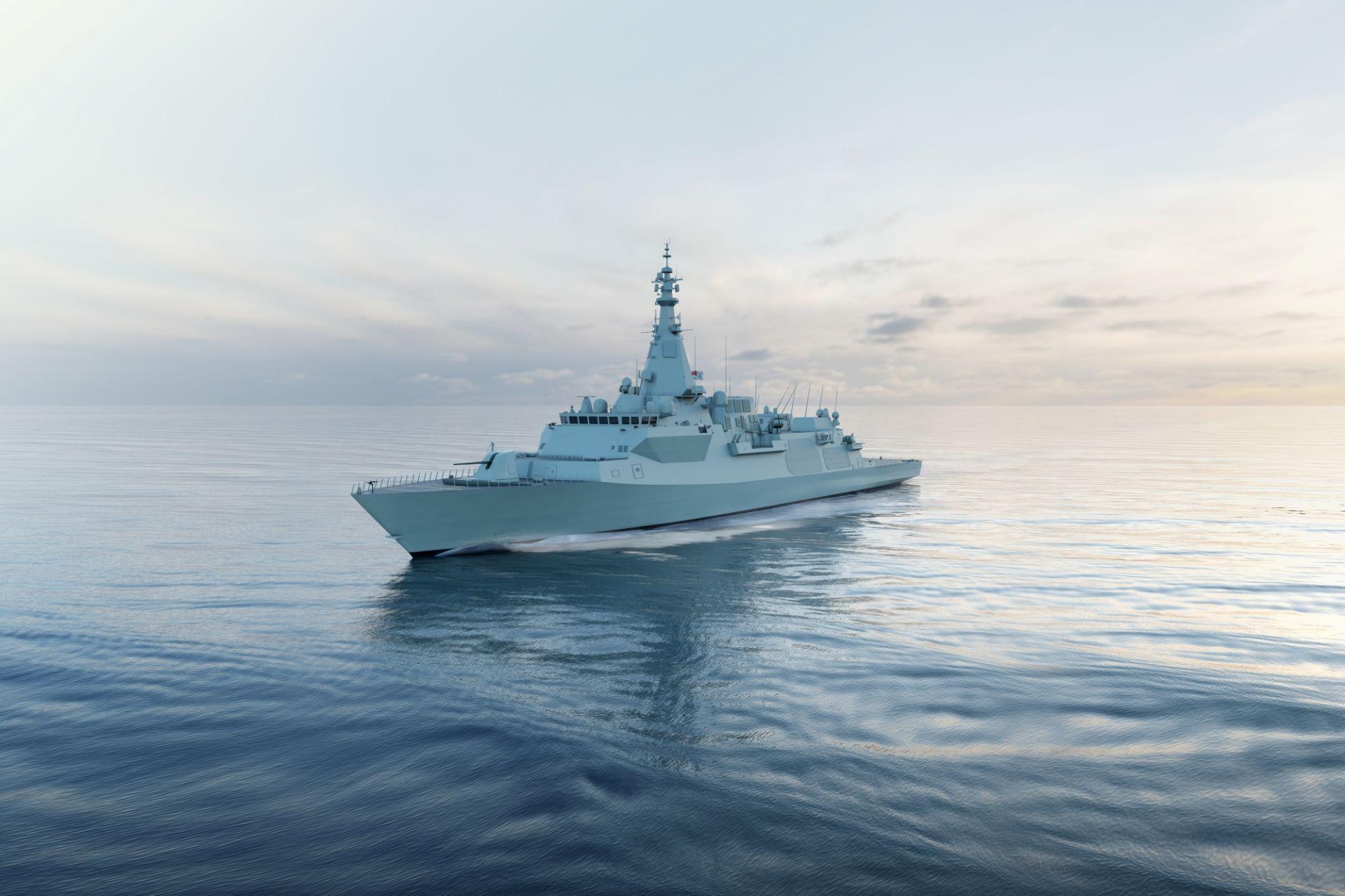
There was also a C$463 million amendment in 2023 for yard infrastructure. That money expanded and modified Halifax and supporting Dartmouth facilities for the much larger destroyer design. It bought schedule capacity: more working space, altered production facilities and preparation for a 165-metre shiplift rated above 27,000 tonnes. The decision reflected a changed mind in Ottawa and Halifax. A generic modern yard was not enough. The physical plant had to fit the actual Type 26-derived ship and borrow accommodations learned by Britain and Australia, which are building relatives of the same design.
A supply chain disguised as a shipyard
A Halifax address hides the national machinery behind it. Irving says National Shipbuilding Strategy spending commitments have reached nearly C$15 billion across almost 700 Canadian organizations. Score in Newfoundland received an C$89 million contract for engineered valves. Russel Metals supplies processed metal. L3Harris contributes surveillance systems. Lockheed Martin Canada leads the design team and combat-management work around BAE Systems' Type 26 reference design.
The arrangement solves two problems at once. The Navy gets ships and the country retains companies able to make marine equipment, interpret naval standards and support vessels after delivery. Contract rules reinforce the approach. Irving must meet Canadian-content and industrial-benefit commitments, while investing an amount equal to 0.5 percent of eligible contract revenue outside the company in workforce development, technology and commercialization.
Patrol ships and destroyers for federal fleets, assembled through modular production in Halifax.
Docking, refit and modernization keep Halifax-class frigates working while replacements arrive.
Hundreds of suppliers deliver steel, valves, software, sensors and services against naval standards.
Training and research investments turn a procurement program into durable industrial capability.
That is where Irving differs from an ordinary commercial yard and from its Canadian peers. Seaspan and Chantier Davie are strategic federal shipyards too, but their assigned large-vessel packages emphasize non-combat ships, icebreakers and other fleets. International yards may offer deeper production histories or export scale. Irving's advantage is domestic position: a modern facility next to the Royal Canadian Navy's Atlantic base, a workforce already through one full class, and a designated combat-ship pipeline. Its weakness is the mirror image - concentration in one public customer and exposure to every policy delay, budget revision and election-year argument surrounding that customer.
What builders can steal
No startup should copy a naval procurement program wholesale. Most businesses would collapse under its sales cycle, capital burden and customer concentration. But the Halifax operating logic travels surprisingly well.
Five portable ideas
- Modularize before scaling. Break the hard product into units that different teams can build, inspect and improve independently.
- Measure accepted work. Output is flattering; first-time quality exposes the rework hiding behind it.
- Preserve scarce teams. A production gap destroys tacit knowledge faster than a handbook can store it.
- Design the factory around the real product. Equipment and layout should follow the mature design, not an abstract forecast.
- Make suppliers part of the learning loop. Their drawings and delivery dates belong inside the production system, not outside it.
The conditions matter. Repetition improves performance only when later products share enough process with earlier ones, the design stops changing at useful moments and demand remains credible. It will not work when each order is a bespoke reset, when procurement pauses scatter the workforce, or when cost-plus incentives reward activity without penalizing avoidable rework. Nor does domestic capacity automatically equal value. Transparent milestones, comparable cost data and an informed buyer remain essential.
The next hull is the verdict
By August 2025, the Royal Canadian Navy had accepted its sixth and final Harry DeWolf-class ship. In April 2026, the future CCGS Donjek entered Bedford Basin, while its sister CCGS Sermilik advanced in the hall. The patrol-ship line had moved from awkward beginning to repeat production. Full-rate River-class work began in April 2025, and the future HMCS Fraser reached keel-laying in June 2026.
Now the difficulty resets upward. River-class destroyers are larger, more densely integrated and built around an Aegis-equipped combat system. Design work continues alongside production, with the most complex final reviews expected later in the decade and first delivery planned for 2032-33. The patrol ships taught Halifax how to sequence steel, people and suppliers. The destroyers will test whether that institutional memory survives a leap in complexity.
Irving's mission sounds uncomplicated: build and maintain ships for Canada. In practice it occupies the intersection of defence readiness, regional employment, industrial policy and patient manufacturing. Its most defensible achievement is not a slogan painted on a yard. It is that Canada now has six operational patrol vessels and a practiced production system moving toward the next class. Its biggest risk is equally plain: a learning curve has value only if the next ship arrives when the fleet needs it.