A fuel sale can look handsome right up to the moment someone asks when the customer intends to pay. Ira Birns understood that problem well before he became a chief executive. In 2007, he arrived at World Fuel Services as chief financial officer. Within a year, oil prices and a banking crisis were giving the balance sheet rather more attention than balance sheets usually enjoy.
His response included a commercially awkward decision: turn some business away. “We’re not saying yes to every piece of business that comes along,” he said in 2009. Customers faced tighter payment terms. Salespeople had to consider the money a transaction consumed alongside the profit it promised. A bigger invoice was no longer sufficient cause for celebration.
On January 1, 2026, Birns became CEO of World Kinect Corporation, now operating as World Fuel. His arrival in the top job followed almost nineteen years inside the company. It is a long apprenticeship for a position often introduced with a short announcement. The interesting part is what he had been practicing.
The sale he could afford to lose
Fuel distribution gives financial decisions a physical consequence. Product has to be sourced and delivered; customers may buy on credit. As prices rise, financing those transactions requires more cash. Growth can therefore increase the demands on a company before the cash from its customers arrives. The timing is part of the product’s economics, however little romance it adds to a sales presentation.
Early in his World Fuel tenure, Birns pushed for greater attention to that timing. The company renegotiated customer terms and linked commercial compensation to return on working capital. That changed the question a salesperson had to answer. Profit mattered, and so did the capital committed to earning it.
The shift reached beyond the finance department. Commercial colleagues were learning how their decisions affected cash flow and returns. There is a considerable difference between asking people to respect a financial target and giving them an incentive to work toward it. Birns’s account of the period suggests he understood the practical value of doing both.
Eighteen years learning the machinery
Birns came to fuel with a background in another distribution business. He joined Arrow Electronics in 1989 as assistant treasurer, became treasurer in 1996, and later added vice president and investor relations responsibilities. He stayed for eighteen years. The company’s growth gave him repeated exposure to acquisitions, funding decisions, and the demands of operating internationally.
When World Fuel hired him in April 2007, Arrow’s record included more than seventy-five acquisitions during his tenure. Birns had worked on raising capital, managing liquidity and debt, and overseeing credit risk for major customers. These were responsibilities inside a larger management team; attributing the company’s entire expansion to its treasurer would make the rest of the organization understandably cross.
His own description of career development was broader than a sequence of promotions. He began as an internal auditor, moved toward treasury, and kept adding responsibilities. Purchasing, real estate, insurance, payroll, and international projects all entered the picture. The progression suggests a useful preparation for general management: becoming familiar with work that does not fit neatly beneath your original job title.
“From the start of my career, I knew one thing: I needed to be constantly challenged.”
Ira Birns, 2009
That appetite had a demanding companion. Communicating across an organization was part of the job, too. Birns urged aspiring CFOs to understand the businesses they supported and develop the ability to influence colleagues in different directions. Being correct in a spreadsheet leaves quite a lot of work still to do.
A hiring rule with teeth
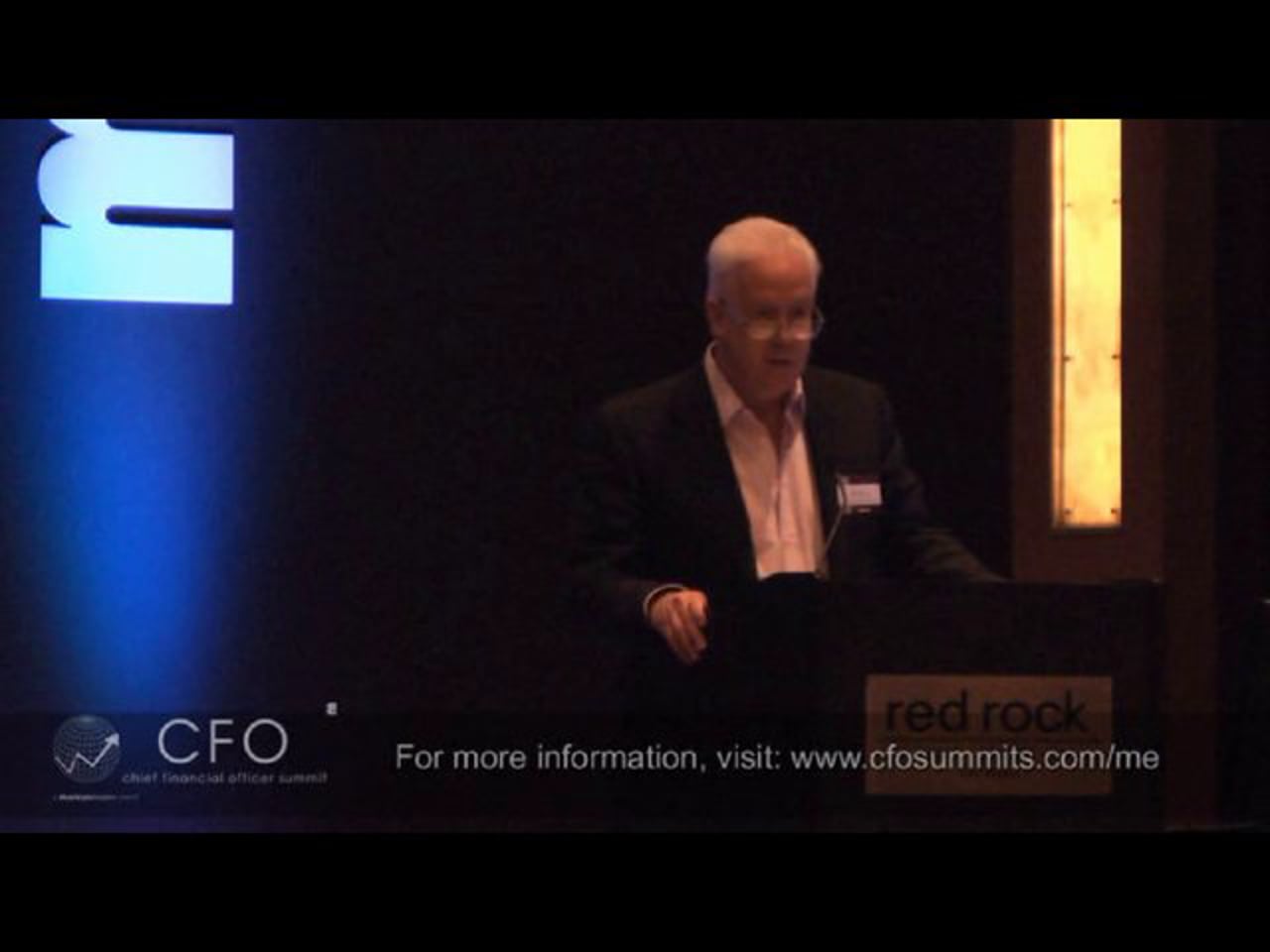
By the time Birns appeared on Oz Rashid’s Hire Learning in April 2025, he had spent years leading a global finance organization. The conversation ranged from his early paper route to keeping teams aligned. His advice about recruitment was particularly plain: decide which qualifications are essential, then treat them as essential when a candidate arrives.
He recalled a former CEO’s insistence that a required qualification remain required. A candidate with two of three essentials should not quietly get the third waived because the manager is eager to finish hiring. Anyone who has watched an urgent vacancy rewrite its own job description will recognize the temptation.
The argument puts responsibility on the hiring manager before the interview begins. A sensible specification needs judgment; an endless list of supposedly indispensable attributes helps nobody. Once the real requirements are agreed, however, convenience should not dissolve them. It is an approach consistent with his earlier commercial decisions: establish the conditions under which an opportunity makes sense.
There is a more sociable side to this picture. Rashid described Birns as a storyteller and a Yankees enthusiast, and discussed his internal communications with large employee audiences. The combination is revealing without requiring a personality test. An executive can insist on clear standards and still care about whether people want to listen.
The podcast also returned to alignment across a large organization. A decision understood in one office does not automatically become a shared practice elsewhere. That makes communication part of execution, particularly when teams work across countries and functions. The subject suits a finance leader who had already spent years translating financial priorities for commercial colleagues.
The long handover
World Kinect promoted Birns to president on April 25, 2025, while he continued as CFO. John Rau became chief operating officer. In October, the company announced the next arrangement: Birns would become CEO and a director in January; Rau would become president; Mike Tejada would take over finance. Michael Kasbar would move from CEO to executive chairman.
Those changes distributed responsibilities among people already familiar with the business. For Birns, the shift widened the brief he had held since 2007. Financial judgment would remain relevant, but the CEO’s job also involved commercial priorities, employees, customers, and the performance of the whole organization.
Assistant treasurer
Chief financial officer
President
Chief executive officer
His earlier CFO responsibilities had included credit risk management and corporate development alongside the finance functions. That is relevant to the promotion: the new chief executive had already worked on questions about which customers to finance and which businesses to pursue. The appointment extended an existing relationship with the company’s operating choices.
The handover is still unfolding. In September 2026, the company announced that Kasbar would step down as executive chairman on December 31, with Ken Bakshi becoming independent chairman. As of October, that change remained ahead. Birns’s first year therefore sits inside a longer transfer of leadership rather than a single ceremonial exchange of business cards.
An old name, a narrower brief
A second change concerned the name on those cards. In April 2026, the company adopted World Fuel as its unified operating brand. World Kinect Corporation remained the legal name, and WKC remained the stock ticker. The distinction is useful for anyone wondering whether Birns had changed employers while sitting at the same desk.
The branding accompanied a stated emphasis on transportation fuels and related services. Customers already knew the World Fuel name. The company connected the decision with simplifying its activities and prioritizing opportunities offering better returns. For a leader whose early record included turning away unsuitable business, the emphasis on selection has a familiar ring.
The operation spans aviation, marine, and land markets, with a network reaching more than 200 countries and territories. It also supplies lower-carbon fuels and markets natural gas in the United States. At that scale, focus has to mean more than a concise description on a website. It involves deciding where people, capital, and management attention should go.
The quarter and the question after it
In July, World Kinect reported second-quarter gross profit of $365 million and GAAP net income of $48 million. Aviation contributed $208 million in gross profit, marine $80 million, and land $77 million. The company raised its full-year adjusted earnings guidance.
The explanation matters alongside the totals. Higher fuel prices and market volatility helped aviation and marine profitability; the aviation business also benefited from the acquired Universal Trip Support Services operation. Management credited both market conditions and the effects of a streamlined portfolio. Treating every dollar as a verdict on the new CEO would ignore that mixture.
The continuing question is how the business performs as conditions change. Birns’s background gives him considerable experience with that problem. His first year as CFO encountered an extraordinary credit environment. His first year as CEO has again required decisions amid volatile markets. The numbers offer a checkpoint, while the job continues.
The names on the scholarship
Birns’s life also reaches institutions whose work is measured differently. He chairs the audit committee at energy software company Stem, having joined its board in November 2023. In Miami, he serves as vice chairman of the New World Symphony, an academy supporting musicians at the beginning of their professional careers.
When Stem appointed him, it identified experience across finance, acquisitions, capital markets, investor relations, and energy as reasons for the choice. The audit committee role draws on that accumulated range. It also places him alongside another management team, with the responsibilities of a director rather than those of the executive running the daily operation.
His own education began early. A Long Beach, New York, native, he entered Hofstra at sixteen, arranging a ride with a classmate because he could not yet drive. He had run a rare-coin business in high school. His mother encouraged accounting; he graduated in 1983.
Today, the Alfred and Edith Birns Memorial Endowed Scholarship honors his parents, both Holocaust survivors. Through it, he wants students to encounter their story as well as receive financial help. A career spent weighing commitments has left room for this one: supporting an education that may change a life whose eventual direction nobody can yet calculate.
Read, watch, follow
- World Fuel · official website
- Ira Birns · LinkedIn
- Career advice · Birns’s 2009 essay
- The 2009 credit decisions · interview
- Hire Learning · full podcast
- Hire Learning · YouTube channel
- Hofstra · family legacy and scholarship
- Q2 2026 · company results
- September 2026 · board transition
Profile updated October 21, 2026. World Kinect Corporation operates as World Fuel.