The manufacturer had decided to modernize its finance and inventory systems. Then a quality employee announced retirement. After 35 years, this person knew how the plant’s scattered records fitted together. The company suddenly had a different software problem: its quality system was about to walk out of the building.
- IQS connected the records behind manufacturing quality: documents, defects, suppliers, audits and training.
- Medgate bought it in 2017. Its legacy now sits within Cority’s quality offering.
- The customer lesson: put knowledge into shared processes before its keeper leaves.
The knowledge that was about to leave
In Cority IQS’s account of this unnamed aerospace and medical-device manufacturer, the retiring employee connected departments and documents through experience. The company broadened its ERP project, choosing Epicor Advanced Quality Management powered by Cority IQS. It centralized shop-floor documents, then linked training and product-quality planning. A medical-device customer audit fell from half a day to two hours, according to the case study.
There is something wonderfully uncomfortable about that opening. The business had procedures. It had records. It had a person who could make sense of them. What it lacked was a dependable way for the next person to do the same. An experienced colleague can make a fragmented operation look orderly for years. The disorder becomes visible when that colleague books a holiday, changes jobs or retires.
This is the territory IQS occupied: the distance between having information and being able to use it. A folder full of inspection reports may satisfy someone’s filing habits. It becomes more useful when a complaint can lead back to the inspection, the applicable procedure and the person responsible for fixing the problem. The connective work is where quality software earns its keep.
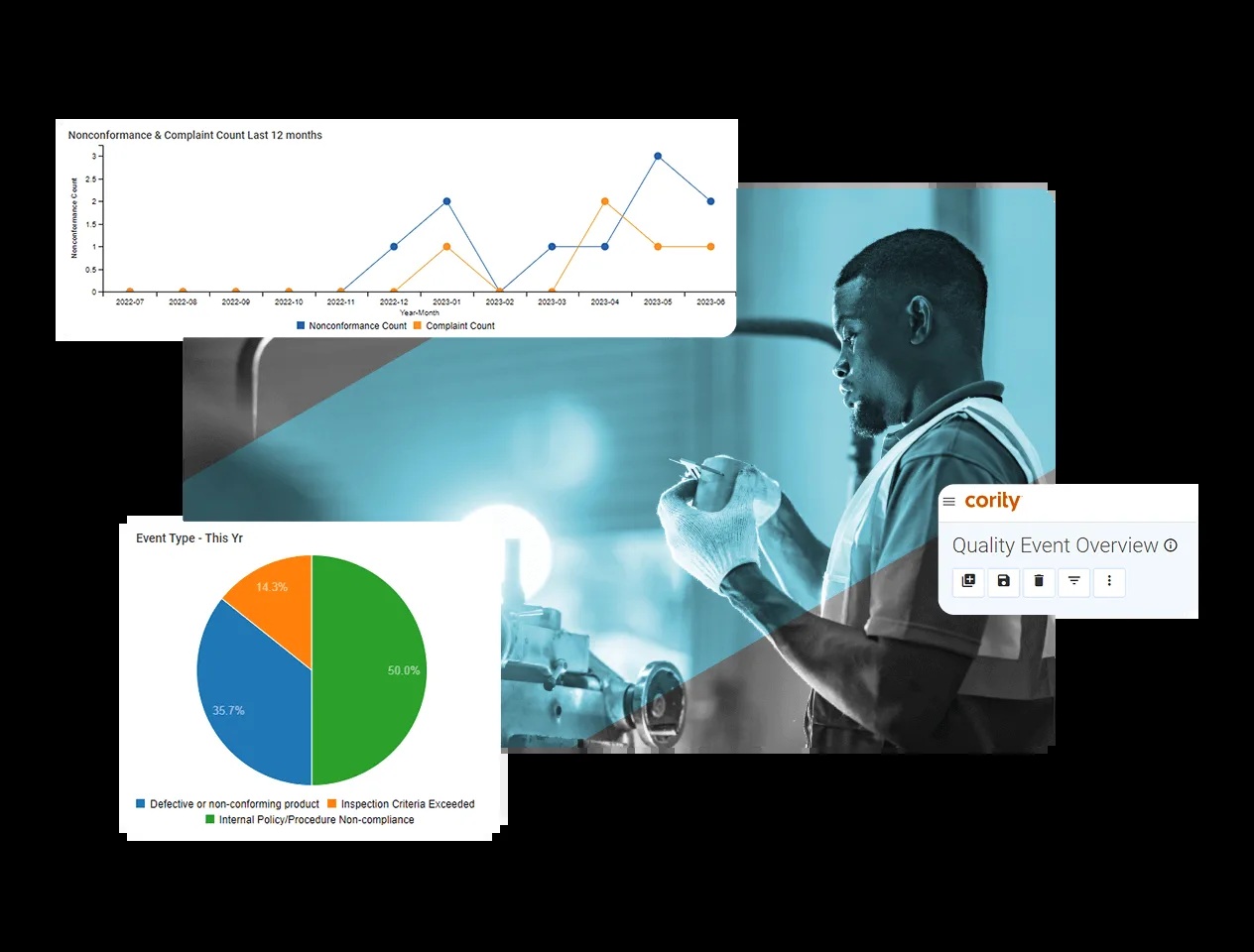
A defect needs a paper trail
IQS was founded in Ohio in 1988 by John Cachat. Its specialty was enterprise quality management for manufacturing: the unglamorous, consequential business of recording what went wrong, who investigated it and whether the fix held. Its historical product range included gauge calibration, inspections, statistical process control, supplier quality, employee training and document control.
Consider a hypothetical rejected component. Someone records the nonconformance - a failure to meet a requirement. A quality engineer investigates. A supplier may need to respond. A corrective action receives an owner and a deadline. If the procedure changes, the approved document must reach the people doing the work. Training may need updating too. Closing the original ticket without those connections would leave a very tidy record of an unfinished job.
Cority’s current Quality Cloud provides workflows for that chain, including nonconformance, corrective and preventive action, supplier oversight, documents and mobile data capture. Its purpose is to keep records accessible and responsibilities visible. A manager can examine recurring issues; an auditor can follow the evidence. The software supports compliance work. The organization still has to perform that work.
The intended users are quality teams, engineers, supplier managers and compliance staff in industries where evidence matters. IQS’s 2017 acquisition announcement named customers including Nexteer Automotive, PolyOne, Delta Faucets, Alcoa and Eaton. Automotive, aerospace and medical-device manufacturing were central markets. These are businesses where “we think someone checked” is an expensive sentence.
Two months is a beginning
Pointe Precision, a precision-machining business, wanted to trace quality issues back to their origin and answer customers faster. Its ERP provider, Epicor, directed it toward the quality system powered by Cority. The published case says supplier and customer data were running in two months, while 70% of the overall system crossover was completed within 12 months.
That distinction deserves a place in every software buying conversation. Go-live is an event; moving the work is a process. A usable first deployment can arrive while other records, habits and responsibilities are still making their way across. Buyers should ask what those first two months included, and what remained for month eleven.
“We now know exactly where we stand at any time, at the push of a button.”
Nicholas Sondelski · Pointe Precision
Published customer case study
Pointe Precision also reported supplier responses falling from approximately five days to three after it began tracking communications. That is a 40% reduction in elapsed response time. It is a customer account, rather than a promise to every buyer. The intriguing detail is behavioral: suppliers were told their communications were being tracked. Visibility can change a conversation before an algorithm enters it.
Approximate customer-reported times. Bars show elapsed days, not a guaranteed outcome.
Parker Hannifin offers a longer view. Cority’s retrospective says its cylinder division began with a calibration module in 1993, after struggling with dozens of quality manuals and costly audit preparation. It reports administrative savings of up to $15,000 a year per module. The useful idea is the starting point: tackle a particular burden, establish a working record, then build from there.
The Q that Medgate bought
IQS was still developing its own platform before the acquisition. In 2016, it announced a fourth-generation quality application built on Trubox, with browser support, configurable workspaces, analytics and integration tools. The technical choices served a practical ambition: quality information had to coexist with the other systems a manufacturer already used.
On March 2, 2017, Medgate announced its purchase of IQS. Medgate subsequently became Cority. Buying IQS added manufacturing-quality expertise to environmental, health and safety software. The strategic logic was straightforward: product quality and operational risk frequently concern the same facilities, processes and people. Keeping their records apart can make a common problem harder to see.
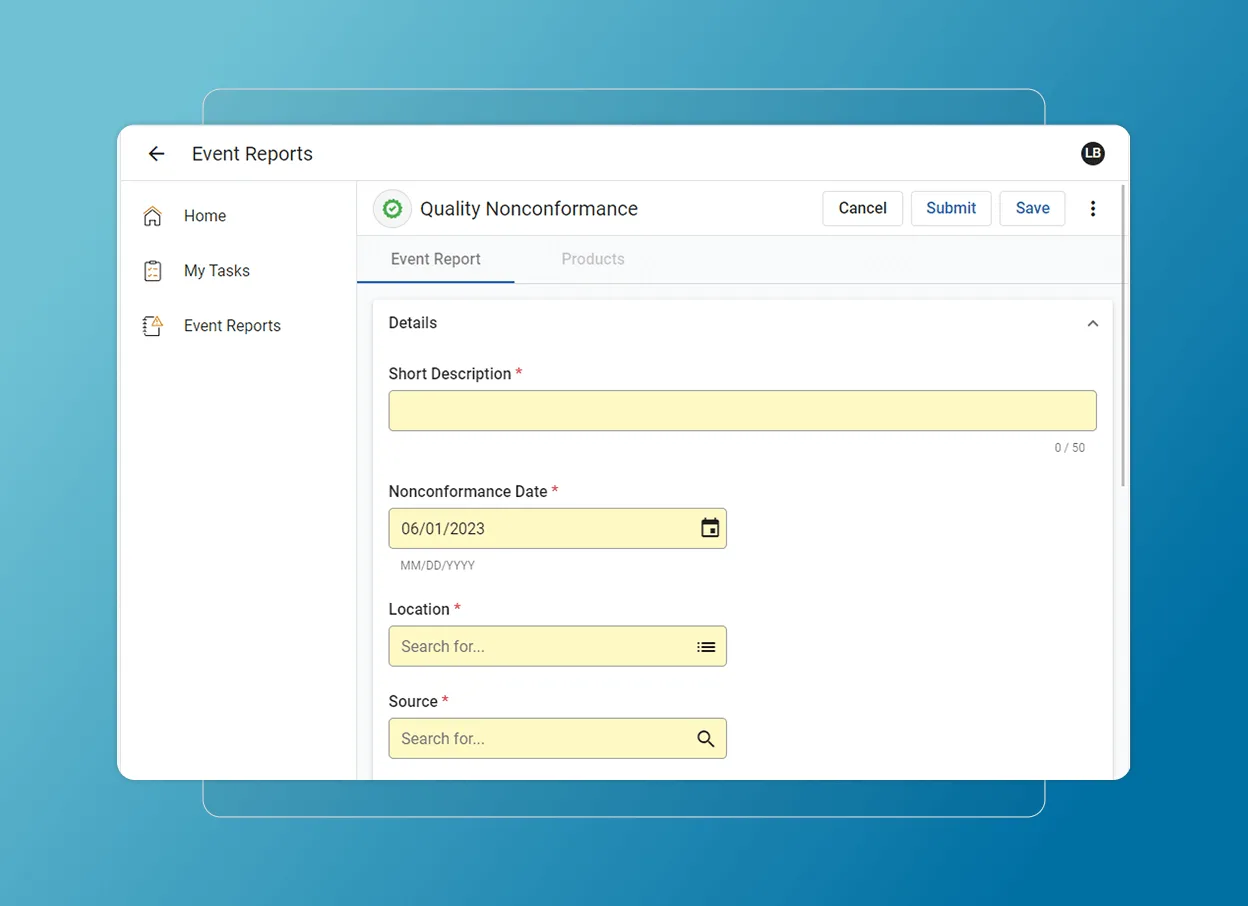
Today, Cority directs IQS visitors toward its quality software, which can operate alone or within the wider CorityOne offering. Its market position rests on that broader operational context and its manufacturing history. ETQ Reliance also sells connected manufacturing quality software, so shared records and automated workflows are competitive requirements. A buyer has to examine the actual fit: processes, integrations, user experience and scope.
Even partnership history needs a date stamp. The IQS customer cases describe Epicor-powered deployments. Epicor’s current QMS page names ETQ, part of Hexagon. A successful historical integration is useful evidence for understanding an old rollout; a new procurement needs the current arrangement checked.
The invoice and the work behind it
Cority’s published pricing model has two main bills: a recurring software subscription and a one-time implementation project. The subscription starts with a three-year commitment. Scope depends on selected solutions, users and integrations. Standard licensing grows with modules and users; enterprise licensing covers the agreed scope for all employees, with an annual uplift.
The implementation fee pays for configuration under a statement of work. Additional professional services can be scoped separately. Those terms explain the present business model; they should not be applied retrospectively to IQS’s earlier customer projects. For a buyer, the sensible budget includes the people who must clean records, agree responsibilities and learn the workflows.
IQS itself experienced financial strain. A 2011 Ohio appeals opinion records Apex’s $2 million equity investment in 2003, another $1 million in 2004 and $5 million in subsequent loans by fall 2007. It describes continuing unprofitability and unsuccessful efforts to raise outside capital. Useful software and a comfortable balance sheet are separate achievements.
Borrow the method before buying the software
The lesson to copy is practical. Choose a recurring problem that crosses departments. Map where its evidence lives. Assign responsibility for each step, decide what closure requires and measure the delay. Then ask the vendor to demonstrate that precise journey with realistic records. A beautiful dashboard is easier to produce than a reliable answer to a messy complaint.
This approach depends on accurate data and people willing to maintain it. If nobody owns the corrective action, recording a deadline adds little. If staff keep using obsolete instructions, document control has failed at the point of use. And if a small operation’s needs are modest, a wide enterprise deployment may create more work than it removes. Scope should follow the problem.
The retiring veteran’s value was judgment built through years of work. Software cannot simply bottle it. What IQS could offer was a place to record procedures, connect evidence and make the next person’s investigation possible. Ask who currently performs that connective work in your company. Then ask what happens on their last day.
Keep investigating
Explore IQS’s website, current Quality Cloud tools and Cority’s pricing model. Follow IQS on LinkedIn or parent Cority on LinkedIn, X and Instagram.
For more: watch the quality and risk webinar, browse the quality automation guide, or read the acquisition announcement.