A doctor’s description of an illness has several jobs. It must help another doctor understand the patient. It must fit inside an electronic record. Eventually, some version of it must satisfy a billing system. Those jobs sound compatible until the same words arrive at three different desks. IMO Health built a company around that awkward journey.
- The work: connect clinical language to codes and usable data.
- The buyers: record vendors, health systems, health tech, and life sciences.
- The lesson: preserve expert language, then make it travel.
Frank Naeymi-Rad noticed the problem while teaching at Chicago Medical School. As students entered different specialties, their vocabularies diverged. His wife, a physician, helped him understand another split: clinical descriptions and billing terminology could carry different meanings. Medicine had plenty of words. Getting those words to cooperate was the opportunity.
The dictionary had to pay its way
IMO’s roots include an early medical decision-support project requested by NASA. A team led by Naeymi-Rad formed IMO in 1994 to help commercialize an early electronic medical record. Its eventual place in the market would be less conspicuous than a complete record system: the terminology inside it.
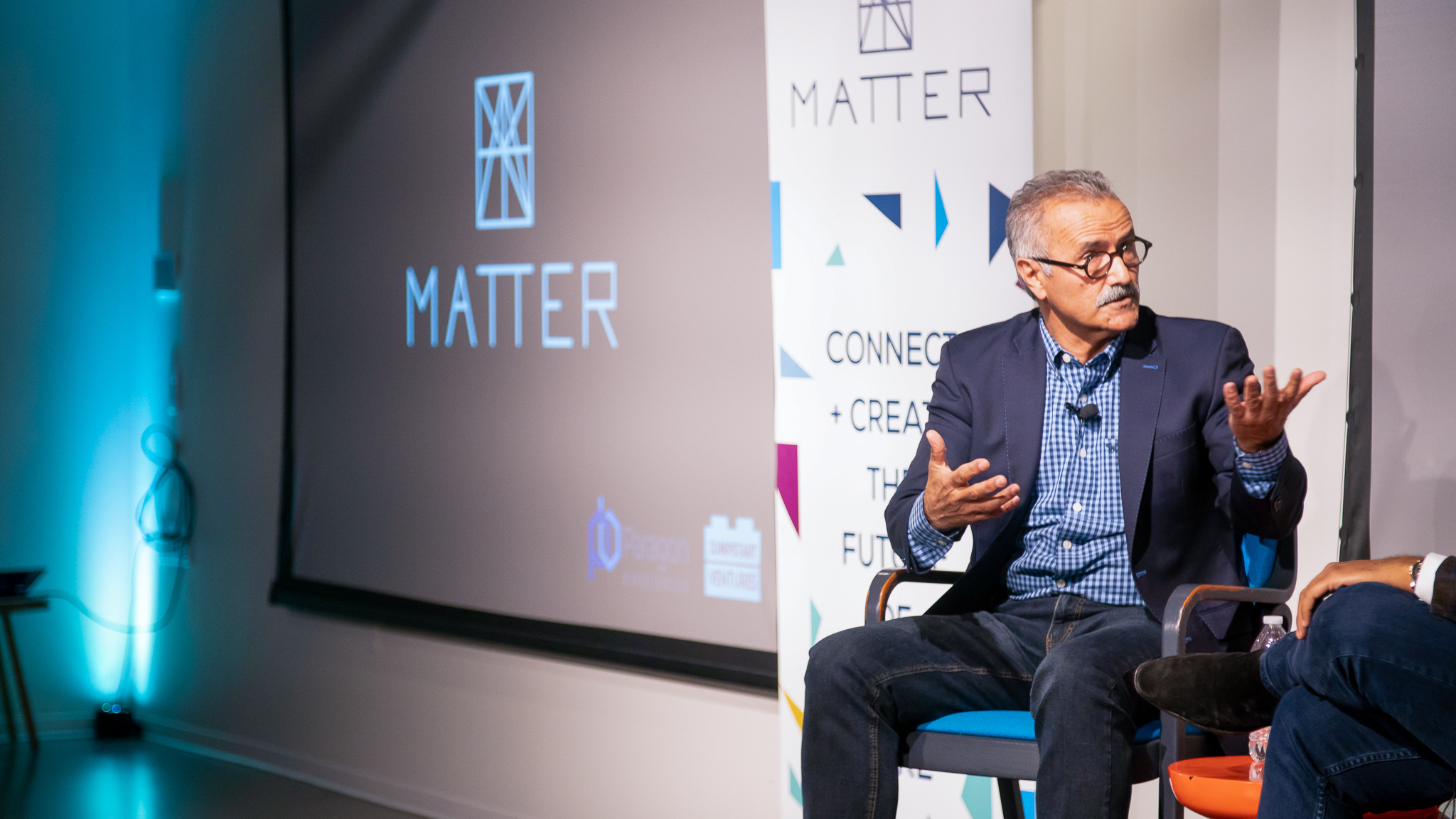
Technical conviction did not settle the commercial question. Speaking at MATTER in 2019, Naeymi-Rad recalled being passionate about the work while paying insufficient attention to making money. Angel investors pushed that issue. Around 2004, he began focusing on recurring revenue and organizing product releases around operational, tactical, and strategic responsibilities.
“We tripled our recurring revenue.”
Frank Naeymi-Rad, recalling the shift at MATTER, 2019
The lesson travels beyond healthcare. A dictionary that changes with medical practice needs continuing maintenance. That creates a reason for an ongoing commercial relationship. IMO’s business combines proprietary terminology and mappings with software and services, delivered through enterprise relationships, integrations, and APIs.
One patient, several languages
The clever design choice was to let clinicians keep their language. IMO Core helps them search for and document diagnoses while mappings connect the selected concepts to billing and reference codes. Epic adopted IMO terminology in its model system in 2004. Working inside established record systems gave the company a route into everyday clinical work.
Today’s product range follows the information outward. Core Procedure supplies terminology and mappings for procedures and related domains. Core Periop maintains the surgical dictionary used in operating-room workflows. Precision Normalize standardizes existing data. Precision Sets lets teams create and maintain code groupings that define patient populations for reporting, research, or other purposes.
One idea. Several useful forms.
These are infrastructure purchases. A health system can use them to improve documentation or reduce repetitive data preparation; a software vendor can embed capabilities in its own application. The buyers need clinical informatics and engineering expertise. Patients usually encounter the results indirectly, through the records and workflows surrounding their care.
Expansion has had financial backers. Warburg Pincus announced a growth investment in 2016. In 2022, THL announced an agreement to acquire a majority stake. THL’s account of its involvement describes product prioritization, acquisitions, and a larger sales organization. The strategic shift was to carry IMO’s established terminology expertise into additional markets, including customers outside healthcare delivery.
Maintaining that expertise also shapes the workforce. IMO’s careers material describes teams spanning clinical informatics and technology, with mentoring and continuing education. It advertises a hybrid arrangement that generally brings employees near its offices together three days a week. For a business selling maintained medical meaning, the people reviewing the content are part of the product.
The homemade fix that became a burden
Sharp HealthCare offers a useful example. In a 2022 case study published by IMO, the San Diego health system described information captured across hundreds of systems. Its team had spent almost two decades developing bespoke approaches to standardization. Maintaining those approaches had become difficult, even for experienced data professionals.
Precision Normalize aligned clinical data to common concepts and connected it with standard codes. The reported result was automated terminology normalization and faster access to information for analysis. This is a claim about a particular implementation. It should prompt a buyer to examine its own preparation work, rather than assume the same gains will appear everywhere.
IMO operates in a market with credible alternatives. Wolters Kluwer’s Health Language offers terminology and data-quality tools; Clinical Architecture supplies clinical content through Symedical. Teams can also build using resources such as the National Library of Medicine’s UMLS. IMO’s distinguishing argument is its connection to clinical documentation workflows, maintained proprietary content, and the tools built around that foundation.
The dictionary opens its doors to AI
In May 2023, IMO bought Melax Tech, adding natural language processing expertise. By July, Precision Normalize could extract and standardize information from clinical free text. That involves more than spotting a disease name: the surrounding language can say a condition is absent, historical, or merely possible.
terminology search transactions a year, reported by IMO Health in April 2026.
A measure of use, not an accuracy scoreThe next extension arrived in April 2026: direct Knowledge Graph access through GraphQL and an MCP server. Developers could query curated clinical relationships for their applications and AI agents. More than 50 clinical informaticists and coding experts curate the graph, according to the announcement. The commercial idea is straightforward: sell access to accumulated clinical context.
A July 2026 collaboration with Modular Medical makes the ambition tangible. The companies announced a pilot to identify diabetes patients who might benefit from insulin pump therapy, using clinical characteristics translated into terminology-based value sets. That remains a pilot objective, with performance still to be established.
Keep the meaning. Measure the work.
For buyers, the practical starting point is a bounded task: one problem list, one surgical dictionary, one patient cohort. Compare preparation time, mapping quality, and the exceptions requiring clinical review. Include integration and continuing governance in the budget. A vocabulary service can organize information; it cannot supply clinical evidence missing from the record.
The same limitation makes IMO interesting. Healthcare keeps finding new uses for old documentation. Each use asks the words to do another job. The business depends on how faithfully they arrive.