The route to a cybersecurity conference took Ido Geffen through Egypt. He crossed into Taba and Sinai with his family, then traveled through Athens, New York, Boston and Canada before heading to San Francisco for RSA. Along the way, they stopped to see Novee’s billboard in Times Square. A company can buy an advertisement. Getting the family in front of it apparently requires a small travel agency.
Geffen described the journey with gratitude rather than complaint. He thanked his wife, Shahar, for managing the domestic chaos and his co-founders for managing the professional kind. The pleasure was being together. For someone building a company around speed and continuous operation, it was a useful pause: the people, the work and a large sign briefly occupying the same place.
That glimpse helps put the funding announcements in proportion. Geffen is the co-founder and CEO of Novee Security. He arrived at his first company as a founder after more than twenty years across offensive and defensive cybersecurity. Behind the quick public launch was a much longer apprenticeship in how systems fail, how teams work and how difficult it is to turn a discovery into a repair.
The long preparation for a first company
His education paired computer science at Ben-Gurion University of the Negev, from 2007 to 2010, with an MBA at Tel Aviv University, from 2010 to 2013. The combination gives his career two useful languages: what the technology does, and how an organization decides to use it. Security products need both. An elegant technical answer still has to survive a budget meeting.
In government technology work, his roles included software engineering, R&D team leadership, product management and group management. He has described roughly a decade in the Israeli security agency leading strategic cyber initiatives. Asked whether he had served in Unit 8200, he clarified that he had worked in a different agency. The distinction matters in a field whose biographies can begin to sound suspiciously interchangeable.
The commercial roles brought him closer to the daily machinery of a security business. He led product at CyberMDX, then at Orca Security between 2021 and 2024. At Oasis Security, his remit included product and customer success. Those titles put the person designing a capability within conversational distance of the person explaining why it has not solved Tuesday’s problem.
Former Orca colleague Noa Gross describes a leader attentive to technical challenges and working relationships. Her account emphasizes the processes they built together and the ease of their collaboration. It is a useful counterweight to the usual lone-operator mythology of cybersecurity. Much of the job involves getting people to understand one another before they can get a system to behave.
Three friends find their moment
The company began with a relationship that was already old. Geffen, Gon Chalamish and Omer Ninburg had known one another for more than fifteen years and had talked about starting a business together. Friendship supplied trust and a standing conversation. It still needed a sufficiently good reason to become payroll, product deadlines and a shared set of consequences.
Reasoning-capable AI provided that opening. The founders’ account traces the change to 2024: models seemed increasingly able to work through problems that required several steps. They began experimenting with tools and knowledge drawn from their earlier security work. For experienced operators, the attraction was practical. Could software sustain an investigation, adjust its approach and discover something that a fixed routine would miss?
Novee was founded in May 2025. Geffen became CEO, Chalamish chief product officer and Ninburg chief technology officer. The company describes their respective backgrounds around exploitation and defense, strategic offensive campaigns, and machine learning and agentic systems. The division of labor gives the founding story some substance beyond three familiar faces in matching company shirts.
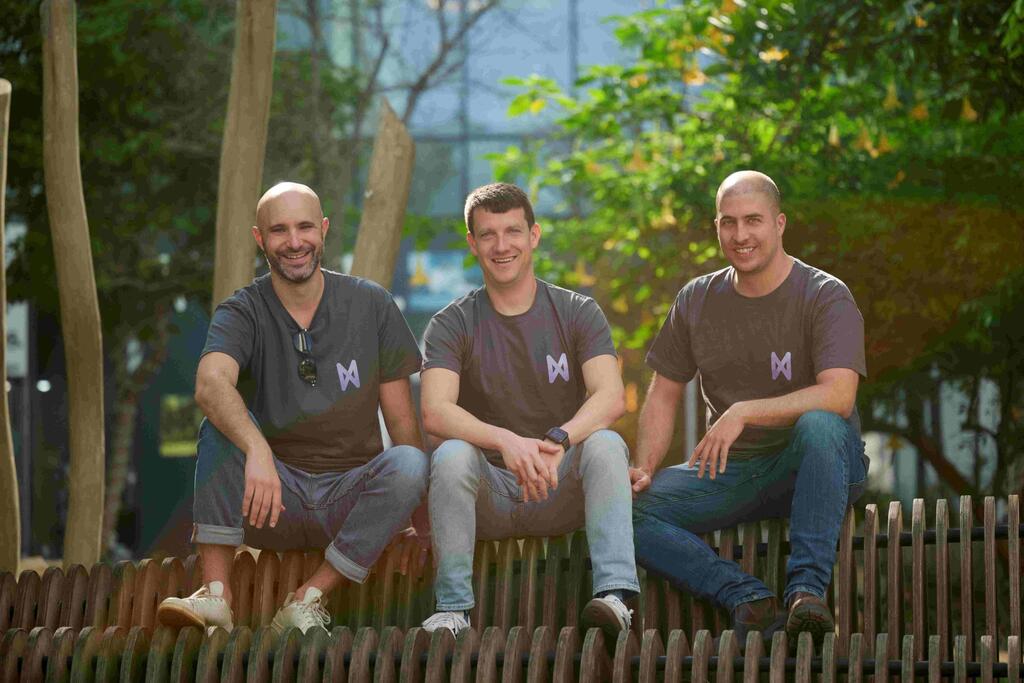
When Novee emerged from stealth in January 2026, Geffen described a problem he had wanted to address for years. This is the kind of problem I’ve wanted to solve for a long time.
The remark connects the new company to the old career. A first founding venture can be the point at which accumulated experience finally acquires an address of its own.
The all-clear has an expiry date
Geffen’s central complaint concerns timing. Software teams keep shipping changes while security assessments often capture a particular moment. An application gets a new integration, a permission changes, another workflow appears. Yesterday’s test remains a record of yesterday. The report may be perfectly respectable while the system it describes has already moved on.
Novee’s proposition follows that moving target. Its platform is designed to test continuously, identify exploitable weaknesses, provide guidance suited to the environment and retest after changes. In ordinary language, it should keep asking whether the door opens, explain how to mend the latch and come back to try it again. The return visit is part of the job.
“Attackers don’t wait for your annual pentest, and neither should your defense.”
Ido Geffen
Business logic makes this especially demanding. Consider the illustrative case of a user whose permissions are reduced halfway through a session. Does the application actually withdraw the access? The question depends on intended behavior, a sequence of actions and the surrounding system. A list of known flaws cannot, by itself, explain whether this particular arrangement works as its owners believe.
That is why Geffen’s argument returns to demonstrated exploitability. A warning has to become evidence someone can reproduce and act upon. His preferred outcome carries the work through the repair. For an engineer receiving a security ticket, the difference is material: a description of danger can occupy an afternoon without making the application any harder to break.
- 01FindExplore the application.
- 02ProveValidate the exploit.
- 03RepairGive specific guidance.
- 04RetestCheck the change.
A gym with no medals for good prose
By August 2026, Geffen was explaining Novee through three pieces: a model, a harness and a gym. The model supplies specialized offensive reasoning. The harness organizes the work of different agents and models. The gym provides applications against which the system can train and be evaluated. The sporting vocabulary is unusually appropriate: an impressive description of the exercise does not count as completing it.
In that account, the test of an exploit is whether it actually works against the application. The system can attempt an approach, fail and revise it. General-purpose frontier models still have roles within the wider system; Novee also develops its own specialized model. Geffen’s emphasis is on controlling the combination and learning from the results, rather than treating the model alone as the whole product.
There are boundaries around that ambition. He describes controls inside the model and outside it, including constraints on which systems agents can reach. An organization hiring software to attempt attacks needs that software to respect the assignment. The quality of the attempt and the discipline of its scope belong in the same conversation.
The cost of trying the door
Geffen also frames the problem in economic terms. In his writing, skilled human attention once limited the reach of sophisticated attacks. Automating repetitive parts of the work reduces the effort required to apply those skills across more targets. His concern is that defensive routines built around scarce attackers and slower cycles become poorly matched to the resulting volume.
It is an argument about how expertise gets distributed. Experienced people still matter; more of their methods can be applied through software. For Geffen, that shifts the question from buying another periodic assessment to organizing a capability that keeps working. The ambition is considerable. Its practical value depends on findings that teams can verify and repairs they can complete.
Combined Seed + Series A financing
YL Ventures · Canaan Partners · Zeev Ventures
The early financing gave him resources to pursue it. Novee announced $51.5 million across Seed and Series A rounds, with backing from YL Ventures, Canaan Partners and Zeev Ventures. That total covers more than one round. At the public launch, the company reported dozens of customers and a team working across Israel and New York.
Geffen’s stated priority was expanding that customer base and building the business. Money adds hiring capacity and room for research; it also adds an organization to manage. For a product executive becoming a CEO, the assignment broadens. The system now includes recruitment, sales, customer relationships and the colleagues responsible for making all of it function together.
After the demo, the working day
His later public work follows the same concern into enterprise AI adoption. In September 2026, his writing turned to the demands that follow an experiment: cost, control and integration into everyday decisions. Those subjects suit someone whose career has crossed product and customer success. A capability becomes useful when people can afford to run it, govern its actions and incorporate its output into work.
In October, Novee introduced Workflows and Scheduled Assessments, extending automation into notifications, ownership, tickets and follow-up testing. These are less theatrical activities than finding a weakness. They are also where a security program spends much of its time. A finding waiting for an owner remains unfinished business, however clever the system that discovered it.
The family stop in Times Square offers a warmer view of that unfinished business. Geffen had a billboard to point to, two old friends building beside him and a long itinerary still ahead. His company asks security teams to keep checking what changes. His own route to founding it suggests a related habit: keep working on a familiar problem until the means of solving it catch up.
Keep reading. Keep asking.
- Novee - company and leadership
- Ido Geffen on LinkedIn
- Watch: model, harness and gym
- Watch: the Techstrong conversation
- Read: the January launch
- Read: the family journey to RSA
- Read: Geffen on the cyber economy
- Read: his Forbes Technology Council work
- Ido Geffen on X
- Ido Geffen on Facebook
- Read: the RSAC conversation
- Read: October’s workflow release
- Career and education