A frozen lake is an unusual place to acquire an investment philosophy. Ian Charles grew up in a small town in Alaska, where one childhood warning stayed with him: avoid gathering too many friends in one spot on the ice. Concentrated weight could turn companionship into a liability. The lesson, as he tells it, was that keeping some distance from the crowd could be the safer choice.
Years later, asked why he pursued ideas other investors had overlooked, Charles reached for that memory. Finance usually likes its crowds dressed in matching confidence. Charles describes feeling nervous when too many people begin doing the same thing. He prefers room to explore, and his career offers a fairly consistent record of choosing it.
He co-founded a firm to help investors sell private equity interests, built a quantitative research group at another, and then co-founded Arctos in 2019. Professional sports franchises became its most visible investments. In 2026, Arctos joined KKR, where Charles now leads KKR Solutions. The settings have changed considerably. The recurring question has stayed practical: what happens when someone owns something valuable but needs a different way to finance it?
THE ALASKA RULE“It’s actually safer to be all alone.”
Ian Charles, recalling the warning about crowds on frozen lakes
Before the stadiums, there was the exit
Charles studied finance and accounting at Texas Christian University, graduating with honors, and later earned an MBA at Wharton. He is also a CFA charterholder. His early investment team eventually became part of Neuberger Berman’s alternative investments platform. This was an education in assets whose ownership could last much longer than an investor’s original intentions.
A private fund investment does not come with a convenient sell button. An investor may have committed money years earlier, under different circumstances. Selling the interest requires finding another buyer, agreeing on a value, and navigating the terms governing the transfer. The underlying businesses may be doing perfectly well. The owner’s timetable can still change.
At Cogent Partners, Charles helped build an advisory business around that problem. The firm specialized in advising sellers in the secondary market. He ran day-to-day operations and sourced large advisory assignments. In his account of those early days, skeptics questioned whether investors needed such an intermediary at all. The business proceeded anyway.
His next chapter was Landmark Partners, where he became a partner, served on the private equity and infrastructure investment committees, and helped shape the private equity strategy. He also built its quantitative research group. The combination matters: negotiating a complicated transaction requires judgment, but judgment becomes more useful when there is evidence behind it.
He has described encouraging younger colleagues to “be curious, but also have courage.” The advice fits the work. An unfamiliar transaction can meet resistance before anyone has seriously examined whether it solves the problem. Charles’s career developed around making those problems specific enough to work on.
A financier meets Doc
Arctos paired Charles with David “Doc” O’Connor, whose experience ran through Creative Artists Agency and the Madison Square Garden Company. O’Connor had spent more than three decades at CAA, helped build its sports business, and later led MSG. Charles brought experience in illiquid investments; O’Connor brought years inside the businesses and relationships surrounding sports.
Their pairing even has an unofficial division of labor. Sharing a Charles interview, O’Connor wrote: “I’m the good looks. He’s the brains.” Partnerships rarely publish their operating agreement quite so economically. The joke also makes a useful point: these were different professional histories brought to bear on the same opportunity.
A Boston Red Sox front-office executive helped connect them. By the time Arctos publicly launched in 2020, the idea was to invest in minority interests in professional teams. That proposition drew on Charles’s existing expertise. An ownership interest could be desirable, valuable, and awkward to sell, all at once.
Sports supplied an especially recognizable version of the problem. The asset might be a famous club, but a small owner still needed a willing buyer. A controlling owner might want money for expansion while intending to remain in charge. Buying a minority position offered a way to bring in capital without requiring the entire franchise to change hands.
The money goes beyond the scoreboard
The distinction between an investment and control becomes concrete at Paris Saint-Germain. In December 2023, Qatar Sports Investments and Arctos announced a partnership under which Arctos would acquire a minority common equity stake. QSI retained control, and Arctos’s role excluded decisions about sporting matters on the field.
The intended work lay elsewhere: growing operations, supporting stadium and training-centre real estate initiatives, expanding internationally, and engaging fans in additional markets. Those ambitions placed capital alongside business development. The ownership announcement made room for financial expertise while leaving football decisions with the controlling owner.
For anyone hoping to purchase the right to suggest a formation, this is an admirably expensive disappointment. Charles’s business concerns the machinery surrounding the game. Buildings, commercial relationships, and expansion plans require decisions and funding whether or not the team has supplied its supporters with a pleasant weekend.
Charles has also stressed that the sports strategy includes growth investments. In a 2023 conversation, he said roughly half of Arctos’s deals to that point had involved growth capital. The distinction is useful. Some money buys an existing owner’s interest; some helps the organization pursue what comes next. Both require an understanding of the ownership group’s priorities.
In December 2024, the Buffalo Bills announced the addition of ten limited partners, including Arctos, after approval at NFL meetings in Dallas. The interests were non-controlling. The group included business investors and former athletes such as Vince Carter, Tracy McGrady, and Jozy Altidore. Charles’s work had reached a league whose ownership rules had only recently opened to private equity.
The Bills investment also extended Arctos’s presence across the five major North American leagues. Each new league added another setting in which institutional money had to fit an established ownership culture. A cheque could begin a relationship. Approval and an agreed role were essential parts of getting it through the door.
A research habit travels with him
The quantitative work Charles pursued at Landmark has a visible counterpart at Arctos. Its research and data science platform, Arctos Insights, supports the investment process and the firm’s work with partners. Research has become part of what the business offers, alongside money and operating experience.
That habit also appears in his public conversations. On Capital Allocators in February 2025, Charles discussed the changing competitive landscape of private equity, including Arctos’s classification of firms into different levels. The subject was how managers position themselves and how investors decide which managers deserve their capital. Famous team names were not the main attraction that day.
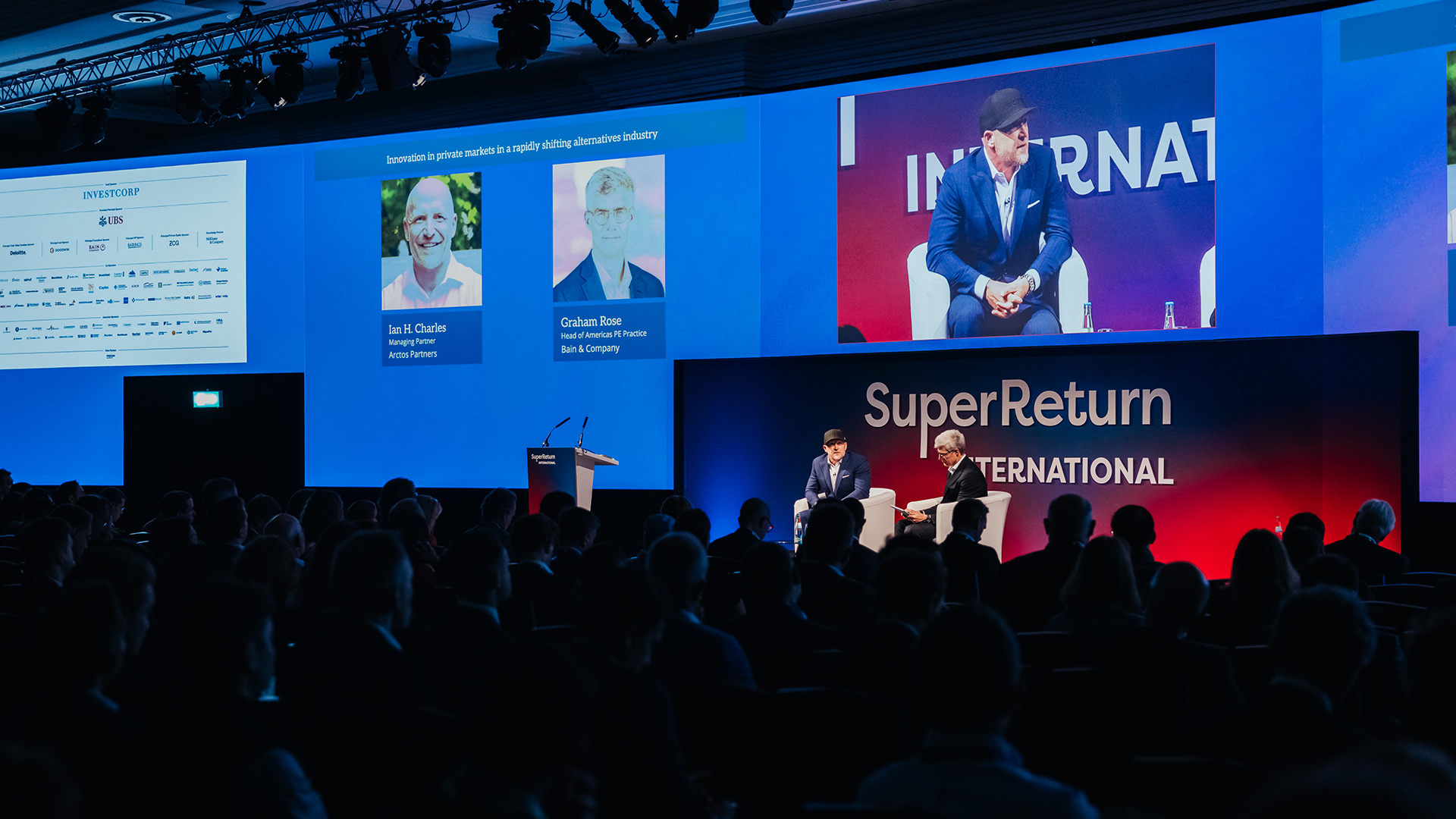
At SuperReturn International in 2025, he returned to the challenge of generating returns beyond the market in a maturing industry. The conversation covered innovation, technology, and the changing conditions facing private investment firms. It is the less photogenic side of his sports reputation: a continuing interest in how investment businesses actually work.
The owners of the money need money, too
In July 2023, Arctos launched Keystone, expanding its work into capital and liquidity solutions for alternative asset managers, their funds, and portfolio companies. Charles supported the new leadership team while continuing to help lead the sports strategy. The move gave the firm a second expression of a problem he already understood.
An investment manager can oversee a substantial pool of assets while needing capital for its own business. Ownership succession, expansion, and changes within existing funds raise different financing questions. A standard transaction will not necessarily accommodate all the people, obligations, and ambitions involved. Keystone was established to work through those differences.
Hayfin provides a specific example. Its Arctos-backed management buyout completed in February 2025, acquiring British Columbia Investment Management Corporation’s majority stake. Keystone underwrote all the funding and would facilitate Hayfin’s team becoming the majority owners of the common equity. Financing and ownership design were intertwined.
That arrangement made employee ownership part of the transaction’s purpose, alongside the firm’s growth plans. Charles described the partnership as helping Hayfin move toward its ambitions. The detail is more revealing than a broad claim about disruption: the capital structure was being used to change who could own the business.
Keystone’s team brought experience from investment management, structured transactions, and legal work. The launch widened Arctos’s remit, but it also returned Charles to familiar terrain. Helping a sports owner and helping an investment manager both require understanding why the existing arrangement no longer fits, and what the people involved want to preserve.
A target, then a close
The uncrowded idea joins a larger firm
On February 5, 2026, KKR announced an agreement to acquire Arctos. The deal carried $1.4 billion in initial consideration, including equity subject to vesting, with additional potential consideration tied to performance and KKR’s share price. Those were transaction terms for a business with multiple owners, rather than a measure of Charles’s personal wealth.
KKR’s leadership already knew Charles through earlier work together in structured secondaries. The proposed combination therefore rested on an existing professional relationship as well as a strategic plan. Sports investing, capital for managers, and a broader secondaries business would sit together within KKR Solutions.
The closing was announced on May 5. Charles became the leader of KKR Solutions, with Arctos’s Sports and Keystone businesses inside the new unit. Arctos managed approximately $16 billion at that point. Joining a larger firm gave the next stage of his work a different institutional setting, with access to KKR’s capital, distribution, and investment capabilities.
Another milestone arrived on July 7: Keystone Fund I and affiliated vehicles closed with $6.2 billion in commitments, exceeding the original $4 billion target. More than 30 percent of the fund’s capital had already been deployed across eleven sponsors. The work with investment firms had become a substantial business alongside the sports portfolio.
“Building and leading a private markets firm is hard,” Charles said at the close. It is a modest sentence for an industry that sells rather more elaborate ones. It also captures the appeal of his approach: start with a problem an owner recognizes, then design the transaction around it.
The Alaska story remains useful precisely because it is small. A child learns to pay attention to where everyone is standing. An investor spends years looking for places where the crowd has left a practical problem unsolved. Charles now works within a much larger institution, but the next test is familiar: find the need, understand the owner, and make the capital fit.