The first useful thing Hyungseok Ha sold was not a lipstick or cleanser. It was permission to be surprised. Memebox arrived in 2012 as a bright package of Korean beauty samples, curated for people who wanted discovery without wandering through a wall of unfamiliar labels. The name was playful. The underlying mechanism was serious: put products in customers' hands, watch what they returned to buy, and learn faster than the traditional beauty counter.
Ha, widely known as Dino, has spent the years since preserving that mechanism while repeatedly discarding its container. The discovery box became an e-commerce marketplace. The marketplace became a laboratory for proprietary brands. Memebox became MBX. Its portfolio now includes Nooni, Kaja, I Dew Care, I'M MEME and Pony Effect, while its shelves have migrated from parcels and phone screens to Sephora, Ulta, Amazon and TikTok Shop.
This is a founder story with an unusual governing verb: revise. Ha did not arrive in beauty through a laboratory or a family cosmetics business. His route ran through environmental engineering, military service, a deployment to Afghanistan, fashion school in New York, public relations at Tom Ford and a fast Korean commerce company. In hindsight, each stop contributed a different instrument. Engineering offered systems. Fashion supplied taste. Commerce provided speed. Beauty gave all three somewhere to argue productively.
A career assembled from spare parts
At university in South Korea, Ha studied environmental engineering. Then came the Army. He volunteered for deployment to Afghanistan, working among forces from more than 20 coalition countries. An American friendship formed there nudged his imagination toward the United States. When his service ended, he went to New York and attended Parsons School of Design, earning a design scholarship and a place on the Dean's List.
The turn from environmental systems to fashion might look abrupt on paper. Ha had already been teaching himself code since childhood, and his interests were broad enough to resist a neat label. At Tom Ford, in public relations and marketing, he encountered menswear, fragrance, beauty and film projects. He worked on press relations, celebrity dressing and the careful machinery of luxury positioning. Beauty, he learned, could be chemistry, object, ritual and story in the same small package.
Back in South Korea, TMON supplied a different education. The early mobile-commerce company was scaling quickly, and Ha worked in new business development, sales and B2B management. Luxury had taught him how desire is framed. TMON showed him how swiftly demand can move through a screen. When he left to build Memebox, he carried both lessons into a Korean beauty market famous for quick product cycles and relentless competition.
The box was a listening device
Early Memebox parcels were not conventional recurring subscriptions. Boxes appeared in discrete, numbered runs, often organized around themes or influencers. Customers could sample Korean products and then buy full-size versions. The company launched globally in 2013 and set up its American entity late that year, betting that American shoppers wanted more experimentation and variety in beauty.
By early 2014, Memebox had about 10,000 US customers despite a modest American marketing presence. It joined Y Combinator's Winter 2014 batch, becoming the accelerator's first Korean company. The decision was practical. Memebox had traction in Korea, but Ha understood that being experienced at home did not make the team fluent in America. Entering a new market required the useful humility of becoming a beginner again.
The boxes revealed a behavior that shaped what followed. Sampling created curiosity, but customers increasingly wanted to repurchase products they already understood. From roughly 2015 to 2017, Memebox expanded into a direct-to-consumer marketplace with thousands of products. Then the company moved again. Its data showed not only what sold, but where existing products failed to fit. By around 2017, it was turning those gaps into its own brands.
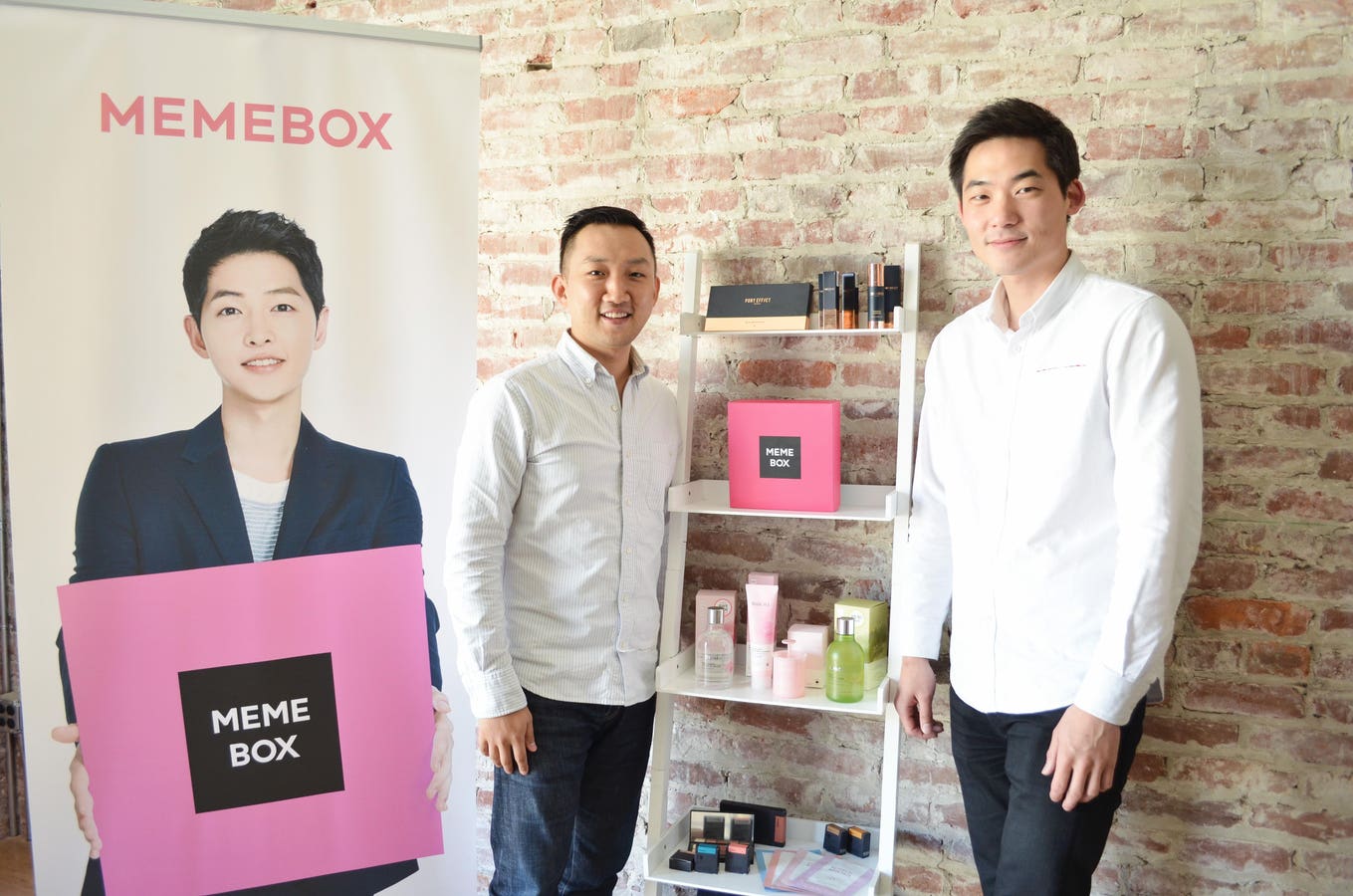
The strategic trick was keeping the learning when the format changed. A less adaptable company might have defended the box because customers recognized it. Ha treated recognition as an asset, not a prison. The company could stop shipping a particular kind of package and still keep its sharper insight: beauty discovery is an active process, and every click, sample and repurchase contains a clue about what to make next.
Translation ends where localization begins
Bringing Korean products to American customers exposed a gap between access and belonging. Packaging had to make sense. Instructions needed more than literal translation. Preferences around texture and scent varied with culture. Retail context mattered. Ha's conclusion was that the technical DNA of K-beauty could travel, but the finished product had to understand the person opening it.
Kaja made the idea visible. MBX worked with Sephora to bring Korean skincare technology into color cosmetics at an accessible price, developing 47 products in five months. Ha framed the work as a design problem: what will people want today or soon, and what education and shopping environment will let them understand it? The answer was neither a Korean product wearing American copy nor an American product with a Korean motif. It was a collaboration built for its shelf.
His view of discovery widened beyond shelves. In 2019, Ha described a future customer who might hear a K-pop song, become interested in an artist, notice the artist using Kaja and only later encounter the product as a shopper. The sequence mattered. Purchase intent no longer had to start the journey. Culture could make the introduction, and commerce could wait politely a few steps behind.
That idea now looks less like a prediction than an operating manual. Creator-led content and TikTok Shop have become central to MBX's growth. Social commerce lets a product appear inside a person's routine before it appears inside an advertisement. The old Memebox curated discovery deliberately; the modern feed does it chaotically. MBX's task is still to learn from the route curiosity takes.
The lip oil becomes the spreadsheet
Nooni Lip Oil is the clearest recent expression of that system. MBX sold about 2.2 million units in 2025. By May 2026, cumulative sales had passed 5 million. The company projected 12 million to 15 million units by the end of 2026 and was planning capacity for 35 million in 2027. Ha linked the momentum to creators, consumers and retail partners, with discovery flowing through TikTok, Amazon and major stores.
A hero product simplifies a portfolio's story, but it complicates operations. Millions of units require dependable manufacturing, inventory, retail coordination and enough creative variation to keep social discovery alive. Ha's engineering and commerce instincts meet here. The product can be charming. The system behind it has to be rather less whimsical.
In June 2026, Ha said MBX expected roughly 50 percent year-over-year growth in the second quarter. The ambition for the next five years is larger than one lip oil: more globally recognized brands, a wider audience for Korean beauty innovation, and eventually products capable of selling 100 million units. By August, the company was reporting Kaja's entry into TikTok Shop in the United Kingdom and its appearance at Olive Young Festa in Los Angeles, more small lines on a map that once began with boxes crossing the Pacific.
Enjoying the revision
There is an appealing tension in Ha's later reflections. He remains an operator who talks in units, channels, growth and production capacity. Yet when asked what he would tell his younger self after more than 14 years, he did not choose a sharper metric. He wished he had spent more time enjoying the journey instead of looking only at results.
That thought feels earned rather than decorative. A company that changes models several times accumulates uncomfortable middles. The old story stops working before the new story feels safe. Teams have to release expertise they worked hard to acquire. Customers keep moving. Platforms rewrite the rules. Consumer brands, as Ha says, are not built in straight lines.
His broader accounting now includes relationships, colleagues and consumers alongside milestones. It does not cancel ambition. It makes a long founder life legible between announcements. The same philosophy sits quietly inside MBX's evolution: preserve what matters, permit the rest to change. First the company learned to enjoy discovery. Its founder, eventually, learned to include the journey.