In 2013, Corey Brundage got to his fiancée’s disabled car in a Los Angeles parking garage by ordering an Uber. Finding someone to jump-start her battery took longer. The local towing numbers he found had miserable reviews; the prices he heard sounded arbitrary. The rescue vehicle, he noticed, was harder to summon than the ride that brought him there. There was a business in that irritating little imbalance.
HONK launched the following year with an app for towing, jump-starts, flat tires, fuel delivery and lockouts. A driver could request help without joining a motor club, see a price before placing an order and get an estimated arrival time. That was the original pitch. The more consequential discovery came later: the stranded driver might be the person tapping the button, but an insurer or carmaker often owned the relationship they would remember.
- HONK matches roadside calls with independent towing and service operators.
- Motorists can buy a job as needed; insurers, fleets and automakers can embed HONK under their own brands.
- Its platform handles dispatch, tracking, claims and vehicle movement after an accident.
- The business grew through a 2017 Farmers launch, an $18 million round in 2018 and more enterprise programs.
The wait is the product
Roadside assistance sounds like a simple exchange: one phone call, one truck. In practice, the driver wants to know whether help is really coming; the provider wants a useful job at a known rate; the insurer wants its customer treated well and its claim handled without surprise costs. A dispatcher has to reconcile all three, at night, in bad weather, with the wrong tire size or a car that will not shift into neutral.
HONK’s software turns that chain into a visible workflow. The customer selects a service and shares a location. The system offers the job to a nearby, qualified provider. The driver gets updates and an ETA. The insurer can see timing, status and feedback instead of discovering the outcome after an angry call. The company says its dispatch considers more than distance: equipment, availability and past performance can matter as much as the closest dot on a map.
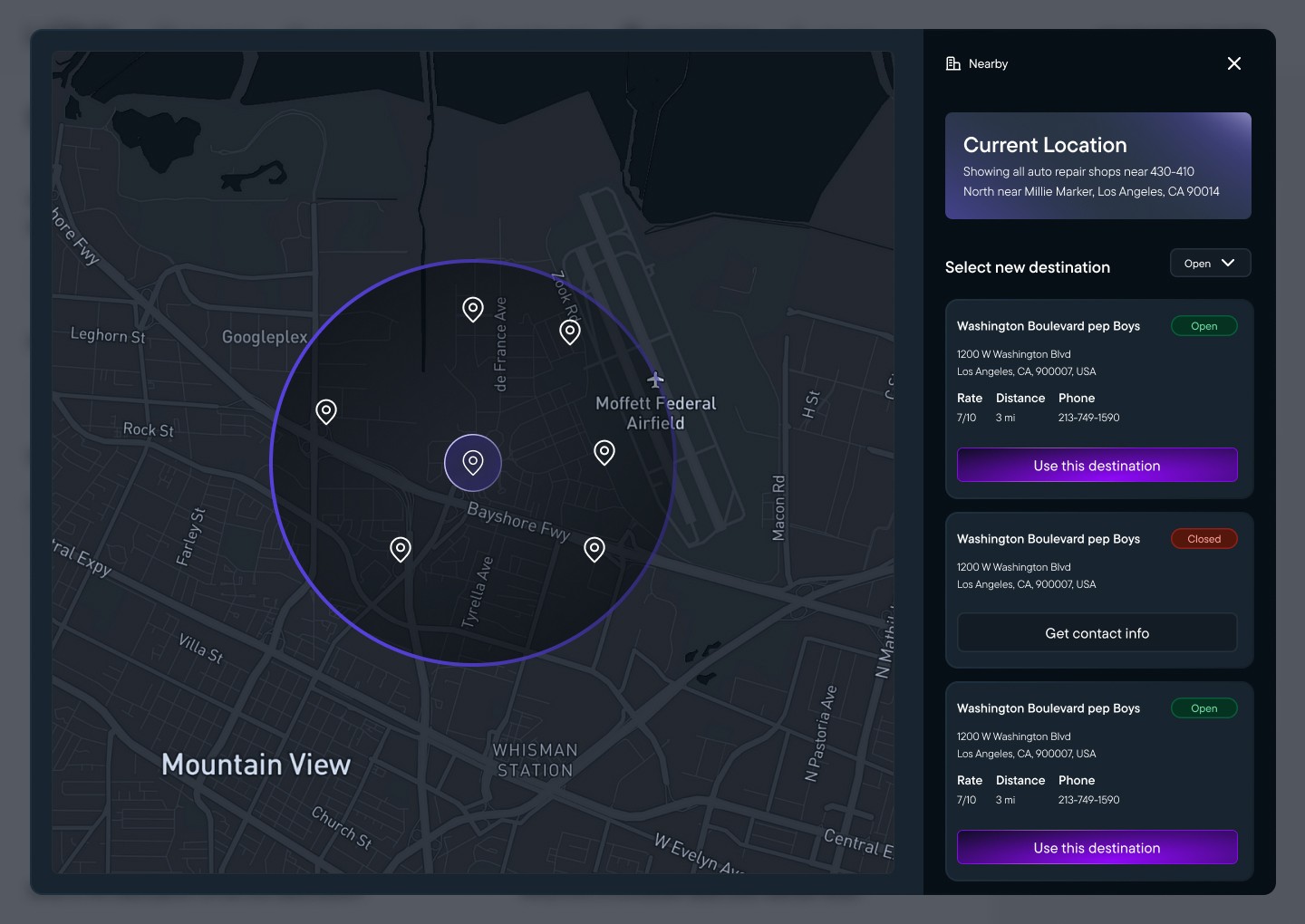
Its network consists of independent tow and roadside businesses, from owner operators to larger firms. Providers apply, set their hours and rates, and submit insurance and background information. HONK says it offers job details before acceptance and fast payment afterward. The network is a coordination achievement, not a warehouse of trucks that HONK bought. That distinction matters: its advantage depends on keeping local operators willing to answer the next call.
Then Farmers called
The company’s pivotal customer was not a motorist scrolling an app store. Farmers Insurance began talking with HONK in 2016, ran a small pilot, and launched a HONK-powered roadside service in 2017. The tool located customers, dispatched a service vehicle and showed progress on a live map, all inside the insurer’s experience. A year later, HONK raised $18 million from a round led by Altpoint Ventures, with Structure Capital and Venture 51 participating, to enlarge its network and build more services for insurers, fleets and manufacturers.
“We will ‘talk’ to their customers more frequently than they do.”Corey Brundage on the roadside relationship with insurers, 2017
That observation explains the economics better than any fashionable comparison to ride hailing. An auto policy may sit quietly for months. A flat tire or dead battery brings the insurer’s promise into the open. If the customer waits on a dark shoulder with no useful update, the insurer takes the blame even when a contractor is running late. HONK’s white-label model lets the insurer own the customer-facing experience while HONK handles the dispatch and service network behind it. Wawanesa Insurance chose the platform for its roadside program in 2020, citing program visibility alongside the actual rescue.
There is still a direct consumer route. HONK’s app lists towing, tire help, jump-starts, fuel, lockouts and recovery; it shows the price before an order and charges for the service rather than an annual membership. Enterprise clients buy a managed program and related tools. Public figures do not reveal HONK’s current contract rates or margin per job. The first published consumer prices started at $49 in 2014; treating that as today’s price would be an expensive mistake.
A tow can be the cheap part
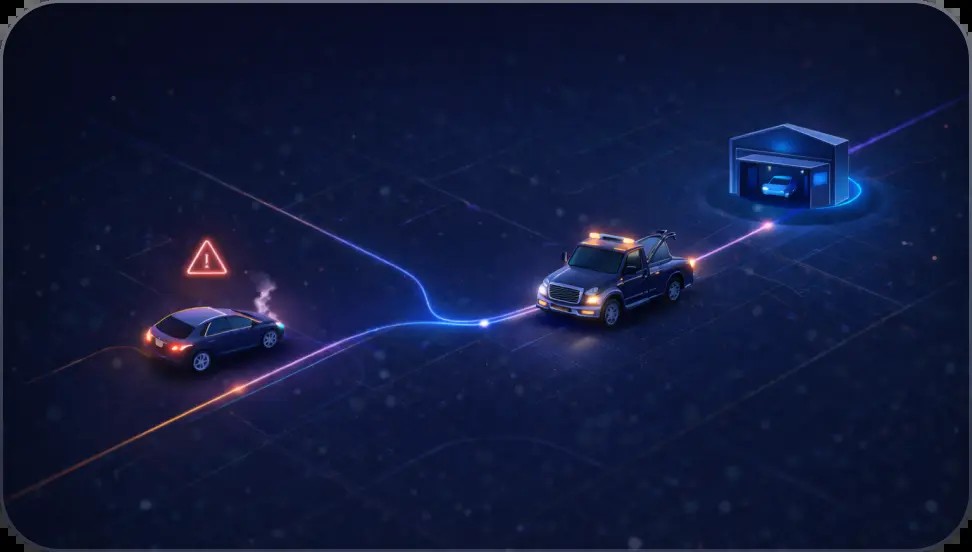
Once the basics worked, HONK moved beyond the roadside event itself. Its platform now covers accident scene management, vehicle release, transport and claims workflows. That sounds like administrative furniture until a damaged car lands in the wrong storage yard. Each day there can add fees; moving it again adds another tow. For an insurer, the destination chosen in the first few minutes can cost more than the original rescue. HONK’s pitch has therefore widened from “send help” to “keep the whole vehicle journey legible.”
The additions are specific. A 2022 service let an insurer’s customer approve and pay for a replacement battery in the app after an on-site test. A reimbursement portal lets policyholders submit invoices and documents digitally. A 2024 Towbook test let selected towing partners receive and manage HONK jobs inside software they already used. None of these is glamorous. Each removes a small handoff where a roadside job can stall.
A larger turn came first. In April 2026, private equity firm Frontenac recapitalized HONK and HONK acquired CurbsideSOS at the close of the transaction. The terms were not disclosed. Adam DeWitt, formerly CEO of Grubhub, took over as HONK’s CEO; Grubhub founder Matt Maloney became chairman. Their stated bet is familiar in shape: a time-sensitive local job gets better when the platform understands dispatch and the people doing the work. The deal adds a light-duty service network alongside HONK’s enterprise roadside operation.
Its operational data now has another job. In September 2026, HONK and the National Insurance Crime Bureau announced a partnership to share intelligence about predatory towing, impound and vehicle-related fraud. HONK says its volume of roadside activity gives it a view of patterns across the country. The announcement is a partnership, not proof that fraud has already fallen, but it shows where a dispatch platform can go once it sees enough of the journey.
Make the anxious interval visible. Show price before commitment, tell both sides who accepted the job, and record where the vehicle actually went. Start with a narrow pilot where service quality can be measured before promising national consistency.
The limit of the clever map
HONK’s model works only if a real, capable provider answers. A thin rural network, extreme weather or a catastrophe can stretch the distance between a good ETA and a good arrival. The software can expose a delay and reroute a job; it cannot materialize a truck. Local towing firms must also like the rates and terms well enough to keep accepting work. And AAA’s annual membership still bundles benefits that a single pay-per-use tow does not replace. Frontenac’s new team inherits those physical constraints along with the software opportunity.
That is what makes HONK more interesting than the old “Uber for towing” label. A push button was the beginning. The durable question was who would be accountable after the button was pressed: the operator, the insurer, the fleet manager, or the name on the app. HONK built a business by giving each of them a clearer answer. The car may still be broken. At least fewer people have to guess what happens next.