A custom insole is a modest object to carry such a complicated itinerary. Before it reaches a shoe, someone may have to capture the foot, collect clinical notes, check coverage, obtain signatures, place an order and wait for fabrication. Improve one step and the others remain. A faster printer is of limited comfort when the order is still sitting beside a fax machine.
- Hike began with smartphone scans and custom 3D-printed insoles.
- Employers offered a route to people who spend their working day on their feet.
- Its current platform joins referral paperwork, clinical work and manufacturing.
- The next test is carrying that approach into more device categories.
That itinerary explains Hike Medical better than a photograph of an arch support. The company sells a physical product, but its ambition concerns the journey around it. For a worker, the attraction is convenient access to something made for their feet. For a clinic, the attraction is fewer administrative handoffs between a patient who needs help and an order that can actually be fulfilled.
A family business meets the backlog
Aadi Bhanti’s starting point was unusually close to the machinery. In his March 2026 essay, Hike’s co-founder and CEO describes a grandfather who made orthotics by hand in India and a father who built an orthotics and prosthetics clinic network. Hike’s founding team includes Aadi, Amit Bhanti and Steven Chacko. The family history supplies a useful vantage point: the device and the clinic have always belonged to the same problem.
The present company carries that connection into software. It sits between custom-device fabrication and healthcare workflow automation, serving orthotics, prosthetics, podiatry and durable medical equipment providers. Its claim to distinction is the combination. Buying a scanner improves capture; buying a separate administrative tool improves paperwork. Hike is betting that joining those activities to its own lab makes the completed order easier to control.
The machine that needed too much attention
The early manufacturing story contains a pleasingly unglamorous correction. In a January 2025 interview, Chacko said Hike’s Artillery printers required substantial modifications and maintenance. The company moved to Bambu Lab machines, which he described as faster, more reliable and better supported. The revelation was practical: equipment that demands constant attention can consume the efficiency it was supposed to create.
“At the core of our business, we are a medical device manufacturer.”
Steven Chacko · 3DPrint.com interview, January 2025
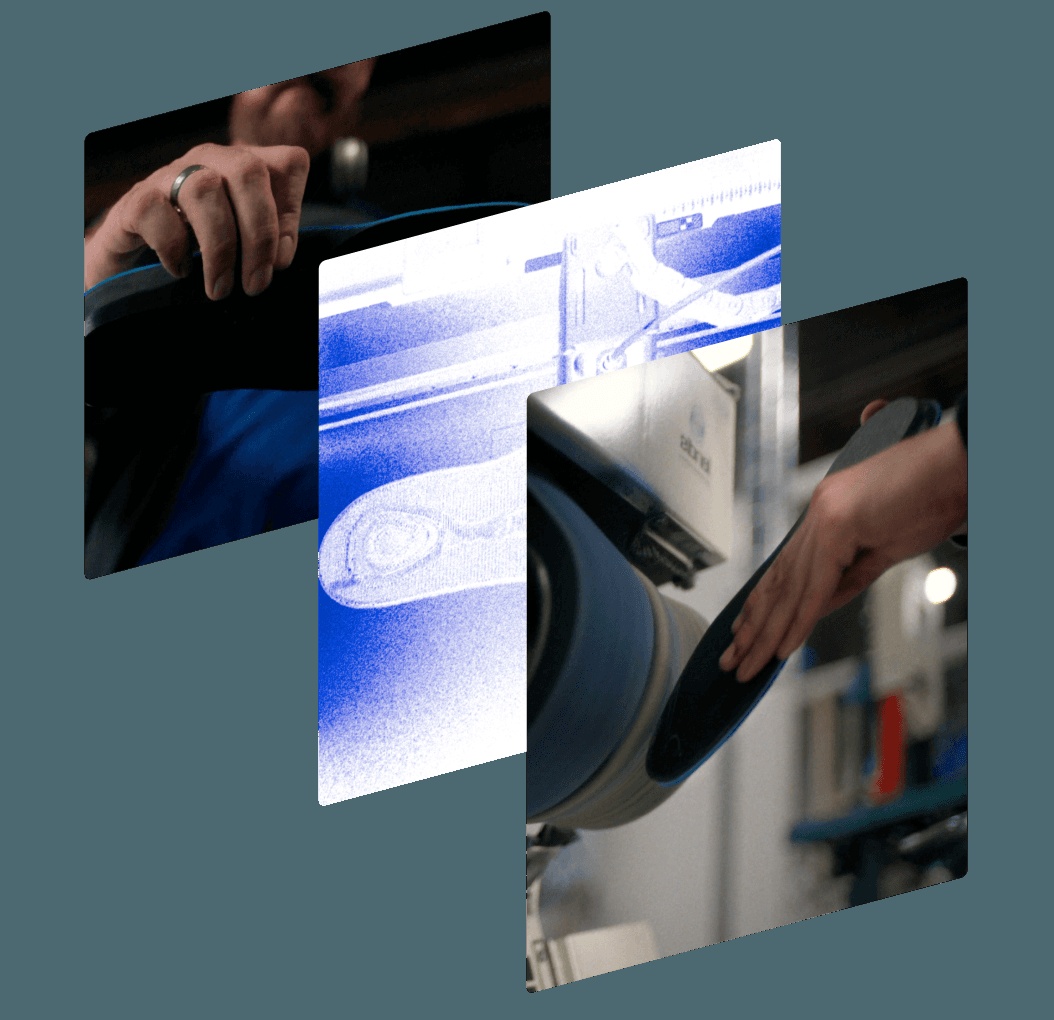
That is a useful corrective to the software pitch. A scan must eventually become a repeatable object. Chacko’s account also describes centralized production and hand finishing. Keeping fabrication inside the business gives Hike responsibility for the result, alongside control over the process. It is a sensible arrangement only if the factory can keep its promises.
A phone camera meets an awkward foot
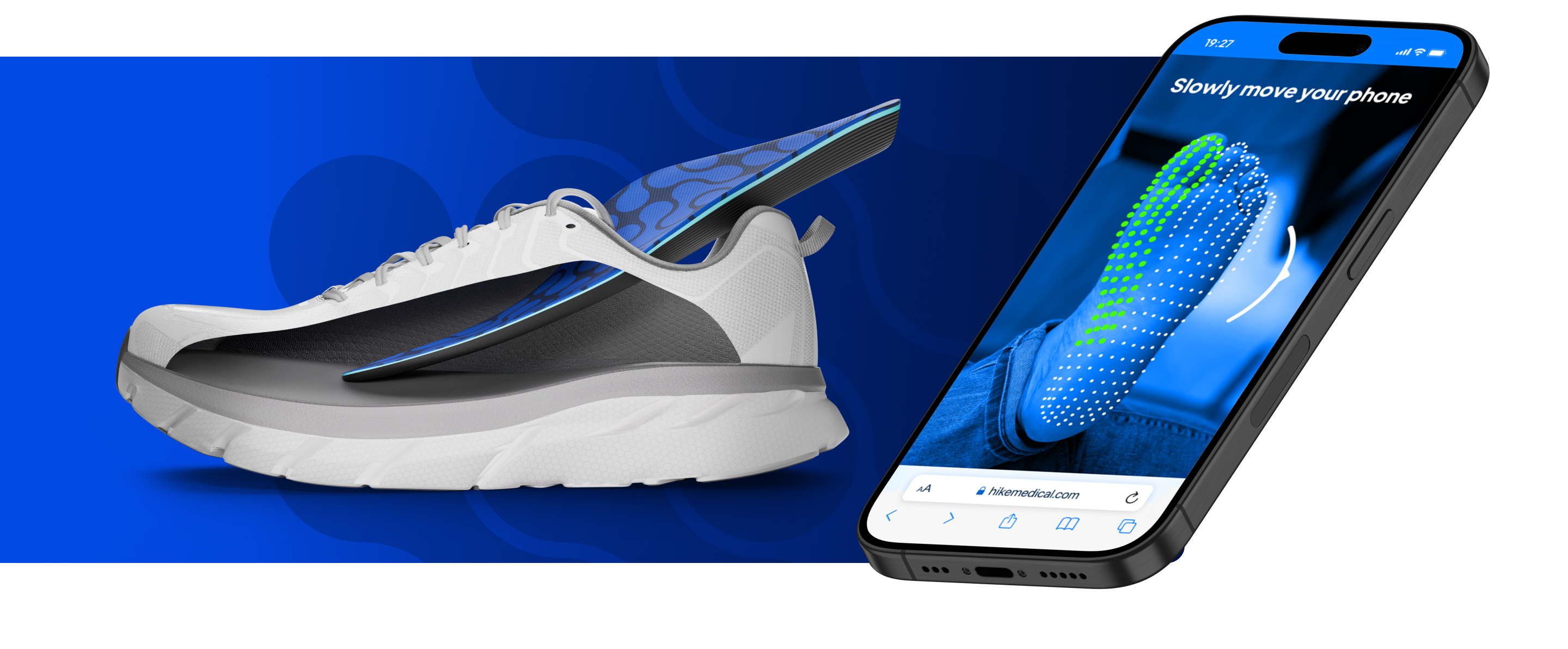
The scanning problem is more interesting than pointing a camera downward. A person filming their own foot may miss the heel or arch. Those missing surfaces matter when the output is an orthotic rather than a souvenir. Best Foot Forward, a 2025 paper coauthored by Hike and University of Cambridge researchers, addresses incomplete scans by aligning captured geometry and using a learned model to complete missing regions.
The research project describes an evaluation using 30 consumer videos and three clinicians reviewing reconstructions. That is evidence about a particular reconstruction task. It should not be stretched into a promise that every insole will relieve every kind of pain. The useful technical advance is narrower: extracting usable geometry from ordinary video makes a specialized capture process easier to access.
The employer picks up the bill. Sometimes.
The business model becomes concrete in its employer offers. In November 2024, Hike announced an OSF HealthCare agreement offering no-cost custom insoles to more than 25,000 employees. That number describes access. It does not tell us how many employees scanned their feet, received devices or experienced an improvement. The distinction matters whenever a benefits announcement arrives wearing a very large number.
Intel’s 2026 New Mexico benefits guide provides a sharper price example. For regular employees in grades 53-57 with a New Mexico home address, the first pair was available at no cost: Intel covered $100 and Hike supplied a $40 voucher. Other regular employees there were offered discounted insoles for $140. The guide described doorstep delivery in two weeks. Employer subsidy and member price are different parts of the same purchase.
First pair: $0 for the eligible grade 53-57 group. Other regular employees: $140.
Distribution also requires getting people to act. In a Resend customer account, Chacko describes switching from Mandrill and using employer CSVs to target email broadcasts. Transactional messages guide ordering; marketing messages encourage enrollment. The lesson is almost comically ordinary: an accessible benefit still needs an invitation that reaches the employee.
The next bottleneck is a fax
Hike’s current workflow has three connected parts. Intelligence handles referral intake and documentation. Clinical supports evaluation, scanning and ordering. The lab fabricates the device. For diabetic shoes and inserts, the company describes checking eligibility before the visit and gathering required records and signatures. Faster capture cannot make an incomplete record complete.
- 01IntelligenceReferral + records
- 02ClinicalEvaluate + scan
- 03LabFabricate + ship
Connected steps, with clinical and payer requirements still in the loop.
The ambition grew in August 2026, when Hike announced $22.5 million across seed and Series A, led by Saga Ventures, with Orthofeet among the participants. The funding supports hiring and expansion beyond insoles. It also reported about five business days of lab turnaround. That production figure and an employer’s two-week delivery estimate measure different stretches of the journey.
The choice of operating leadership fits that bet. The funding announcement identifies Jerry Tang as chief operating officer, following roles at Flexport and digital dental lab Dandy. Logistics and custom manufacturing both involve making a promised delivery happen beyond the screen. Hike needs that expertise alongside the engineers who build its clinical tools.
The copyable idea is to follow an order all the way through. Find the steps that stall it, connect the people responsible, then measure delivery alongside the quality of the object delivered. Hike’s next chapter depends on doing that for more devices. Feet offered a manageable place to begin. The paperwork has given the company a much longer walk.