The Lead
Slides Per Hour
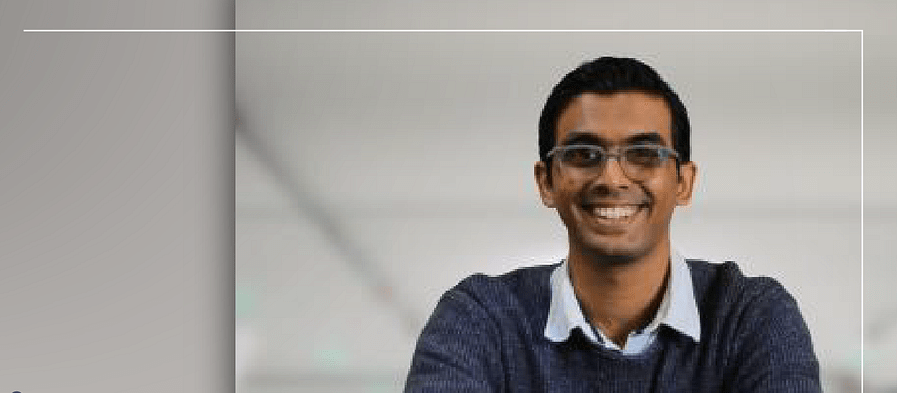
Rohit Hiwale runs a company that makes two things. The first is a robot that slices thin sheets of tissue off a paraffin block, an operation known in the trade as microtomy and, until recently, performed by a person with a blade, a wet brush, and the sort of steady hand that takes years to acquire. The second is a scanner that turns those slices into images at a rate of about a hundred slides per hour, which is not an interesting number until you realize what the previous number was.
The company is called Morphle Labs. It is a Y Combinator W20 alumnus. It was founded in 2017 in Bengaluru by Hiwale and Anchit Navelkar, both IIT Kharagpur graduates with robotics backgrounds and, by the standards of medical devices, exceptionally little seed capital. In November 2025 the company closed a $5 million Series A led by Inflexor Ventures, which pushed total funding to about $6.33 million. That is not a large number for a hardware company operating in oncology. It is a large number for a hardware company operating in oncology that has already shipped scanners.
The pitch, if you strip out the pathology jargon, is simple: cancer diagnostics begins with a physical object - a piece of tissue on a glass slide - and the physical object has not been meaningfully automated. Hiwale would like to automate it. He is not the first person to say this. He is one of the few actually shipping the robot that does it.
"Morphle aims to automate 80% of the current pathology market in the next 3-5 years."
- Company vision, via Enzia Ventures thesis
The Bottleneck Nobody Photographs
When a patient is told they have cancer, or that they do not, the sentence originates in a lab most patients will never see. A biopsy is embedded in wax. A technologist trims the wax block into ribbons a few micrometers thick using a microtome. The ribbons go onto slides. The slides are stained. A pathologist reads them. Then a report is issued, typically three to eight days after the biopsy.
Most of that time is not thinking. It is queuing, cutting, staining, mailing, and looking. RoboTome, Morphle's flagship platform, addresses the cutting. It is described by the company as the first robotic microtome, capable of sectioning biopsy blocks at more than twice the speed of an experienced histotechnologist while producing more consistent sections. MorphoLens - which comes in variants like the Morpholens 1, 6 and 240 - addresses the imaging. It scans the finished slides at what Morphle calls high-throughput rates, feeding a digital pipeline where pathologists can read remotely and AI can assist.
The interesting thing about pursuing this stack is that it is boring. Nobody photographs a microtome. Nobody writes a founder profile about a slide scanner. If your instinct is to disrupt pathology, your instinct is probably to build an AI model that reads slides. Hiwale has decided the model is not the problem. The wet lab is the problem. Without automation at the front of the pipeline, the AI at the back has to eat whatever the human hand delivers, which varies from lab to lab and technologist to technologist.
An Unlikely Pivot
Hiwale's resume is not obvious. He did his B.Tech and M.Tech in computer science at IIT Kharagpur, graduating in 2012. His early work was in software: an internship at Yahoo on review extraction from unstructured data, engineering roles at WalmartLabs and later Rippling. In 2015 he co-founded BigClozet, an AI-driven fashion discovery platform - a recommender system for clothes.
Then in 2017 he co-founded a company that builds robotic microtomes.
That is a serious jump. Fashion e-commerce and cancer diagnostics do not share customer archetypes, regulatory regimes, or capital cycles. What they share, in Hiwale's case, is that he has now built two companies from a technical background rather than a clinical one. The bet Morphle's investors made - Enzia Ventures and later Inflexor and Y Combinator - is that the people best positioned to automate pathology are engineers who did not grow up inside a pathology lab, because they can see the workflow without accepting it.
Rs 1 Crore, Then Real Money
The founding team validated Morphle's early scanners with respected pathology labs on roughly Rs 1 crore - about $120,000 - in initial capital. That is a striking number in a category where seed rounds for medical hardware routinely start with a comma. Enzia's investment thesis explicitly flagged this capital discipline as part of the reason to back the company.
After YC W20 came the slow, deliberate build. Digital pathology is not a market that rewards speed for its own sake. Hospital procurement cycles are long. Regulatory clearance is real. And every scanner shipped becomes a physical object living in a lab, with technicians who need training and maintenance contracts that need honoring. The Series A in late 2025 is the point at which Morphle stops proving the concept works and starts finding out how many labs will pay for it.
"Rohit is dedicated to ensuring that the benefits of cutting-edge technology advancements benefit patients, pathologists, researchers, and the global medical community."
- Vanity Stardom profile, 2021
The AI That Comes Later
Morphle's product keywords read like a checklist of every AI-in-pathology conference talk of the last five years: AI cell counting, AI for cancer detection, AI-assisted metastasis detection, AI-powered telepathology, AI for histology quality control, AI for rare disease diagnosis, AI-powered image repair. All of those things are real product surfaces the company is developing. All of them depend on having good digital slides in the first place, which is why Hiwale keeps returning to the hardware layer.
If you believe, as many do, that the future of oncology involves models reading slides at scale for triage and second opinions, then the interesting infrastructure question is who owns the pipeline that produces the data those models learn from. Morphle's answer is that it wants to own the whole thing: the microtome, the scanner, the software, the storage, the LIS integration, the workflow. It is a vertical bet in an industry that has spent the last decade trying to disaggregate itself.
India for the World
Morphle is registered at 447 Broadway in New York and operates primarily from Bengaluru. It sells or plans to sell into markets on multiple continents. Enzia framed the company as part of a broader shift: Indian deep-tech companies building globally-competitive healthcare products rather than localized clones of Western hardware.
The strategic logic is straightforward. India has the pathology volume, the engineering talent, and the manufacturing base. The addressable market for automated digital pathology is not just American academic hospitals - it is also the enormous number of labs in South Asia, Africa, and Southeast Asia where a pathologist is expensive, remote reading is essential, and any tool that turns a slide into a shareable digital object is disproportionately valuable.
What Rohit Hiwale Is Doing Today
He is running a company that just closed its Series A and is presumably hiring aggressively. He is presumably arguing with a supplier about optics. He is presumably reviewing product specs for the next version of MorphoLens. He is, if the recent press is any indication, telling the same story to reporters that he has been telling to investors for eight years: pathology is a physical problem, physical problems require physical machines, and the machine that reads the slide is not as interesting as the machine that made the slide readable.
Whether Morphle succeeds at automating 80% of pathology in the next few years is unknowable. What is knowable is that Hiwale is one of a small number of founders who has actually built the hardware to attempt it, and he has done so with a capital efficiency that most medical device founders would not recognize. This is not a story about a moonshot. It is a story about eight years of shipping.