An old financial application can be an unusually good historian. Buried in its code are decisions about exceptions, calculations, and customers that nobody thought to put in a manual. Replace the application too quickly and the history goes with it. Hexaview has made a business of reading the footnotes before anyone orders a rewrite.
- Builds financial software, data platforms, and supervised AI workflows.
- Documents legacy business rules before changing the systems that hold them.
- Sells engineering and ongoing delivery, alongside products such as ReportWa.
The rules nobody wrote down
In October 2025, Hexaview described an engagement with an unnamed hedge fund managing more than $80 billion. The assignment concerned over four decades of accumulated system knowledge. Its first deliverable was preservation: extract requirements, map relationships, capture business rules, and have specialists check the results.
According to the company, that first phase finished ahead of schedule. Work stayed inside the client’s virtual private cloud, with restricted access and audit trails. The useful detail is the sequence. AI helped produce documentation; people who understood the domain validated it. Decisions about selective modernization could follow.
This is a particular kind of engineering problem. Working software can become difficult to explain long before it stops working. A replacement team then inherits two jobs: build something new, and discover what the old thing secretly does. Hexaview’s preservation offering separates those jobs.
“Every offering we shipped came from a client problem.”
Ankit Agarwal · Co-founder & CTO · March 2026
Legacy IP, announced in December 2025 within its HAKI framework, formalized the documentation work. Its Legacy Insights service describes code discovery, dependency maps, and readable accounts of business logic. A May 2026 collaboration with specialist firm Execu-sys brings that offering to MultiValue, COBOL, and UniBasic customers. Hexaview keeps responsibility for delivery.
- 01Discover
Read the code - 02Map
Expose the rules - 03Validate
Ask the specialists - 04Decide
Choose what changes
A reporting problem, wearing an IT badge
The same preference for understanding shows up in a less dramatic place: enterprise reporting. In one published case, a client had expensive DOMO reporting and data scattered among trust administration, CRM, financial, and regulatory systems. Reporting had become slow, costly, and hard to govern.
Hexaview built a Microsoft Fabric environment with separate development, testing, and production workspaces. It migrated historical reports, assembled ingestion pipelines, and supplied Power BI dashboards. Identity controls, secrets management, and data cataloging were part of the build. The project reached production in nine months.
Before committing to architecture decisions, the team tested workloads containing 50 million records. The Warehouse engine ran scans and aggregations 18-29% faster in those benchmarks. A stored-procedure transformation took 3 minutes 56 seconds, against 4 minutes 33 seconds in PySpark. Measurement informed the engineering choices.
Hexaview reports 40% lower recurring analytics license and platform costs, and 60% faster report turnaround after the migration. Those are results from this engagement. They make a useful buying principle visible: test the actual workload before falling in love with the architecture.
license and platform costs
The adviser still has to send the report
Hexaview also sells something advisers can recognize without an architecture diagram. ReportWa helps wealth-management firms design performance reports inside Word and Excel, automate distribution, and archive documents. A secure client portal handles delivery. The problem is familiar: last-minute edits, manual sending, and the possibility that somebody receives the wrong version.
The product fits the company’s broader work. Wealth managers and fintech providers need portfolio information to move between systems, become understandable, and reach the right person. Hexaview handles the underlying software and data; ReportWa addresses one recurring task at the end of that chain.
Public customer references include Prio Wealth, TIFIN, and Paralel. Its services extend into insurance, healthcare, and travel, while financial services remains the clearest thread. Its menu includes Salesforce implementation, cloud migration, testing, custom product development, and ongoing support. These jobs connect the platforms a client already owns.
Buying the people behind the platform
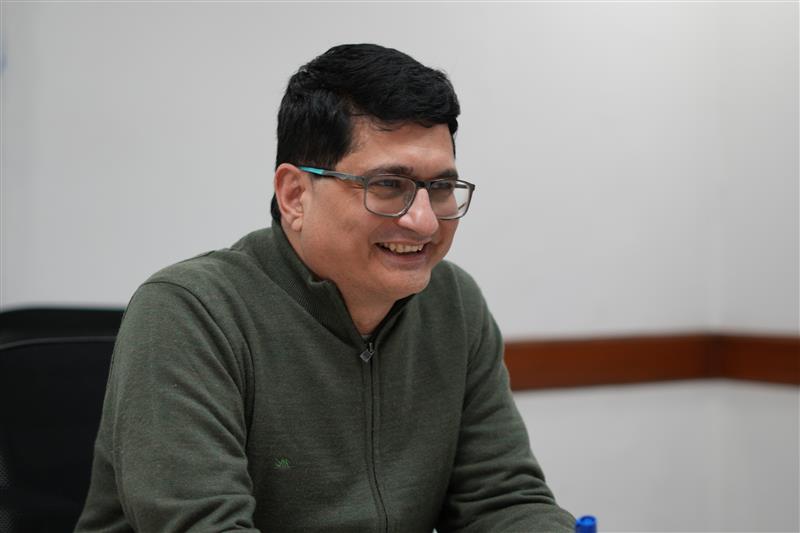
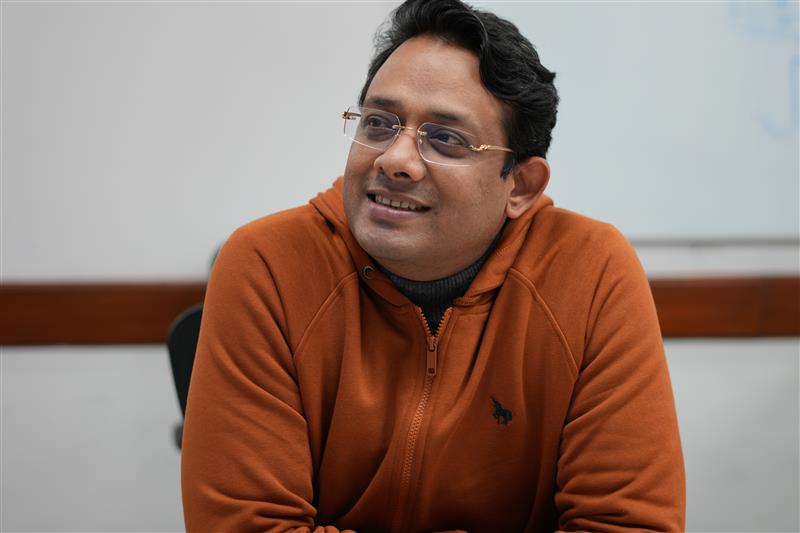
Abhishek Talwar and Ankit Agarwal founded Hexaview in 2010. Their account of the company’s beginnings centers on engineers wanting ownership of what they shipped. Today, the delivery pitch emphasizes teams led by senior engineers, a mix of onshore and offshore work, and founder involvement.
The commercial offering includes consulting, custom builds, managed services, and offshore development centers. One lending-client case describes a 50-person team assembled under a build-operate-transfer model. An inaccurate external scorecard, duplicate submissions, and slow systems were the problems. Hexaview reports 30% faster time to market and £16,000 in annual scorecard savings.
What does that sort of help cost? The homepage describes mid-market buying cycles of $100,000-$300,000 and enterprise cycles of $1 million or more. Those ranges indicate the engagements it pursues. They are not a fixed tariff, and the scorecard saving alone cannot establish a project’s return.
Its market position is a specialist engineering partner alongside enterprise platforms. Buyers can also assemble an internal team, hire a narrower consultancy, or use a larger services firm. Hexaview’s case rests on financial-domain familiarity and delivery continuity. Its Salesforce Crest announcement and current Anthropic Select directory listing give buyers concrete credentials to check.
Keep the map. Then choose the road.
The company’s AI shift follows that practical thread. In March 2026 it described production work in legacy documentation, private coding-agent systems, and agent strategy. Its AI University teaches engineers to coordinate agents with evaluations and controls.
The lesson travels beyond Hexaview: recover the rules, validate the output, test the workload, and keep ownership of the result. This approach needs available domain experts, access to the relevant systems, and a customer prepared to fund discovery. Without those conditions, AI can produce impressive documentation that nobody can confidently approve. The map earns its keep when someone can verify the roads.