On June 22, 2025, Herbert Ong had a rather practical way to investigate the future of transportation: get in the car. Tesla was beginning its robotaxi service in Austin, Texas, with a small group of invited riders. Ong was among them. He filmed his experience, watching the vehicle move and park while sharing the ride with an audience that usually encountered him discussing what Tesla might do next.
The distinction matters. An anticipated event had become something a passenger could experience. The launch was limited, and a safety monitor sat in the front passenger seat. There was plenty left to observe. But for someone known for tracking milestones, the occasion offered a pleasing change of scenery. A calendar entry now had seats.
Ong’s public life has come to revolve around such moments: a product announced, a factory discussed, an engineering question put to someone who works on the answer. On Brighter with Herbert, his interviews cover Tesla and the technologies surrounding it. The subject can be a financial model or a humanoid robot. The recurring interest is how an ambitious idea becomes a business people can actually use.
His route to that microphone ran through company building. The former Healthentic co-founder and CEO brought a product background to a medium that rewards personality. That combination gives his story its particular shape. He is an investor with something at stake, a host with people to introduce, and a former operator who has spent time on the other side of a product promise.
The builder before the broadcaster
Ong is based in Bellevue, Washington. His career includes product marketing, strategic alliances, business development and executive roles. Those titles describe different forms of the same practical work: deciding what to build, explaining why someone should want it, and finding the partners needed to get it into the world.
His education includes an MBA at Simon Fraser University, completed between 1996 and 1998, and study in product design, development and management at MIT Sloan in 2005. His professional record includes Philips and Thomson Reuters, alongside his own ventures. It is a background in making products legible to customers and organizations, well before he began making technology legible to viewers.
In 2013, while leading Healthentic, he offered entrepreneurs advice that began with the customer’s problem. He recommended investigating needs that mattered and were poorly served, then building around the problem people would pay to solve. His reading list included Anthony Ulwick, Steve Blank and Eric Ries. The books concern different approaches to developing a business, but each asks a founder to look beyond enthusiasm for an idea.
One brief sentence from that period survives especially well: “Smarter tools are easier to use.” It is a useful standard for a product executive and a demanding one for a broadcaster. There is always another chart available. The harder job is deciding which chart helps somebody understand the question.
“Smarter tools are easier to use.”
Herbert Ong, 2013
A shareholder with a calendar
Ong dates his Tesla investment to 2012. That places his interest a decade before the first episode listed in his podcast archive. He arrived at broadcasting with an existing commitment to the company, rather than acquiring one as a convenient subject for a show.
The name he uses for himself, “The $TSLA Milestones Guy,” is revealing. A milestone is a checkpoint. It gives a sprawling story a date, an event and a question that can be revisited. For a company whose public discussion stretches across vehicles, software, factories and robotics, that is a useful organizing habit.
His stated aim is to help investors, including people who have not yet invested, evaluate their conviction in the business fundamentals. He also openly supports Tesla’s mission. Readers and viewers can therefore understand his perspective from the start. He is an interested participant explaining a company he owns shares in.
That perspective leaves room for a more useful question than whether a person is enthusiastic. What does the enthusiasm attend to? In Ong’s case, the recurring subjects include product progress, operating milestones and the people trying to interpret them. A calendar encourages return visits. Yesterday’s prediction can become tomorrow’s interview question.
Episode one had a person in it
The first episode in the archive, dated June 10, 2022, featured Tesla Joy. Its running order gives a good account of what Ong wanted his program to do. The conversation began with her story and the beginnings of her channel. Questions about her name and favorite videos came before questions about software and future products.
The interview went on to discuss women in the Tesla community, SpaceX, languages, retirement and the community itself. Technical interest and ordinary curiosity occupied the same conversation. A viewer could meet a person whose videos they knew, rather than merely receive another explanation of a company.
That choice was explicit in the show’s description. Ong wanted to introduce people in the Tesla community and get to know them better. The podcast biography also contained a small joke about predicting the future, immediately taking the claim back. Someone spending this much time on upcoming events should be allowed a little fun with the job description.
Later archived conversations included aerospace engineer Scott Walter and entrepreneur Larry Goldberg. The guests supplied different kinds of experience. For the host, the work involved giving that experience somewhere to land: a question, a discussion, a topic viewers could follow. The interview format made the community part of the material.
The browser tabs become a product
Ong also built Brighter $TSLA, a subscription resource alongside his videos. Its premise was familiar to anyone who has researched a company online: useful information tends to be scattered. His resource page puts historical events, company information and financial material in one place.
The advertised collection contains more than fifteen modules. Its categories include milestones, executives and board members, master plans, earnings calls, charts and financial estimates. The structure gives subscribers several ways into the company’s story. They can begin with an event, a person, or a set of numbers.
There is a resemblance here to his earlier product advice. A recurring inconvenience becomes a proposed product. The inconvenience is searching across apps and websites; the proposed answer is a collection organized around one company. It is a modestly recognizable founder’s move, even when the subject involves robots.
A video moves with the pace of a conversation. A resource collection lets a reader stop, compare and return. Together, the two forms offer different speeds of attention. The interviewer introduces a question; the organized material gives that question somewhere to remain after the conversation ends.
When the milestone opened its doors
The Austin ride gave Ong’s work another form. On launch day in June 2025, he said Tesla had invited fourteen people. The first riders included retail investors and social media creators, and the opening service used a small fleet within a limited area. Passengers paid $4.20 per trip.
Ong shared observations about the vehicle’s movement and parking. His recording belonged to a wider set of first rides that circulated online, turning individual passengers into narrators of the launch. The audience could watch people encountering a system they had previously discussed through announcements, demonstrations and predictions.
The front passenger’s safety monitor remains part of that scene. So does the small scale of the rollout. Both details help locate the experience in time. A first service is a specific event, with specific operating conditions. Ong’s place in it was as an invited rider filming what happened around him.
It is an appealing episode in the story of a milestones host because it brings the subject within arm’s reach. The questions become immediate: how the car moves, how it stops, how it handles the end of a ride. Transportation eventually has to answer to the person sitting inside it.
A conversation about squeaks
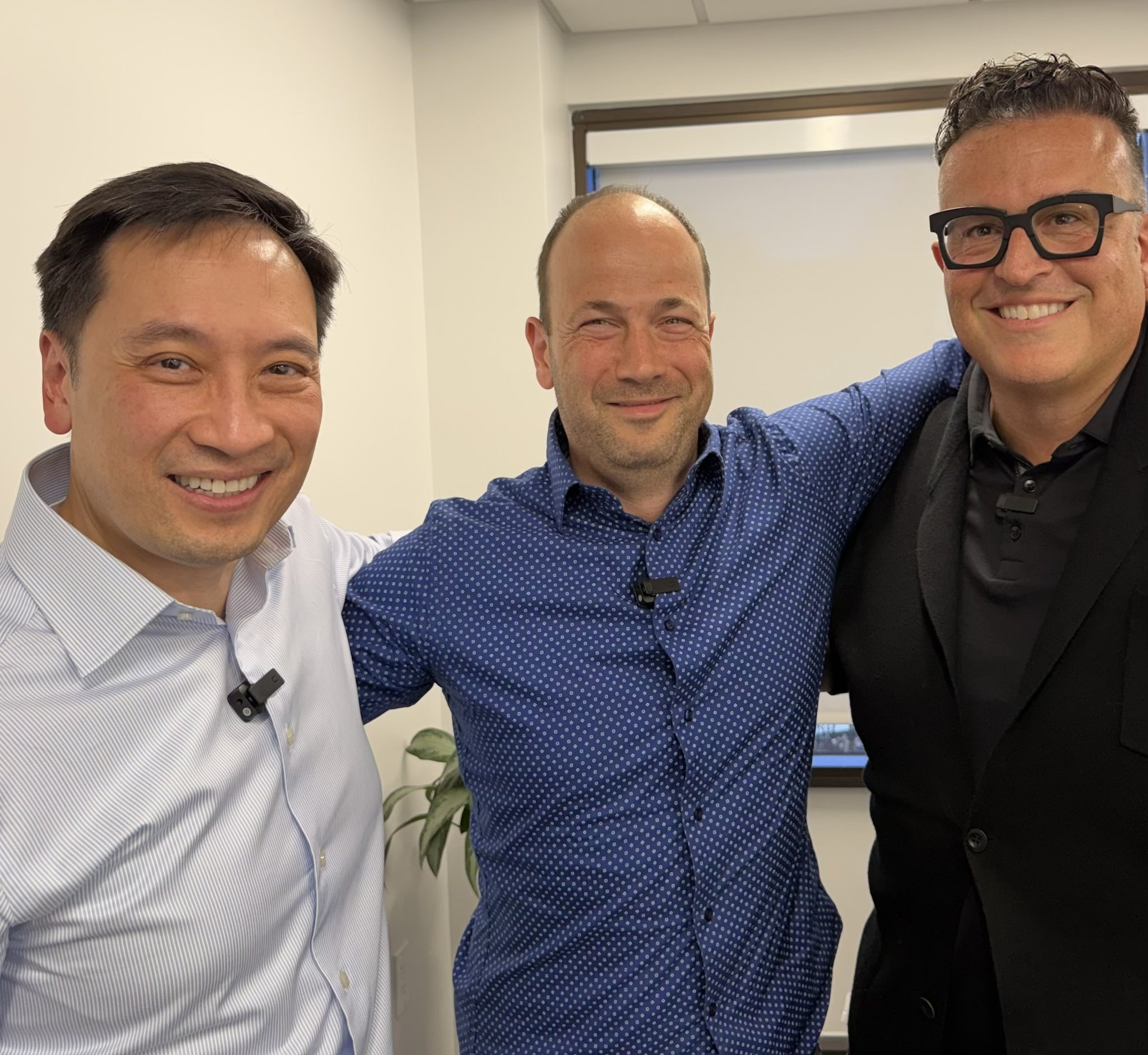
By July 2026, Ong and Jeff Lutz had sat down with Lars Moravy, Tesla’s vice president of vehicle engineering. The conversation reached into manufacturing, including the final checks vehicles undergo before leaving the factory. This was the kind of detail that can disappear beneath grander talk about autonomous cars.
Moravy described vehicles driving through a bumps, squeaks and rattles test, with cabin microphones listening for unwanted noises. He also discussed work on an AI system to recognize imperfections. The account came from an executive describing Tesla’s process; it supplied viewers with a concrete example to examine.
A squeak is an excellent antidote to abstraction. It is small, recognizable and capable of annoying the owner of a very sophisticated machine. An interview that reaches that detail shows what a product conversation can contain when it moves past the reveal and into the work of making things consistently.
Ong’s founder background makes this territory a natural part of his story. Products have to be built, tested and explained. His later work with the microphone keeps returning to those activities, even when the objects under discussion have changed.
A future with names attached
Ong has also appeared as a guest, discussing autonomous driving with Brian Wang in May 2024 and the broader AI future on The IDEAL Investor in August 2025. The latter conversation ranged from robotaxis and robotics to energy and possible futures shaped by AI. His interests extend beyond the next vehicle announcement.
The thread through his public work is the company of other people: the early creator interview, the investor conversations, the engineering executive, the fellow riders. A timeline makes events easy to place. A person makes them worth listening to.
Ong’s career has carried him from product roles and company leadership into a show where the product is partly the conversation itself. He still has dates to track and questions to ask. Sometimes the next item on the list arrives as an interview. Sometimes it pulls up to the curb.
Keep the conversation going
- PERSONAL WEBSITEBrighter with Herbert and the Brighter $TSLA resources ↗
- YOUTUBEWatch Brighter with Herbert ↗
- INTERVIEWHerbert Ong and Jeff Lutz with Lars Moravy ↗
- THE FIRST EPISODE · JUNE 2022The conversation with Tesla Joy ↗
- NEWS · JUNE 2025The Austin robotaxi launch and its first riders ↗
- CONVERSATION · MAY 2024Brian Wang talks autonomous driving with Herbert Ong ↗
- XFollow Herbert Ong ↗
- LINKEDINHerbert Ong’s professional profile ↗
- PODCAST ARCHIVEListen to Brighter with Herbert ↗