An insurance broker’s inbox is a peculiar filing cabinet. It contains applications, attachments, half-answered questions, requests for quotes, and the quiet hope that someone else has the missing information. Herald built a business around connecting that cabinet to the machinery of commercial insurance. The interesting part is how its idea of the job grew.
- One API connects broker software with multiple insurance carriers.
- Babbix brings AI assistance into email and other placement channels.
- The current system follows submissions through quotes, proposals, binding, and issuance.
The inbox was already the interface
Co-founders Matt Antoszyk and Duncan Crystal knew the plumbing. Before launching Herald in 2021, they built and distributed a cyber insurance API at At-Bay. Early CTO Jacob Barnett brought experience building life insurance purchasing workflows at Haven Life. These were people acquainted with the distance between a tidy software diagram and an actual insurance transaction.
In his Seed announcement, Antoszyk described an industry full of tools that lived in silos. Brokers collected information, passed it to carriers, and waited. Every additional carrier meant another integration, with its own quirks and maintenance. Herald proposed a common connection: software developers would integrate once, then quote and bind across multiple carriers.
That was a practical promise. A brokerage could build its own experience without assigning an engineering team to every carrier relationship. A software platform could add insurance transactions to an existing product. The small business buying coverage might never see Herald, while benefiting from fewer repeated questions.
The expensive part is the translation
The work beneath “one API” is less glamorous than the phrase. A former product director’s account describes carriers returning documents as links or encoded files; some arrive immediately, others take 24 hours. Herald built a common way to access those files. It also mapped industry classifications across carrier systems. Standardization here means accepting that the originals disagree.
Herald’s October 2024 announcement reported 35-plus carrier partners, 80-plus products, and relationships with eight of the 25 largest brokerages. Those are dated company figures, but they reveal the ambition: connect many products without requiring the brokerage to manage each connection separately.
Company-reported snapshot · October 2024
The funding followed the infrastructure. Herald announced an $8 million Seed in December 2021 and a $12 million Series A in October 2024. Lightspeed led the Seed and co-led the Series A with Brewer Lane; Afore and Underscore participated in both. The rounds supplied $20 million for the company’s development.
The acquisition followed the behavior
Connectivity, however, still leaves a human at the keyboard. In December 2024, Herald launched email quoting powered in part by Babbix. Brokers could send information they already had, including attachments, and receive quotes in the same place. The interface was familiar enough to require very little explanation.
“We understand that brokers need tools that adapt to their workflows, not the other way around.”Matt Antoszyk · December 2024
Herald acquired Babbix in July 2025, after months of partnership. Babbix founders Kim Mishra and David Elbaz joined to lead its new AI division. The announcement identified slow behavioral change among brokers as a constraint on insurance technology adoption. Antoszyk also acknowledged that enterprise brokers needed more than foundational infrastructure.
The sequence matters. Herald first connected systems, then added a way for brokers to use those connections without rearranging their day. The acquisition joined the agent that could read an email to the infrastructure that could do something with it. An attachment had somewhere to go.
A quote is only one stop
By July 2026, Herald was describing an Intelligent Placement System with three layers. Babbix operates portals, drafts submission emails, and extracts quote data. Placement Workbench tracks submissions, quotes, and accounts. Core Data and Systems connects the operation to CRMs, agency management systems, data lakes, and carrier systems.
- 01Intake
Gather + extract - 02Market
Submit + quote - 03Close
Propose + bind - 04Issue
Deliver policy
Placement is the work between deciding a client needs insurance and delivering the policy. Herald targets that middle: intake, marketing to carriers, quoting, proposals, binding, and issuance. Its customers include brokerages, wholesalers, and technology platforms; carriers gain another route to distribution.
Several product moves show how that expands. Batch quoting launched in April 2025 with a cyber focus, taking data from a brokerage’s systems and returning quotes across a book of business. A September 2024 Salesforce collaboration aimed to put quoting and binding inside Financial Services Cloud. The expanded Counterpart integration brought management and professional liability products into the connected workflow.
Rules before autopilot
A broker reading “between 50,000 and 100,000 records” must decide whether to use the upper bound or ask another question. Herald’s March 2026 explanation lets firms configure triage, extraction, and subsequent actions. Customers define how ambiguous information is handled, when clarification is needed, and what triggers escalation. The broker’s judgment becomes part of the workflow’s rules.
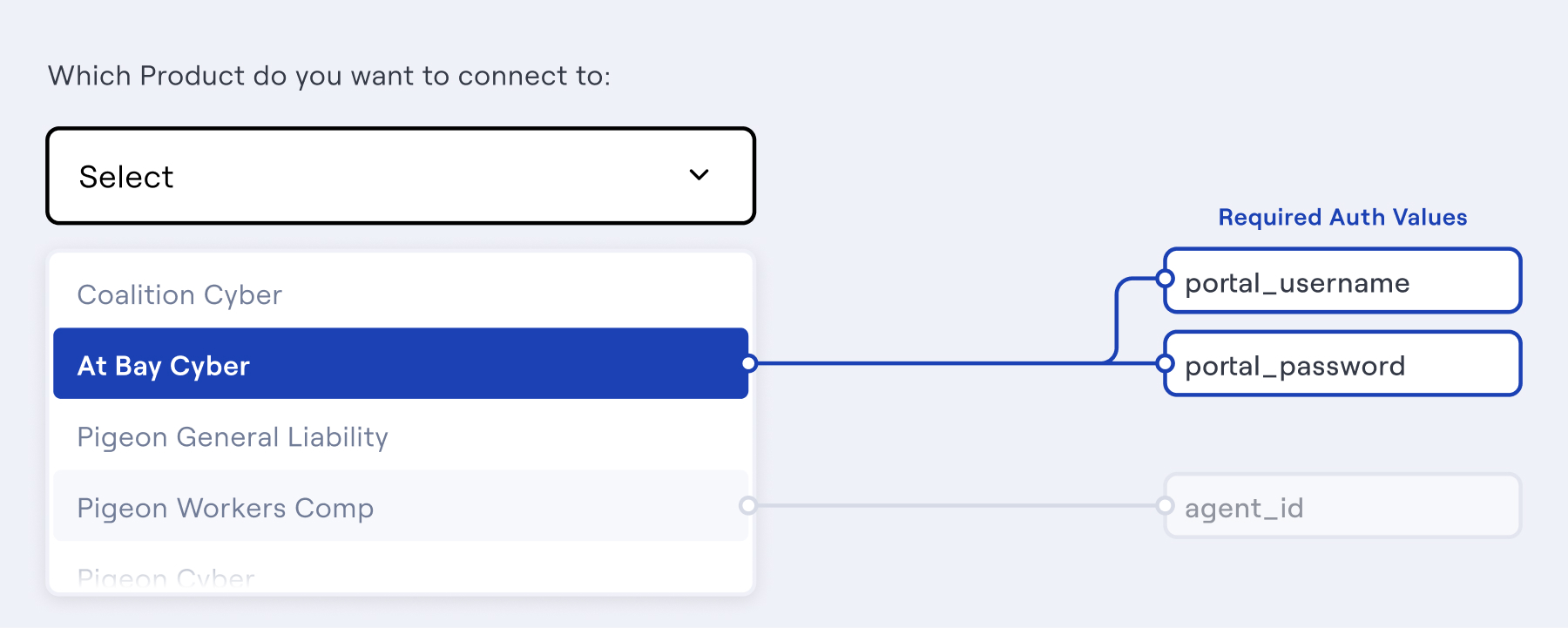
Permission remains a firm boundary. Herald’s documentation says producers must be appointed and authorized to sell the relevant carrier product. Connecting software does not grant that authority. Incomplete applications and risks outside a carrier’s appetite still require attention. Faster submission cannot make an unsuitable risk suitable.
A lesson for anyone selling software
Herald occupies a crowded part of insurance technology. Bold Penguin’s Enterprise Terminal also offers APIs and integration with brokerage systems. Herald’s case rests on the combination of carrier connectivity, its agent, a workbench, and configurable placement behavior. Buyers should compare the markets and workflows their own teams actually need.
The business is enterprise software: a former product director reports contracted recurring revenue, and the current website invites a demo. Implementation involves connecting systems and defining workflow rules. In July 2026, Herald joined Guidewire’s Insurtech Vanguards program and welcomed former USI CIO Stew Gibson to its advisory board, extending its access to insurer and brokerage experience.
For another software builder, the useful lesson is straightforward: investigate where work already starts, then connect that place to the transaction. Herald’s inbox approach gives that lesson a concrete form. The familiar email remains; fewer of the jobs hiding inside it need to remain manual.