The stars are the easy part. You find a doctor, glance at a rating, and feel the small relief of having turned an uncertain decision into a number. Then comes the question the number cannot answer by itself: five stars for what? A reassuring conversation? A successful operation? The hospital where that operation happens? Healthgrades has built its business around the distance between those questions.
- Find clinicians by condition, procedure, location and insurance.
- Read patient feedback separately from hospital outcome ratings.
- Search is free; advertising and partner services fund the business.
- Zocdoc now supplies live booking for participating providers.
A star is doing two jobs
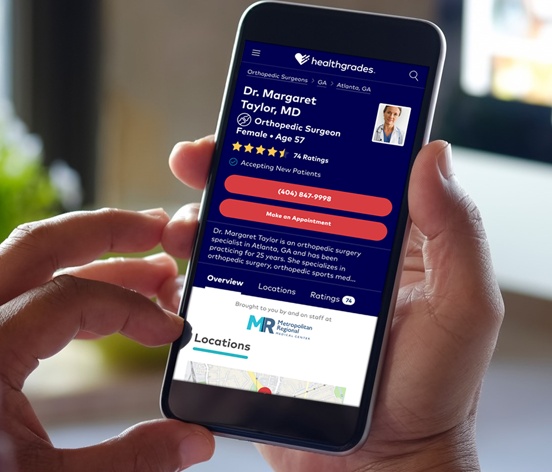
Healthgrades is a healthcare marketplace with an unusually consequential comparison problem. Its physician profiles bring together experience, qualifications, hospital affiliations and patient feedback. Its hospital ratings examine clinical outcomes. Those categories sit close together on a screen, but they describe different things. The useful habit is to keep them separate in your head.
For hospital clinical ratings, Healthgrades compares what happened with what its models expected to happen, accounting for patient risk. A facility treating sicker people should not automatically look worse because its patients arrived with more complications waiting to happen. The company describes analyzing more than 45 million Medicare claims records across the latest available three-year period, covering approximately 4,500 hospitals.
Three questions. Three kinds of evidence. No single score answers all of them.
Patient reviews have another job. They help describe encounters with clinicians. Healthgrades’ homepage advertises more than 15 million patient ratings. That is a large collection of experiences, but an experience rating does not become a surgical outcome measure simply because it has stars beside it. The distinction is the first thing a careful shopper should learn.
The 2026 awards make the distinction tangible. Healthgrades recognized 373 hospitals for patient experience; 80 also received its patient safety award. The overlap is real, yet the lists are different. Patient experience draws on survey measures, including communication and discharge information. Safety examines preventable events. Someone choosing a hospital can reasonably care about both, while resisting the temptation to treat either award as a complete description of the place.
Free to search. Valuable to reach.
The consumer gets a directory, comparison tools and educational material without buying a subscription. The paying audience is on the other side: health systems, large medical groups and life sciences advertisers. A patient looking for an orthopedic surgeon is also someone a hospital’s orthopedic service would very much like to meet. Healthgrades sells access to that moment.
Its partner offerings include sponsored profiles, advertising, hospital quality services and licensed award promotion. For larger organizations, it also markets patient communication and workflow automation through Medchat·ai. Pharmaceutical advertisers can reach people researching conditions and treatments. The expertise spans clinical data analysis, consumer publishing and the practical mechanics of bringing a prospective patient into a practice.
That arrangement makes labeling matter. Healthgrades says sponsored profiles are identified as advertising. It also says doctors cannot buy good reviews or pay to remove negative ones. These are separate promises: purchasing prominence in a search is different from purchasing the sentiment attached to a clinician’s name.
“To empower informed and lasting connections between people and their healthcare professionals.”
Healthgrades’ published mission
The appointment is the product, too
For years, the awkward point in a doctor search has been the handoff. Research happens online; arranging the visit can still require a telephone call. On December 4, 2025, Healthgrades announced a partnership that puts Zocdoc’s real-time availability and booking technology into its platform for participating providers. A familiar name in doctor discovery became part of the plumbing.
The launch announcement expected the integration to open access to more than 16.5 million hours of bookable appointments over a 90-day window. That was a measure of available inventory, not appointments completed. Still, the direction is revealing. Helping someone choose is more useful when the next step is sitting beside the choice.
December 2025: Zocdoc brings live availability to participating Healthgrades profiles.
The company itself has undergone a handoff. Vestar agreed to acquire Healthgrades in 2010 for approximately $294 million in equity. In 2021, RV Health bought Healthgrades.com while the separate enterprise technology and data business became Mercury Healthcare. In 2022, Healthgrades joined the newly formed RVO Health, a partnership between Red Ventures and Optum. That split matters when reading older descriptions of the business.
Its market position now crosses several familiar categories. Google helps people discover local practices. Zocdoc helps them find and book clinicians. CMS Care Compare and other hospital rating services help investigate facilities. Healthgrades puts physician discovery, patient opinion and hospital assessment together, while borrowing booking infrastructure from a company that also competes for the search.
The useful part of a small experiment
A Healthgrades case study describes an unnamed Southeastern nonprofit health system with a small team and no listing management software. Its response was wonderfully unglamorous: improve physician profiles, encourage authentic patient feedback and buy sponsored visibility. Photos, biographies and introductory videos gave people more to evaluate before making contact.
For a program launched in January 2024, Healthgrades reports break-even in the second month and a 7.1:1 return over 24 months. Read the fine print: this was proxy ROI, calculated with conversion volumes and cross-client averages because the customer did not share financial encounter data. The reported revenue was modeled. The workflow is easier to copy than the return: complete the information, make contact easy, then measure what happens.
A shortlist, with the right questions
Healthgrades’ own research exposes the boundary of comparison shopping. In its 2026 hospital announcement, the company said 46% of Americans lived more than 25 miles from one of its America’s 250 Best Hospitals. A ranking can reveal a choice that geography makes difficult. Insurance networks and available appointment slots narrow the field further.
Use the platform to make a shortlist around the condition or procedure that actually concerns you. Examine relevant experience, patient feedback and the hospital affiliation. Confirm insurance and availability with the practice. Use the appointment guides to arrive with better questions. A rating earns its place when it helps you ask something specific. The star is the beginning of the conversation.