The hospital system had already done its homework. It had reviewed vendors, examined spending and employed people whose job was to negotiate. Its laboratory contracts looked reasonable. Then hc1 took another look. In the company’s account, published in July 2026, an unnamed national health system found that reasonable was an expensive word.
- The raw material: lab orders, results, purchasing records and customer activity.
- The product: software that makes those records comparable and useful.
- The twist: consultants who help turn findings into changed behavior.
- The lesson: a savings opportunity needs an owner before it becomes a saving.
The good deal that wasn’t
hc1 reports $15.8 million in realized laboratory savings at that system in under two years: $11.2 million from reagent and service contracts, and $4.6 million from capital equipment. These are company-reported results from a particular customer, rather than a forecast for every buyer. The interesting detail is that the customer had capable internal teams. It lacked a sufficiently revealing comparison.
A contract can look perfectly respectable beside last year’s contract. The question changes when you compare it with what other hospitals pay. hc1 brought purchasing benchmarks and specialists who could help negotiate. The client, according to the account, was willing to follow the evidence. The dashboard did not sign the agreements. People did.
Realized savings in under two years. These figures are savings, not hc1’s fees.
That distinction explains much of hc1. An Indiana technology business founded in 2011 by Bradley Bostic, it sells a way to extract more value from information laboratories already produce. Health systems can use it to examine testing patterns, identify care gaps, manage lab operations or scrutinize supply spending. Independent labs can connect service problems with ordering activity. A result that once ended a transaction becomes the beginning of a question.
Before the intelligence, a dictionary
The unglamorous part comes first. A health system may have several hospitals, electronic records and laboratory information systems. The same test can have different names in different catalogs. Comparing those records without resolving their differences is like conducting a choir whose members have each been handed a different song.
hc1’s 2019 collaboration with Quest Diagnostics addressed precisely this difficulty. Quest Lab Stewardship powered by hc1 connected enterprise systems and normalized laboratory data, including test catalogs. It gave medical staff and lab leaders a shared view of ordering patterns. Earlier approaches could depend on manual uploads and reports that arrived too slowly to guide action. The first bottleneck was often the machinery of comparison itself.
- 01ConnectBring lab and clinical records together.
- 02NormalizeMake names and results comparable.
- 03AssignPut a finding into someone’s workflow.
- 04MeasureCheck what changed after action.
An editorial map of the approach, not a product interface.
This is laboratory stewardship: asking whether testing is appropriate, rather than simply whether there is more or less of it. Missing a useful test and repeating an unnecessary one are different errors. Both can hide inside a large volume of activity. The Quest offering explicitly leaves medical judgment with the treating provider. Analytics supports the conversation; it does not settle an individual patient’s care.

Four doors into the laboratory
The current portfolio sits under hc1 IQ, which the company’s history dates to 2026. Its four product names suggest a tidy arrangement. The work underneath them is less tidy, because a laboratory is simultaneously a clinical service, an operation, a purchaser and, frequently, a business with customers.
Testing patterns, anemia, maternal risk and transfusion monitoring.
Orders, specimens, turnaround times, customer service and lab CRM.
Purchasing benchmarks, contracts and realized savings.
Longitudinal lab intelligence for life sciences, payers and devices.
Clinical IQ combines utilization insights and clinical expertise. Its advertised modules cover anemia management, maternal care through HerCare, test monitoring and transfusion monitoring. The practical aim is to surface patients or patterns needing attention within clinical workflows. Those features matter only when a care team can respond to what appears.
Ops IQ carries the company’s healthcare relationship-management roots into laboratory operations. A sales representative can see ordering activity; a service team can see account context; operations can follow specimens and turnaround times. Its lab-system feeds use HL7, a healthcare data-exchange standard. For a buyer, the useful distinction from a general CRM is that the relationship includes laboratory activity, rather than just contacts and sales notes.
Source IQ works with purchasing records, invoices, contracts and utilization data to expose price differences and support negotiation. Signal IQ has another audience: life sciences businesses, payers and medical-device organizations interested in patient histories, segmentation and outcomes. Its product page describes longitudinal lab results and clinical context. A single result answers a narrow question. A sequence can help reveal a trajectory.
The people who can change the result
In October 2024, hc1 acquired Accumen, a healthcare performance consulting business. The purchase joined technology with expertise in running laboratory improvement programs. Read as a business decision, it acknowledged how much work takes place after an insight appears. A hospital needs people who can navigate its committees, purchasing rules and clinical routines.
An hc1 case study of a 500-bed Pennsylvania health system makes the mechanics visible. Its anemia program used existing pre-surgical testing staff, committee-approved processes and MyBloodHealth software. The program launched in June 2022, twelve weeks after kickoff. hc1 reports more than $330,000 in blood acquisition cost savings over nine months, an 18% reduction. The result belongs to that implementation, with its own starting conditions.
“hc1’s cPBM program enabled us to standardize care and improve patient outcomes.”
Chief Medical Officer, unnamed Pennsylvania health system · hc1 case study
The revealing detail is the staffing. Five pre-surgical testing nurses and three mid-level providers supported the program. Software entered a workflow with identifiable people and clinical approval. For anyone buying enterprise technology, that is a useful test: can you describe who will act on Tuesday morning, or can you merely describe the screen?
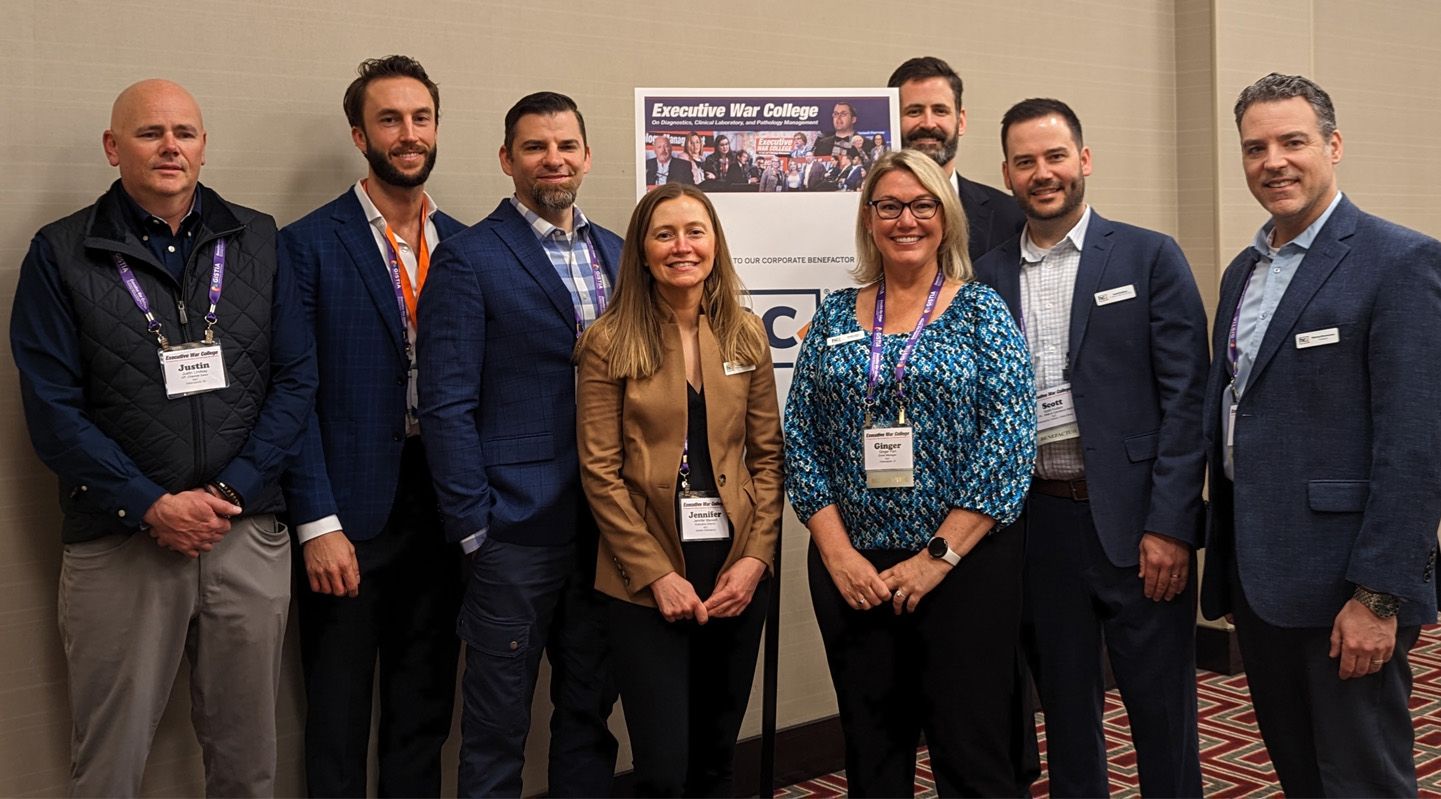
hc1’s published values emphasize curiosity, accountability, collaboration and ethics. Its careers page advertises flexible work, unlimited time off and health benefits. Those are the employer’s descriptions of its workplace. The more consequential cultural question for a customer is whether a vendor’s team can work alongside clinicians and operators, where an elegant answer must survive a busy shift.
What a buyer should borrow
hc1 occupies a space between laboratory systems, general business software and performance consulting. Its customers include labs and health systems; its current marketing names organizations such as Sonora Quest, UNC Health and Jefferson Health. The company reports more than 1,000 client locations nationwide. Its partnerships with Quest and, historically, Beckman Coulter show why the market is not a simple list of rivals: a diagnostic supplier can also be a route to customers.
The business model combines enterprise cloud software with advisory and implementation services. A buyer should compare that package with the internal effort required to connect data, maintain reporting and carry out changes. The relevant calculation includes staff time and integration work, as well as the contract bill. Attractive savings figures alone cannot answer it.
Public financing offers another scale marker. hc1 completed a $10 million Series B in 2018 and announced $6.25 million in new financing in January 2025, led by Health Cloud Capital with A1 Health Ventures participating. The Accumen acquisition terms were undisclosed. Those numbers describe capital raised and corporate expansion, rather than what a hospital pays to use the tools.
The method is portable: make records comparable, choose a tractable problem, give it a responsible owner and measure completed changes. Its conditions are equally concrete. Without usable data feeds, clinical agreement or authority to change contracts, an alert remains an alert. Procurement savings also depend on where current prices sit and when agreements can be renegotiated. The sensible first question is therefore wonderfully plain: once the lab tells us something useful, who is going to do something about it?